Issued by the Catholic Center for Studies and Media - Jordan. Editor-in-chief Fr. Rif'at Bader - موقع أبونا abouna.org

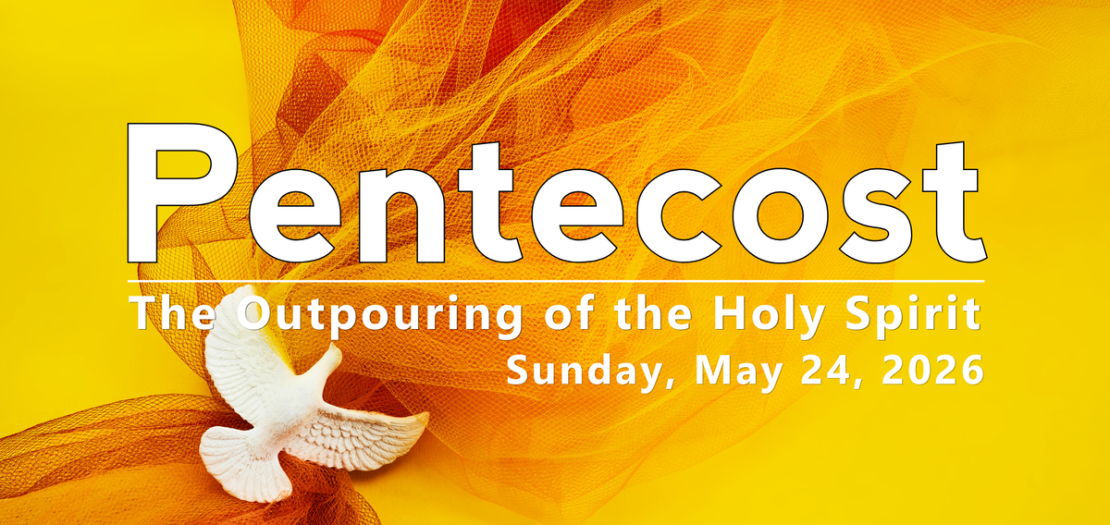
On the first evening of the week, the disciples were gathered behind locked doors, afraid and uncertain about what their future held.
They had seen the suffering and death of Jesus. They knew their own failures too well – Peter’s denial, the others’ abandonment, Thomas’ doubts. They were not triumphant heroes. They were frightened, wounded, and deeply aware of their unworthiness.
Yet it is precisely into that room, into that fear, that the risen Christ entered and breathed upon them, saying, “Receive the Holy Spirit.” (John 20:22)
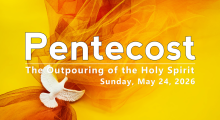
Pentecost reminds us that the gift of the Holy Spirit is not a reward for the perfect. It is God’s promise to fragile people that their failures will not have the final word. The disciples were given something they could never have earned on their own: a future.
The Spirit transformed men who had hidden in fear into apostles who would carry the Gospel to the ends of the earth. What seemed like an ending became a beginning.
That same truth speaks powerfully to us today. So often we carry the weight of our own limitations, regrets, sins, and disappointments. We remember the moments when we failed to love well, failed to trust God, or failed to become the people we hoped to be.
Like the disciples behind locked doors, we sometimes live imprisoned by fear – fear of the future, fear of rejection, fear that we are somehow beyond redemption or incapable of change.
But Pentecost declares something astonishing: God does not define us by our worst moment. Through the Holy Spirit, God continually opens a future where we thought none existed.
The Spirit is the breath of divine mercy filling the dry bones of our lives with hope again. The Spirit whispers that no wound is too deep, no sin too great, and no failure too final for the power of God’s love.
There is something deeply moving about the fact that Jesus gives the Spirit alongside the sacrament of forgiveness: “Whose sins you forgive are forgiven them” (Jn 20:23). The future God offers us is not built upon pretending our sins never happened. Rather, it is built upon mercy. The Holy Spirit allows us to begin again. In every confession, every act of reconciliation, every moment of grace, God restores to us the possibility of tomorrow.
The Church herself was born from this gift. Not a community of the flawless, but a community of forgiven sinners learning to trust in grace.
Pentecost is not simply about dramatic flames or miraculous speech; it is about God refusing to abandon humanity to despair. It is about Christ breathing life into fearful hearts and sending ordinary people into the world with courage and hope.
In a world often marked by division, violence, cynicism, and uncertainty, Pentecost reminds us that God still breathes upon His people. The Holy Spirit continues to create new beginnings where we see only dead ends.
And perhaps that is the greatest miracle of all: that God looks upon us in all our weakness and still entrusts us with His mission, His mercy, and His future.