Issued by the Catholic Center for Studies and Media - Jordan. Editor-in-chief Fr. Rif'at Bader - موقع أبونا abouna.org

How do Catholics in the United States view the current war?
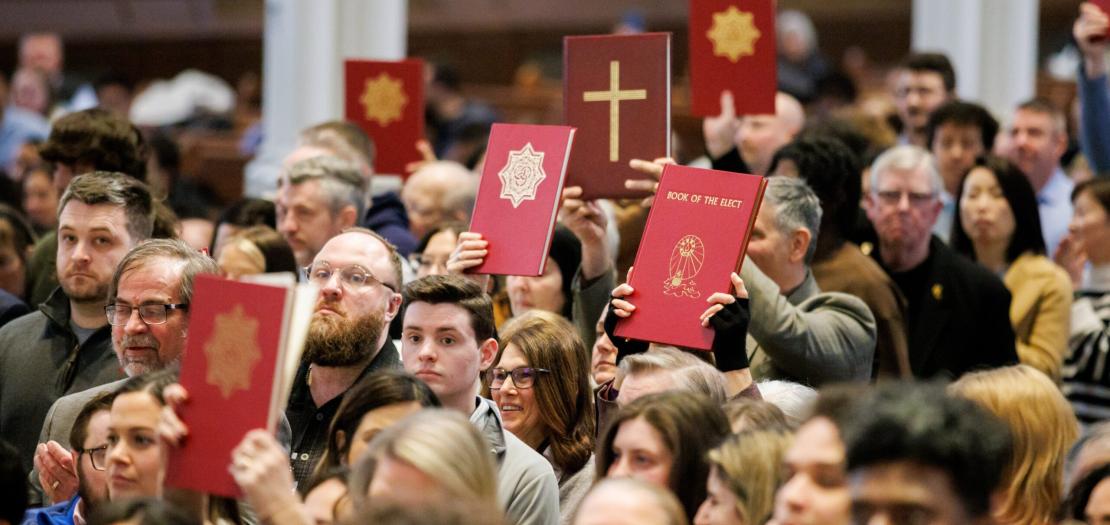
While reading an analytical article this week by Kevin Clarke, senior correspondent at Catholic America magazine titled, "A Catholic Guide to Understanding the War with Iran," I paused at the way he attempted to read the rapidly unfolding events in our region in light of the Catholic Church's moral teachings. It seemed clear that what is happening nowadays in the Middle East cannot be construed through the language of politics and military alone, as it also requires the voice of the human conscience, which raises the deeper question, namely do wars truly lead to peace, or do they open new doors of pain, displacement, and instability?
Following the posting of pictures showing pastors from "Christian" communities, who support the American right, while praying for their nation's president in the Oval Office, this balanced "Catholic" article serves as a reminder of what is known in Christian thought as the tradition of the “just war” which is an ancient moral tradition that developed over centuries of theological reflection. Yet at its core, it does not easily grant legitimacy to war, but rather sets extremely strict conditions before resorting to it. War, according to this teaching, can only be justified in very specific circumstances, namely self-defence, after exhausting all diplomatic means, associated with the need to protect civilians and avoid causing harm that exceeds the evil ought to be prevented.
Yet, what we witness nowadays in the region raises serious questions about the extent in which these criteria are respected. With the prevailing civilian casualties and the widening circle of violence, the world again seems to be facing a reality reminiscent of what Saint John Paul II once referred to at the eruption of the 2003 Iraq War as "an adventure with no return."
From this premise, American-born Pope Leo XIV urged an end to the whirlpool of violence and affirmed that world leaders are called upon to abandon projects leading to death as well as to choose the path of dialogue and peace since true peace is not based on military force, but rather on justice and mutual understanding among peoples. This followed the Vatican’s declined membership in the newly formed Peace Council and was followed as well by the appointment of a senior diplomat, namely Archbishop Gabriele Caccia as the new apostolic nuncio in Washington.
In the Middle East, where local Churches live amidst the heart of these crises, the Catholic Patriarchs in Lebanon expressed deep concern over the widening scope of the war, calling on the international community to work earnestly toward de-escalation, while warning that continued violence would bring nothing but rather further destruction and displacement to the peoples of the region. Likewise, the bishops of the Arabian Gulf states and Iraq have issued urgent appeals for peace, cautioning against the dangerous repercussions any escalation would have on civilians, particularly migrant workers who make up a large segment of the region's population.
In Jordan, the Churches are following these events with great concern, yet at the same time they raise fervent prayers to maintain durable security and stability in our dear Jordan, which constitutes a haven of safety in a turbulent region. We have full confidence in the political and diplomatic wisdom with which His Majesty the King steers the Jordanian ship, supported by the potent Arab Army and the Public Security Department which guide citizens on how to act during alert moments. We also pray for the safety of Jordanians stranded abroad due to the current circumstance so that that they would return safely to their families and homeland.
Wars may begin with a political decision, but always end with widespread human suffering, thus the moral responsibility rests nowadays on the shoulders of leaders and decision-makers around the world, to choose the path of wisdom and dialogue before the scope of fire expands further. The Middle East, the cradle of civilizations and religions, must not remain an arena of conflict, as it can be avenue of encounter and cooperation among peoples. The voice of conscience and the prayers of the faithful during this blessed Lenten season, may serve among the most important bridges as leading our weary world toward a genuine and lasting peace.