Issued by the Catholic Center for Studies and Media - Jordan. Editor-in-chief Fr. Rif'at Bader - موقع أبونا abouna.org

“Things need to improve”: Habermas’ final message
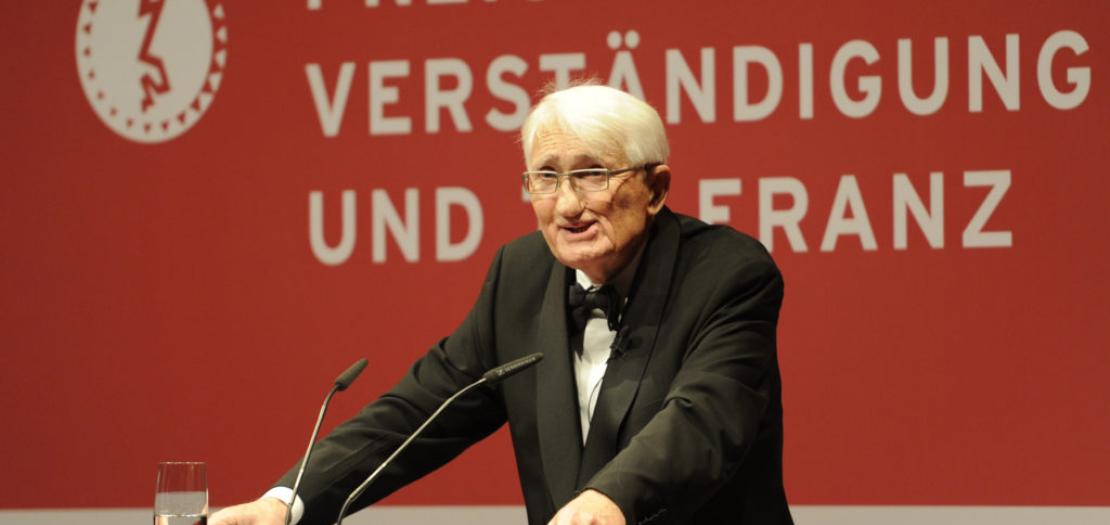
The passing away of German philosopher Jürgen Habermas a few days ago places before us a profound intellectual testament that summarizes a lifetime of reflection and critique, namely the world can be better… yet, it must become better. This is not a statement of naive optimism, but rather a philosophical and ethical stance against the despair that dominates modern humanity.
Habermas lived for nearly 96 years (1929–2026). During that time, he witnessed the effect of World War II and the transformation of the world from ideological conflicts to a turbulent globalization. Until his final days, he remained a voice advocating reason and dialogue. In his last work, published in December 2025 and titled, “Things Need to Get Better,” he refused to surrender to the logic of collapse, stressing that the current crises, no matter how severe they are, can be confronted and surmounted.
Yet, the question that arises nowadays is: Why need we “things to get better”?
We need this because our world at present, despite its technological progress, still suffers from deep imbalances. In politics, the language of power continues to dominate, where wills are imposed instead of “resorting to consensus". As Lord Christ said: “The rulers of the Gentiles lord it over them, and their high officials exercise authority over them,” (Matthew 20:25) which is a description that still resonates with our reality nowadays. Millions of people, namely migrants, refugees, and the marginalized, live on the fringes of justice with neither a real voice, influence, nor even the ability to express themselves.
Thus, the first fundamental and required transformation is a political one so as to shift from the concept of domination to the concept of service, and from imposing realities to instilling justice, as a better world cannot exist without safeguarding human dignity for all and with no exceptions.
Secondly, we need to resort to respecting the mind. Habermas based his entire project on the idea that rational dialogue can create understanding. Yet, our reality nowadays shows the opposite as weapons prevail, violence speaks, and noise overwhelms thought. The world cannot improve as long as people suffer under the burden of oppression and fear. The alternative is clear, even though it is difficult, it implies resorting to dialogue in lieu of the language of bullets.
Then follows the equally important transformations, namely economic reform that puts people before profit, administrative reform that ensures transparency and accountability; moral reform that restores the value of honesty and integrity, in addition to intellectual, cultural, and media reform that frees individuals from obsequiousness and shallowness.
In the cultural, artistic, and media spheres in particular, we face a new challenge, namely a world abounding with “images” that exceed reality. It has become easy to fabricate a false presence and promote “pseudo-artists” at the expense of genuine creativity through social media and artificial intelligence. The problem in this regard does not lie in the tools themselves, but rather in the absence of standards. A better world needs an authentic culture, not fleeting visual noise.
Habermas’ message is not an idealistic dream, but rather a call to shoulder responsibility. The affairs or the world does not improve on its own; it rather improves when human beings decide to be part of that improvement. Thus, the real challenge is not to say, “may things get a little better,” but to ask, “What do we do, here and now, to make life better?”
Habermas, one of the most prominent intellectuals of our time, has passed away, but his idea remains alive: “I believe that trying to make the world even a little better—or even just being part of the effort to fend off the constant threats of regression we face—is a motivation worthy of admiration.”