
Issued by the Catholic Center for Studies and Media - Jordan. Editor-in-chief Fr. Rif'at Bader - موقع أبونا abouna.org

Amendments to the Personal Status Law for Christians: A step in the right direction with issues awaiting resolution
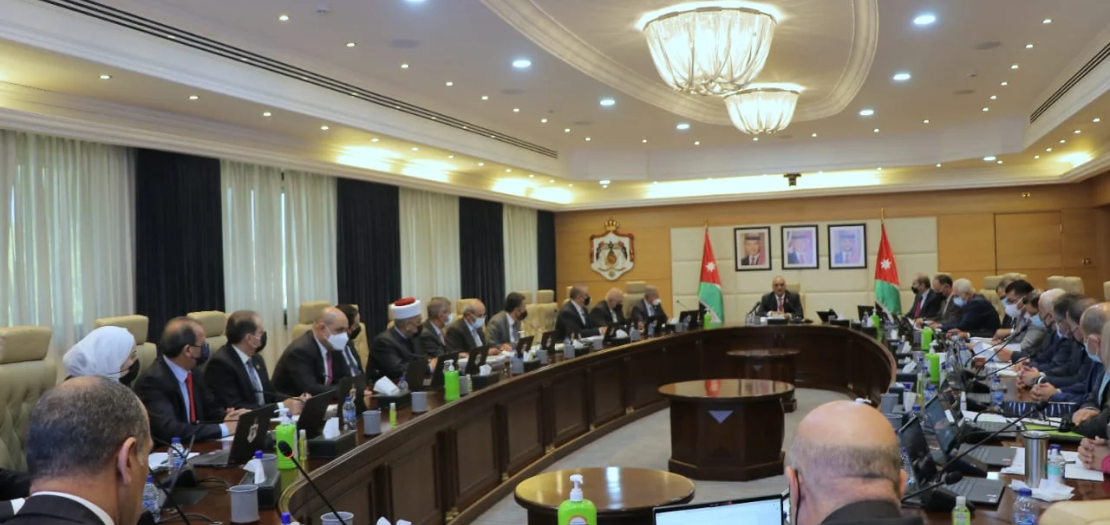
At its Cabinet’s session held on Wednesday, June 17, 2026, the Council of Ministers approved the reasons that elicit the issuance of a draft amendment to the Christian Communities Councils Law for the year 2026, as a preliminary step that awaits referring it to the Legislation and Opinion Bureau to complete the procedures required for its enactment according to due process.
Commenting on the proposed amendments, Fr. Dr. Rif'at Bader said:
What took place today regarding the Personal Status Law for Christians represents an important and advanced step on the one hand, while on the other hand it leaves Christians and human rights organizations with little aspects of disappointment particularly those who have called for equality in inheritance rights.
The positive aspect lies in the approval of the principles of wills and adoption. Wills, which were previously subject to significant restrictions in the past, are now permitted within a clear legal framework, and adoption has also been incorporated into the new amendments. These amendments still need to fulfill their constitutional process through the Legislation and Opinion Bureau, then the Parliament, and finally receive Royal Endorsement for the amendment of the law known as the Law on Christian Communities Councils which has been effective since 2015.
The source of frustration is attributed to the issue of equality in inheritance, since no provision or reference to it appears in the announced amendments which suggests that this matter was neither discussed nor did receive the necessary consensus to move forward at this stage. This is attributed to several reasons, among which in my view, the opposition of some Christian figures and representatives of tribal communities to such a law. Nevertheless, the endorsement of wills gives Christian citizens the opportunity to distribute part of their property according to their wishes, including allocating shares to their daughters, sisters, or others whom they wish to support.
A relevant question remains regarding adoption, namely does the term in the new Jordanian legislation refer to foster care as it is currently practised, or does it mean full legal adoption, whereby an adopted child is officially registered as a member of family and acquires all the legal rights accrued from that status? This issue will become clearer once the final legal texts and regulations are issued.
Thus, it is too early to make definitive judgments at this point. It is preferable to wait for the final legal version to understand the precise details and mechanisms of implementation. However, what can be said today is that the inclusion of wills and adoption constitutes an important development in the ongoing modernization of legislation concerning Christians in Jordan, while some other issues remain open for future discussion.