
Issued by the Catholic Center for Studies and Media - Jordan. Editor-in-chief Fr. Rif'at Bader - موقع أبونا abouna.org

The Pope between Madrid and Barcelona: A message merging faith, politics, and culture
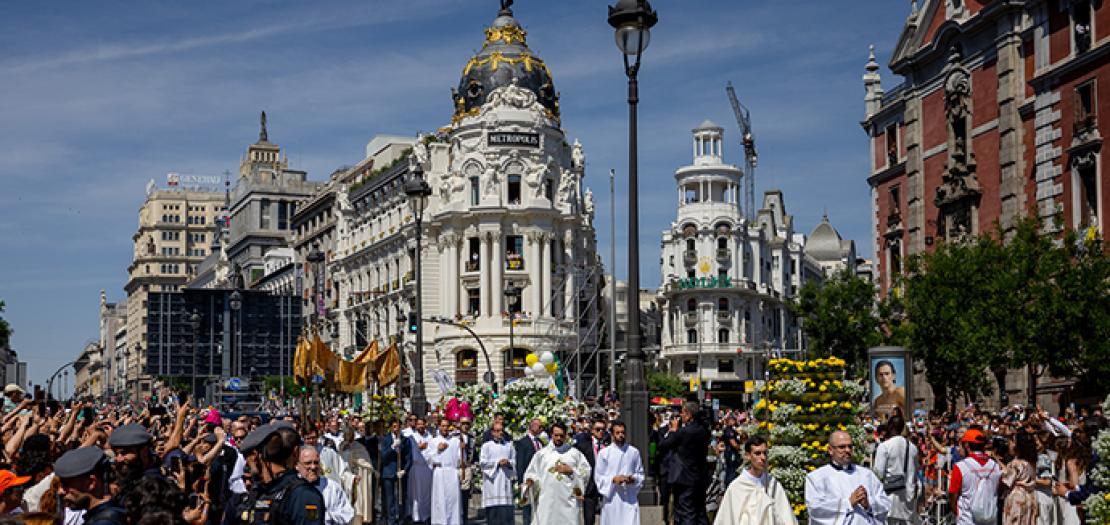
The papal visit by His Holiness Pope Leo XIV to Spain has received extensive media coverage. Though it is not the first visit by a pontiff to this country, yet it is the first paid by this Pope, who used it to shed light on the pioneering role of youth in the Church, and on the responsible use of modern media particularly artificial intelligence technologies.
This takes place in compliance with what the Pope emphasized in his first impressive encyclical, Magnifica Humanitas, published earlier, in which he accentuates the importance of these modern technologies and their role in serving humanity, on condition that they always remain in the service of human dignity and the common good, rather than becoming tools of domination, violence, or instigation of wars among peoples and countries.
In Barcelona, the inauguration of the main tower of the Sagrada Família Church was one of the most outstanding stops of the visit. This church is considered one of the greatest religious structures in the world, as its construction spanned about 144 years, according to the design made by renowned Spanish architect and artist Antoni Gaudí, whom the Catholic Church is considering to be on the path to sainthood. Gaudí was not merely an architect or an artist; he was a man of profound spiritual vision who drew from his Christian faith the inspiration to build this unique landmark, crowned by a spire dedicated to Lord Jesus Christ, and considered nowadays as the tallest among all church towers in the world.
Another landmark of the visit was the Pope's meeting with the Spanish parliamentarians, which is a historic encounter during which he delivered a speech described as eloquent and deeply moving, as it prompted members of the parliament to rise and applaud continuously for seven minutes upon its conclusion as this was a clear expression of the great esteem the Kingdom of Spain holds for Pope Leo XIV, who breathed a fresh spirit of hope and vitality into the Church since his election.
In his address to the parliamentarians, the Pope focused on the importance of human relationships and on the need for political life to be guided by ethical values and noble human virtues. He also stressed that politics, despite its complexities and competing interests, is always called upon to serve the common good and to upgrade a culture of love, mutual respect, as well as solidarity among citizens and peoples. In this regard, His Holiness stated: "Politics reaches its highest meaning when it places the human person at the center of its concern, and when it becomes a mission to serve society, build peace, entrench justice, and safeguard the dignity of every human being."
What draws attention these days is Pope Leo XIV's consistent keenness to draw close to artist and cultural figures through repeated meetings with artists, writers, and intellectuals. He seeks to build bridges of dialogue and trust with them, as well as to encourage them to draw on spiritual and human values in their work, while stressing the importance of relying on God's mercy and remaining open to faith in human life. Through these encounters, the Pope affirms that the Church is not in confrontation with art or culture but rather views both of them as a noble means of expressing truth, beauty, and goodness. The Church does not stand in the way of artistic creativity, but rather extends a hand of friendship, affection, and cooperation to artists and intellectuals, while regarding them as partners in building a more humane and open civilization.
From this premise, his meeting with artist and cultural figures in Spain was rich with deep cultural and literary references, as he repeatedly referred to immortal Spanish literary works. Among the most notable reference he made was his citation from Miguel de Cervantes' Don Quixote, reminding those present of the words: "Freedom is one of the most precious gifts that heaven has bestowed upon men."