
Issued by the Catholic Center for Studies and Media - Jordan. Editor-in-chief Fr. Rif'at Bader - موقع أبونا abouna.org

A reflection on Pope Leo’s journey to France: “Europe and the challenge of remaining human”
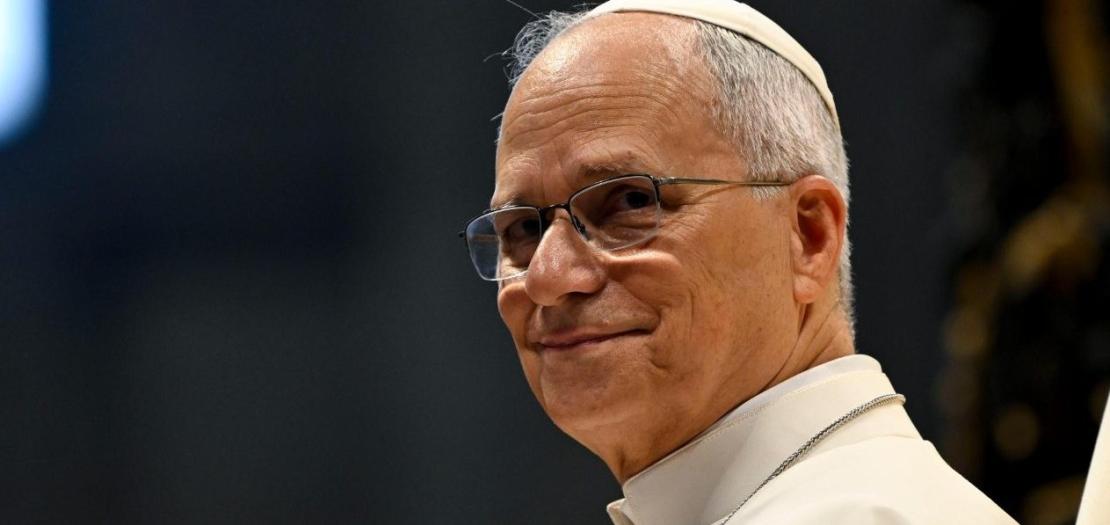
In Magnifica humanitas, his first encyclical, a text that continues to be discussed and commented on internationally, Pope Leo said that we have an “pressing duty” to remain human. Faced with technology that is becoming technocracy, faced with attacks on human life and dignity, faced with the inhumanity of war and the attempt to make it seem “normal” and “inevitable” in order to justify the squandering of enormous amounts of money on rearmament, Pope Leo XIV’s invitation to remain human can no longer be postponed.
The unarmed Successor of Peter, who proclaims Christ and his “disarmed and disarming” peace, does not operate according to the logic of power that today appears so triumphant. He has no interest other than making heard the voices of the poor, the suffering, those who thirst for justice, those who long to see the dignity of life recognized, and those who work for peace.
The call to remain human is particularly significant for France as well, once known as the “eldest daughter of the Church,” the country that became the homeland of the Enlightenment and of the Universal Declaration of Human Rights. It is a nation whose Christian roots are attested by the splendor of the art and cathedrals built over the centuries, and are kept alive by the presence of a vibrant and active Catholic community.
The Bishop of Rome is therefore setting out on his fifth international journey to visit Paris, Lourdes, and Metz, in the heart of old Europe. It is a pastoral pilgrimage, whose purpose is to strengthen French Catholic communities in their faith while at the same time conveying a message of peace and unity capable of reaching beyond the boundaries of the Church.
The Pope is not landing in the Ville lumière to condemn anyone, nor to barge into the French political debate, which is as polarized as that of every other European country. He comes as a Shepherd to meet a people, its history, and its culture. He comes to encourage those who refuse to surrender to inhumanity. He comes bearing nothing but the Word of the Gospel. Yet the Gospel is a Word that is not meant to remain suspended in midair, confined merely to the realm of ideas or predictable messages. It is instead a Word that enters into the living flesh of history, confronting the wounds of our time and offering the light of truth. It is a Word that invites us to be wounded by the suffering of those who die beneath the bombs of wars deemed “inevitable”—wars that might perhaps be stopped if diplomatic creativity and serious negotiations were allowed to prevail rather than yielding to the undisclosed interests of arms dealers. It is a Word that asks us to take responsibility for the suffering of those who are gravely ill and who need to be loved and accompanied rather than left alone. It is a Word that confronts us with the responsibility not to look the other way when faced with those who arrive in the Old Continent after crossing the Mediterranean in search of a better future.
From this land so proud of its ancient roots, its history, and its role in the world, Pope Leo will speak to Europe as a whole.
Europe risks losing its identity, sliding into the abyss of warmongering and technocratic ideologies, when instead it is called to rediscover the deeper reasons for its unity, the need of peace, and the urgency of defending the ‘magnificent humanity’ of every person at every stage of life.