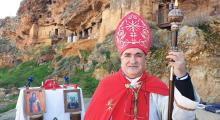
Issued by the Catholic Center for Studies and Media - Jordan. Editor-in-chief Fr. Rif'at Bader - موقع أبونا abouna.org

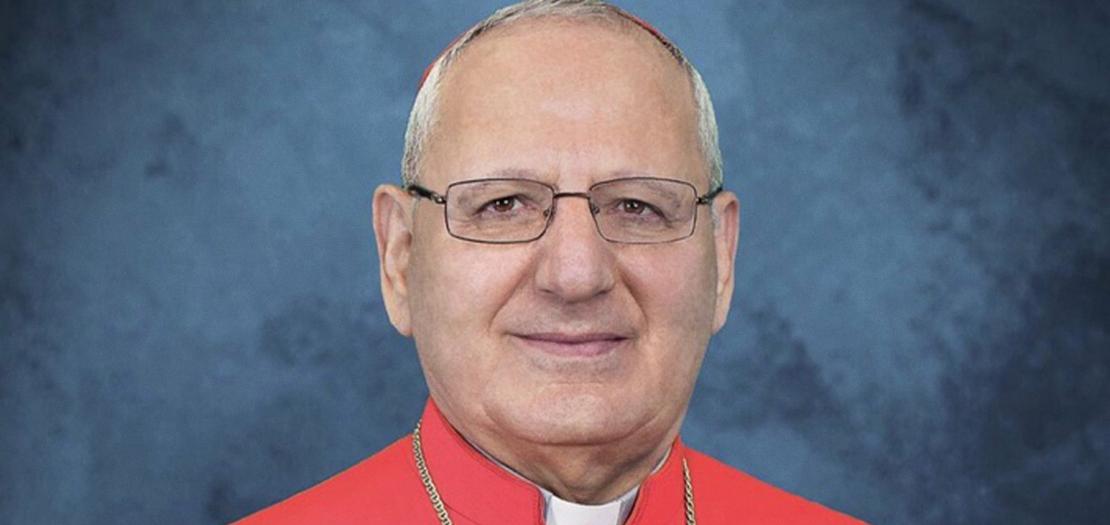
We are Chaldeans, our identity is Chaldean, our nationality is Chaldean, and our Church is Chaldean Catholic. Our feelings must be respected, our Chaldean identity, and other national identities must be recognized and respected, and not erased or dissolved into modern, hybrid names that have no connection to history or the convictions of their people.
Churches are named according to the name of their peoples: the Chaldean Church, the Assyrian Church, the Syriac Church, the Maronite Church, the Armenian Church… If there were no Chaldean people, there would be no Chaldean Church! Whoever denies their origin has no origin.
The Chaldean and Assyrian peoples historically belong to ancient pagan peoples and a rich civilization, such as the Babylonian and Assyrian civilizations, which had no connection to Christianity. There are words we use in our spoken language (soreth) that are not Syriac, for example: para (sheep), bella (door), aqla (leg), poqa (nose)…
We were one church called the Church of the East, without a national designation. It included several peoples and nationalities: Jews, Chaldeans, Assyrians, Arabs, Persians, Afghans, Indians, and Chinese. The same is true of the Catholic Church; the Chaldeans have had one of the Catholic churches since 1553. Currently, there are Assyrians who maintain their Assyrian identity and belong to the Chaldean Catholic Church, especially in America and Australia.
Recognizing the Chaldean, Assyrian, and Syriac national identities is a legitimate right and a guarantee for the continuation of this historical Iraqi fabric.
Before the repeated waves of migration, the Chaldeans lived in central and southern Iraq, and the Assyrians in the north.
Today, in Nasiriyah, the province at southern Iraq, there is a group of Shia Muslims who call themselves Chaldeans. They have a Chaldean cultural association and various activities, but they do not belong to any church! In past, the sense of nationalism was weak especially among Catholics, but this feeling is deepening today.
Without being blindly biased, I would say that our identities are diverse, but complementary because of our land, language, and history.
What is required from all of us, especially as our numbers dwindle and our presence is threatened, is to engage in dialogue on matters of common concern, to unite, and to unify our perspectives and positions with respect for the sake of our people. Our love should be reflected in our fraternal relations, particularly since we are all Christians, and Christianity unites us and humanizes our relationships.
♱ Patriarch Louis Raphael Sako