Issued by the Catholic Center for Studies and Media - Jordan. Editor-in-chief Fr. Rif'at Bader - موقع أبونا abouna.org

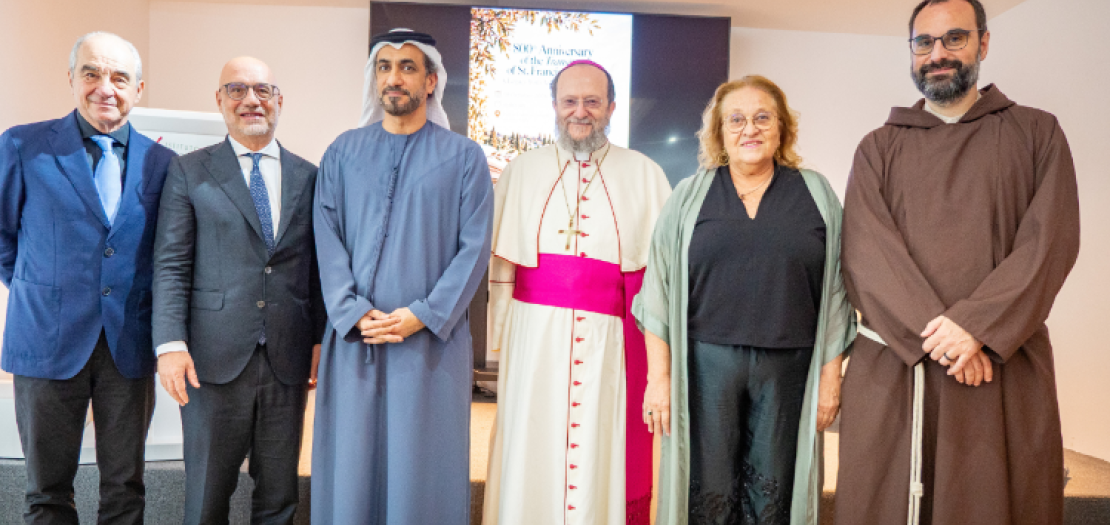
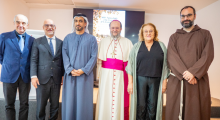
Bishop Paolo Martinelli (center) with other dignitaries at the event in Abu Dhabi. Photo: Apostolic Vicariate of Southern Arabia
St. Francis of Assisi’s writings offer an enduring witness to fraternity, peace, and dialogue, Bishop Paolo Martinelli said at a gathering in Abu Dhabi marking the 800th anniversary of the Italian saint’s death.
Around 50 people attended the October 19 event at the Italian Cultural Institute, held during the Week of the Italian Language in the World.
The Apostolic Vicariate of Southern Arabia organized the event with the Italian Embassy in the United Arab Emirates and the Institute.
Italy’s Ambassador to the UAE, Lorenzo Fanara, opened the evening, which brought together reflections on Franciscan spirituality, interreligious dialogue, literature, and sustainable art.
The event considered the relevance of St. Francis’ legacy in the Arabian Peninsula, where dialogue between different cultures and religions is part of daily life.
The saint’s own voice
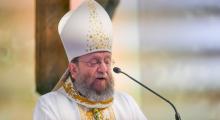
Bishop Martinelli, Apostolic Vicar of Southern Arabia, opened his address with St. Francis’ greeting: “May the Lord give you peace.”
He described the saint’s writings as “few and brief, but extraordinarily intense, profound, and in many ways groundbreaking.”
Their rediscovery, he explained, allows readers to encounter St. Francis speaking about his own life and the religious order he founded.
The texts include rules and exhortations, letters, and prayers. Among them, the Canticle of Brother Sun holds a distinctive place in Italian vernacular literature and expresses St. Francis’ extraordinary familiarity with all creation.
Fraternity, peace, and dialogue, Bishop Martinelli said, were more than universal values: they reflected a personal journey that transformed the saint’s life.
From conflict to fraternity
St. Francis initially aspired to chivalry and victory in battle. He became a man of peace through failure, the horror of war, and his encounter with Christ.
His conversion also changed his relationship with people he once avoided. Drawing close to lepers, he learned to recognize others as brothers and sisters.
“What was bitter to me became sweetness of soul and body,” Bishop Martinelli recalled St. Francis writing in his testament.
This fraternity extended to creation. In the Canticle, the sun becomes a brother and the moon a sister, while praise embraces forgiveness, patient suffering, and even “sister death.”
The Bishop also recalled St. Francis’ encounter with Sultan Malik Al Kamil and his guidance to friars living among Muslims, asking them to avoid quarrels and disputes and approach others with humility.
A legacy for the Gulf
Fr. Stefano Luca, director of the Vicariate’s Interfaith and Ecumenical Dialogue Office, emphasized that St. Francis’ social significance flows from his relationship with God.
Although often presented as a philanthropist, environmentalist, or peacemaker, he was, above all, “a man in love with God,” Fr. Luca said.
Professor Roberto Catalano of Sophia University Institute explored the connection between St. Francis and Pope Francis, particularly through fraternity and the desire to build positive relations with the Muslim world.
Emirati artist and engineer Sheikh Ali Ibn Abdullah Al Mualla addressed sustainability and the Franciscan love of creation, drawing on his work transforming discarded materials into functional art.
Ambassador Fanara highlighted dialogue, mutual understanding, encounters between cultures and faiths, and environmental sustainability as values that continue to inspire Italian foreign policy.
He also recalled St. Francis’ significance as one of the earliest great poets in the Italian language.