Issued by the Catholic Center for Studies and Media - Jordan. Editor-in-chief Fr. Rif'at Bader - موقع أبونا abouna.org

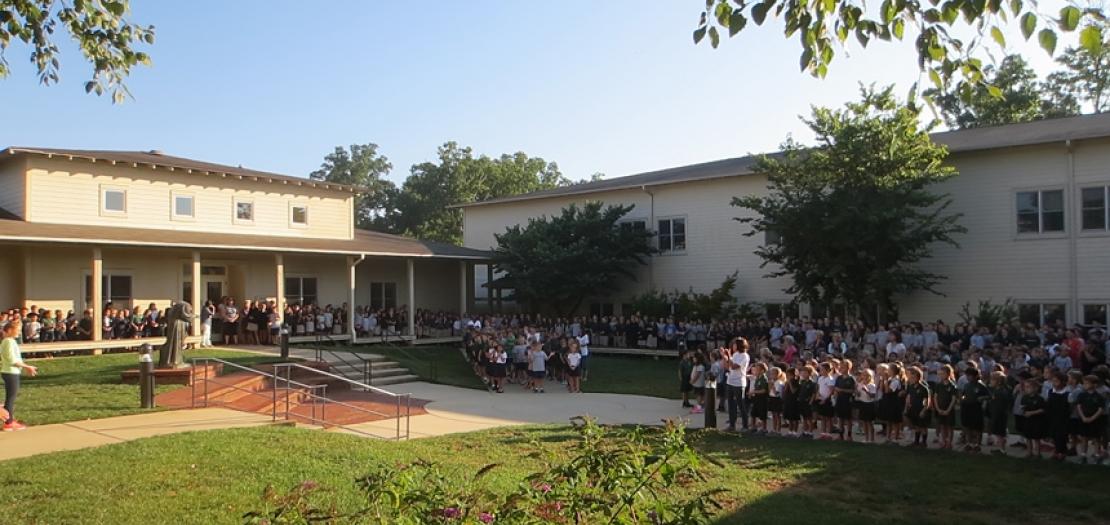
Among the objectives of the Franciscans of the Holy Land there is the development of the educational level of the local community, carried out through the 15 schools of the Custody scattered over a very large territory. More than 11,000 students attend them and 1,100 teachers of all religions work in them.
Br Ibrahim Faltas, director of Terra Sancta Schools, says, "There is a beautiful coexistence and ecumenical dialogue in our schools. We live this coexistence practically every day. We often have students who enter at the age of three and then we follow them until the end of their university studies. We also offer many scholarships. This is the spirit of the Franciscan schools in the Holy Land. Our schools are unique in every field and everyone wants to study with us." The education that we Franciscans provide to the local community is the main incentive for Christians to remain in the Holy Land."
While Br. Abdel Masih Fahim, secretary general of the Christian Schools says, "As Franciscan schools we strive to help the poor. Our schools are considered of the people".
The birth of Franciscan schools in the Holy Land dates back to the 16th century. The Holy Land School in Bethlehem is the oldest in the entire Middle East, and was founded in 1598. These schools seek to provide education to people of different social and economic backgrounds.
The Terra Sancta Schools cover the entire school curriculum, from kindergarten to high school. The majority of students then continue their school careers at university.
Graduates of the Terra Sancta Schools can be considered pioneers of the Arab cultural renaissance in the Holy Land, and they excel in all areas of the world of work to which they have access.
These schools, equipped with the most modern technological equipment, are considered to be among the best in the country for their educational excellence.
Franciscan friars are also involved in music education through the Magnificat Institute, which contributes to the growth of young students.
A loving care, the Franciscan one, that has not neglected even the students with special needs: they are welcomed in schools so that they can overcome their difficulties, and to bring a smile to their faces.
The Corona virus pandemic failed to stop Franciscan educational activity. Through distance learning, teachers were able to remove the barriers of fear and through their competence they continued to give lessons, obtaining truly satisfactory results.
In addition to being a source of knowledge and success the Franciscan schools are also centers of faith.