Issued by the Catholic Center for Studies and Media - Jordan. Editor-in-chief Fr. Rif'at Bader - موقع أبونا abouna.org

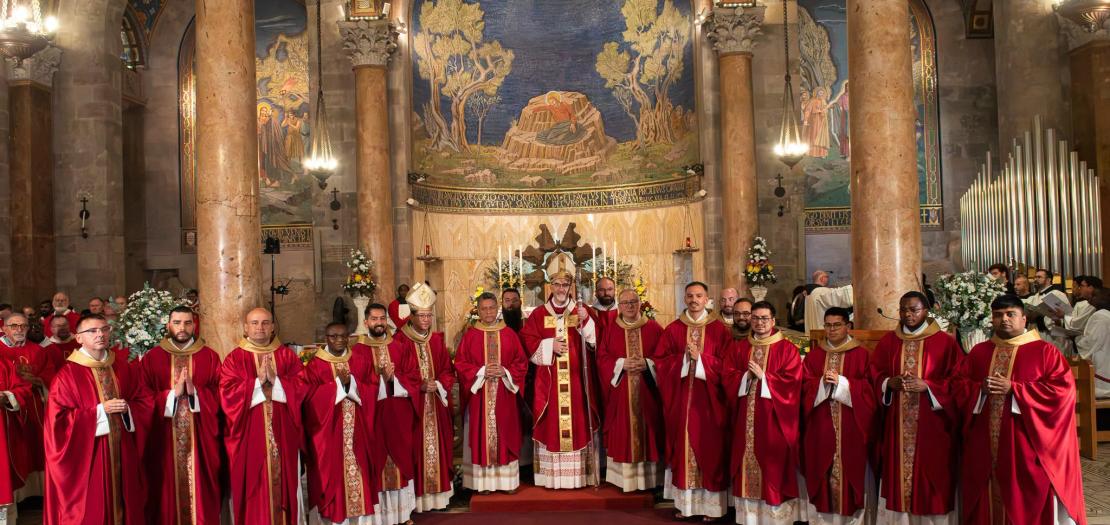
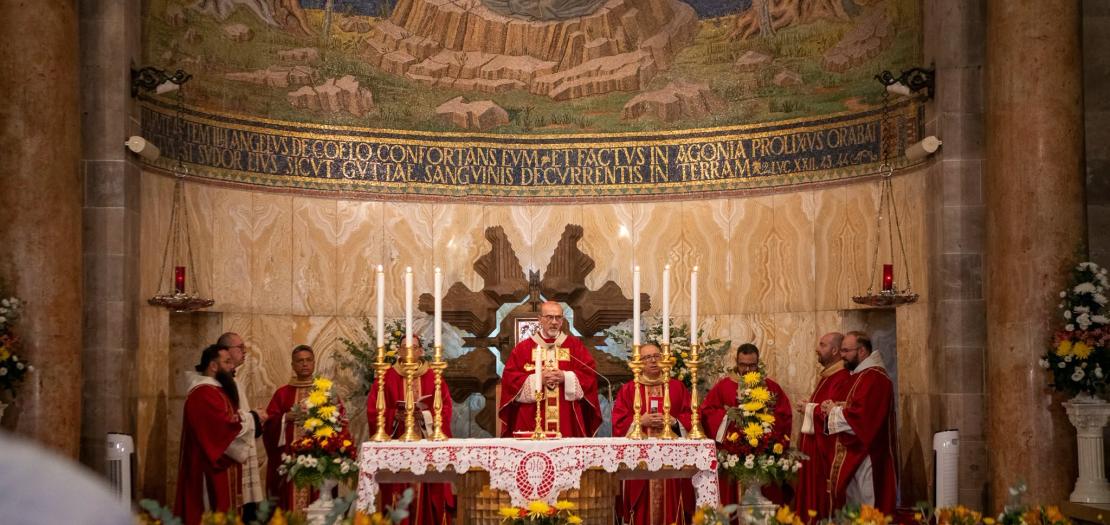
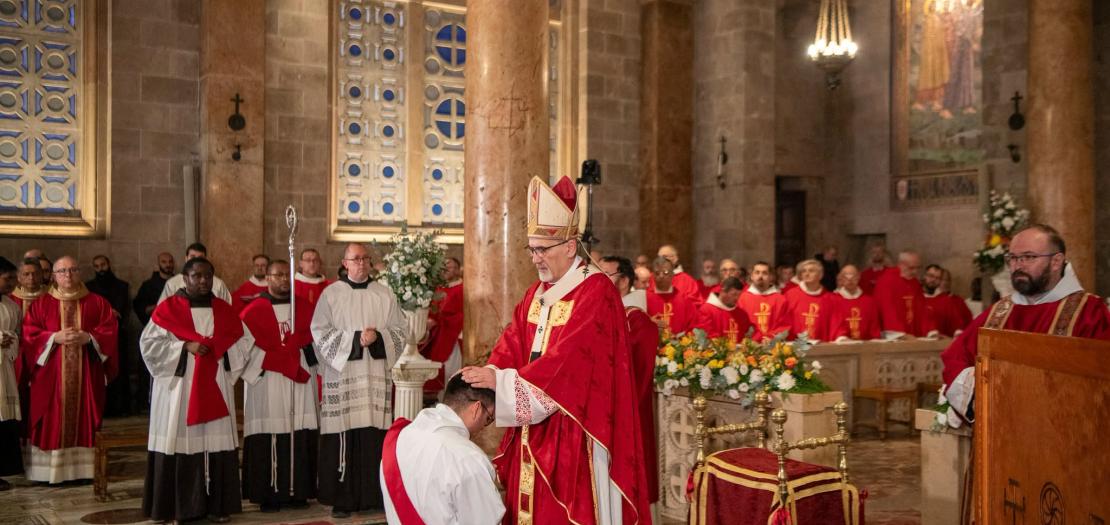
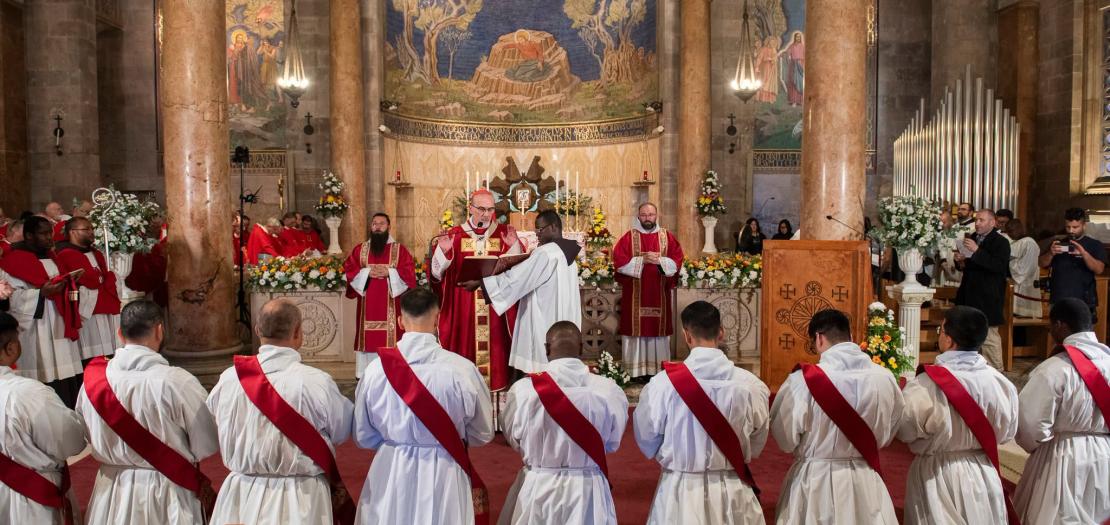
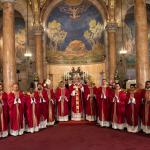
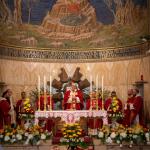
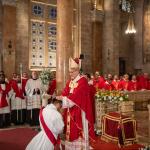
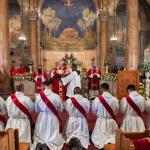
At the foothills of that Mount of Olives, in that Gethsemane where Jesus accepted his Passion and, at the climax of his agony, sweat blood. It is here that on Wednesday, July 1st, ten Franciscan friars were ordained priests through the laying on of hands and the consecratory prayer of the Latin Patriarch of Jerusalem, Cardinal Pierbattista Pizzaballa. A mass deeply felt by the entire community of the Custody, because in a Holy Land wounded by conflicts, ten new priests appear as seeds of hope: those who will carry their message of love, of peace, and of mercy not only to the places of the Gospel but also to the rest of the world.
The liturgy began with the entrance procession which made its entry into the basilica from the garden of Gethsemane. Amid the chants of the choir and the faithful gathered in a mixture of prayer and emotion, the candidates for the priesthood walked together with the patriarch, the Custos of the Holy Land, Fr. Francesco Ielpo, and the other concelebrants. A journey in fraternal communion, there where the bare rock, then sprinkled with petals and incense, recalls the place where Christ accepted his Passion.
In his homily, Pizzaballa wanted to focus precisely on the coincidence between the priestly ordination, Gethsemane, and the choice of the date of July 1st: the one on which tradition celebrates the feast of the Most Precious Blood of Jesus. As the patriarch recalled, this "is not a coincidence". "Providence, in its wisdom, chose this day and this place for you to remind us that the priesthood is born from the Blood of Christ", the cardinal stated, and "every priest is called to be a witness to that Blood which speaks more eloquently than that of Abel". A choice of words upon which Pizzaballa wanted to further dwell to recall a fundamental difference in the history of Redemption. "The blood of Abel cried out for justice; the Blood of Christ cries out for forgiveness", he stated, emphasizing how God chose to sacrifice his own Son for the good of humanity. And it is from this sacrifice that the priesthood took shape to "bring to the people that Blood which gives life".
An intense, complex mission, and one not without anguish. Gethsemane reminds us of this, the place where Jesus struggled with himself, sweat, felt pain until accepting the will of the Father, abandoning himself completely to Him. But the Holy Land itself also reminds us of this, the place of Redemption but also of continuous suffering. "To you, ordained today in Jerusalem, in this land bathed in blood, both innocent blood and the Blood of Christ, a special vocation is entrusted", said Pizzaballa, "you are called to be witnesses in a land that knows too much violence, too much division, too much spilled blood. You are called to bring the Blood that reconciles, unites, and forgives".
After the homily, the liturgy was marked by the rites that for centuries have represented the moment of transition from the diaconate to the priesthood. First the promise of obedience, then the laying on of hands and the prayer of ordination. Following this, the friars had to perform the other deeply symbolic gestures of the liturgy: the clothing with the stole and chasuble and the anointing of the hands with the holy Chrism. Finally, the eucharistic concelebration: the first time for ten new priests who were able to participate in the sacrifice of the altar. After the ceremony, the community of the Custody dissolved into warm applause and the embrace of all the priests. A moment of happiness, of emotion, and of deep empathy. And at the foothills of the Mount of Olives, the ten newly consecrated men coming from the Democratic Republic of the Congo, Peru, Mexico, Slovakia, India, and Hungary began their new path: that of announcing the Gospel.