Issued by the Catholic Center for Studies and Media - Jordan. Editor-in-chief Fr. Rif'at Bader - موقع أبونا abouna.org

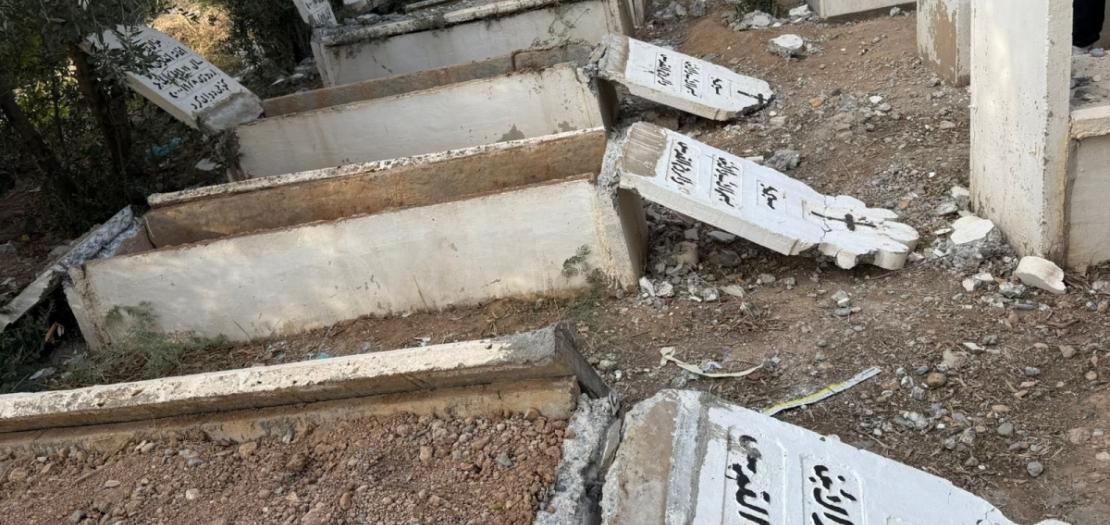
A "firm condemnation" for a sacrilegious act that targeted the local Christian community, while days later there is still no news of those responsible. This is what the Chaldean Patriarchate expressed in a statement sent to AsiaNews signed by the primate, Cardinal Louis Raphael Sako, regarding "the attack on the Christian cemetery" in the village of Koya, in Iraqi Kurdistan, which desecrated tombs, tore down headstones, and destroyed burial sites. "This criminal attack on the corpses," the statement reads, "is morally and religiously unacceptable." "We Christians," the cardinal continues, "have already paid a high price for conflicts in which we are not involved. We demand that the Kurdistan authorities conduct a thorough and professional investigation and bring those responsible to justice, so that they receive just punishment."
Patriarch Sako's call for justice joins the chorus of outrage and condemnation over the attack on a sacred site, in an area where local Christians and Muslims (mostly Kurds) live peacefully together. However, in recent weeks, the Iraqi Kurdistan region has also seen attacks and violence, from rockets fired at the Khor Mor gas field to protests forcibly quelled in the Erbil area, which also resulted in several casualties.
"We want to assure Christians," the statement from the Chaldean Patriarchate continues, "that they are protected and safe, otherwise a new wave of emigration will begin." Over 100 Christian families live in Harmota and approximately 60 in the center of Koya, for a total of over 700 people. Harmota represents approximately 9% of Koya's population; the district is home to two churches, the largest of which is Maryam Pakiza. "We trust the regional government," Cardinal Sako concludes, "to ensure justice and punish those responsible for this heinous crime."
The desecration of a Christian cemetery in the village of Harmota, in the Koya district of the eastern province of Erbil, sparked anger and indignation among local Christians, also condemned by the Kurdistan Regional Government (KRG). At present, there is no further information on the perpetrators of the attack or its origins; at least a dozen graves were vandalized by unknown persons. Prime Minister Masrour Barzani's office released a statement condemning a "destructive and inappropriate act" committed against "our Christian brothers and sisters." The statement added that "necessary investigations will be launched to identify and punish" those responsible for the attack.
Meanwhile, dismay and concern are spreading among the Christian population living in the area. "A large number of graves have been vandalized, some with hammers, others with various tools, and several graves have been left uncovered," Rudaw Hawzhin Silewa, a member of the Christian community and a professor at Koya University, explained to the news website. The extent of the damage, he continued, suggests that the desecration was carried out "by more than one person," but at the moment "we don't know who did it and why." In recent days, some community representatives have gathered at the cemetery to express their outrage.
The attack ultimately drew widespread condemnation from religious, political, and civil figures and groups. The Assyrian Democratic Movement said it represents "a new link in a chain of similar incidents that Christian cemeteries and holy sites have faced in recent years in several areas of the region, including Shaqlawa, Tel Keppe, Zakho, and Simele." The group adds that such acts reflect the spread of extremist ideas hostile to religious and ethnic diversity and undermine the very foundations of civil peace in the region.