Issued by the Catholic Center for Studies and Media - Jordan. Editor-in-chief Fr. Rif'at Bader - موقع أبونا abouna.org

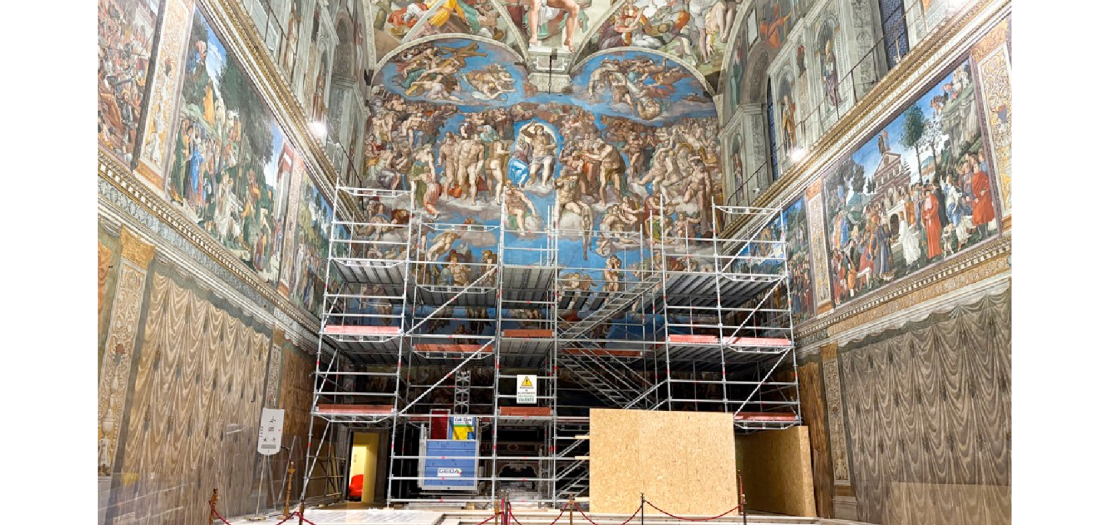

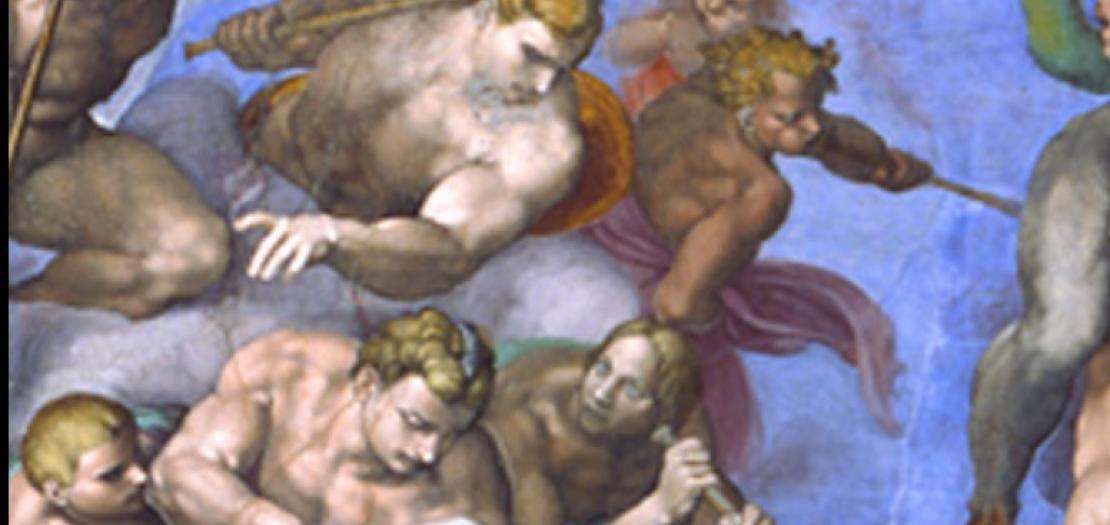
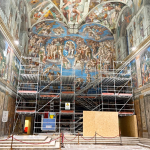

The extraordinary maintenance of the Last Judgment has begun with the erection of scaffolding in the Sistine Chapel: Michelangelo’s masterpiece will undergo a cleaning program for approximately three months.
The Sistine Chapel will remain open at all times, welcoming worshippers and visitors, while restorers from the Vatican Museums’ Painting and Wood Restoration Laboratory carry out cleaning operations behind a high-definition screen displaying the Last Judgment.
“Some thirty years after the last conservation intervention on the Last Judgment in the Sistine Chapel,” said Barbara Jatta, Director of the Vatican Museums, “completed in 1994 under the supervision of Director General Carlo Pietrangeli and carried out by Gianluigi Colalucci, Chief Restorer of the Vatican Museums’ Painting and Wood Restoration Laboratory, the extraordinary maintenance of Michelangelo’s last masterpiece will begin, lasting approximately three months.”
“Commissioned to Buonarroti in 1533,” explains Fabrizio Biferali, Curator of the Department of 15th and 16th Century Art, “by Pope Clement VII for the altar of the Sistine Chapel, the Last Judgment was only started under the new Pontiff, Paul III, who named the Tuscan artist ‘supremum architectum, scultorem et pictorem’ of the Apostolic Palace, freeing him from contractual obligations for the tomb of Julius II so that he could dedicate himself exclusively to the Sistine project.”
Michelangelo began painting the scene in the summer of 1536, completing the immense work (approximately 180 square meters and 391 figures) in the autumn of 1541. On October 31 of that year, Pope Paul III was able to celebrate Solemn Vespers before this extraordinary painting which, as Giorgio Vasari wrote, «filled all of Rome with wonder and admiration.» Following Colalucci’s intervention, which marked a turning point in the understanding of Michelangelo’s palette, in subsequent years the paintings of the Sistine Chapel were subject to constant research and monitoring by the Vatican Museums, necessary to assess their state of conservation given the large daily influx of visitors.
Consequently, the Restoration Laboratory initiated a preventative maintenance program for the entire decorative complex, designed to safeguard the frescoed surfaces through the systematic removal of deposits accumulated over time. Over the years, the operations, carried out exclusively at night with the aid of mobile platforms, have progressively focused on the walls with Michelangelo’s lunettes, the series of Popes, and the large 15th-century scenes.