Issued by the Catholic Center for Studies and Media - Jordan. Editor-in-chief Fr. Rif'at Bader - موقع أبونا abouna.org

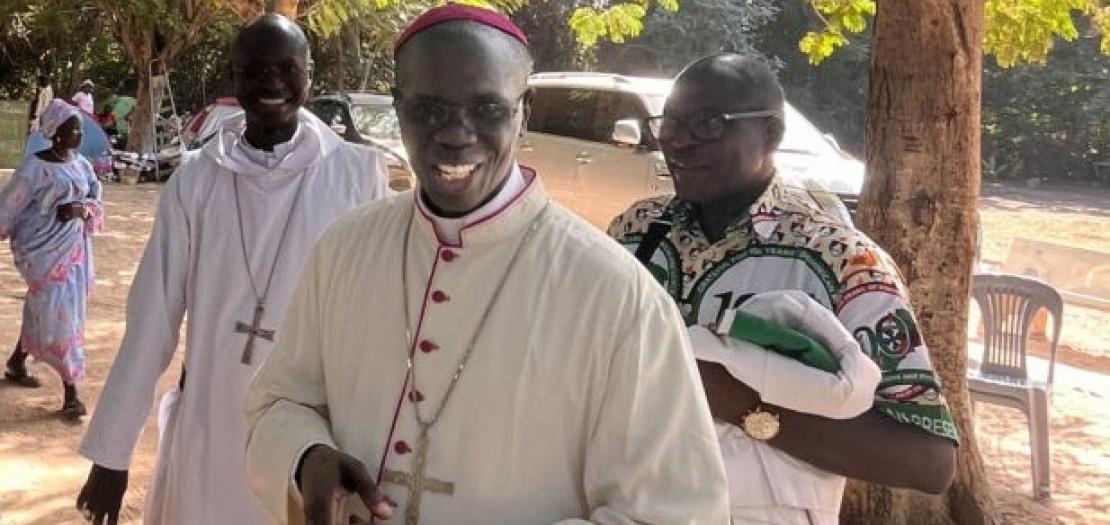
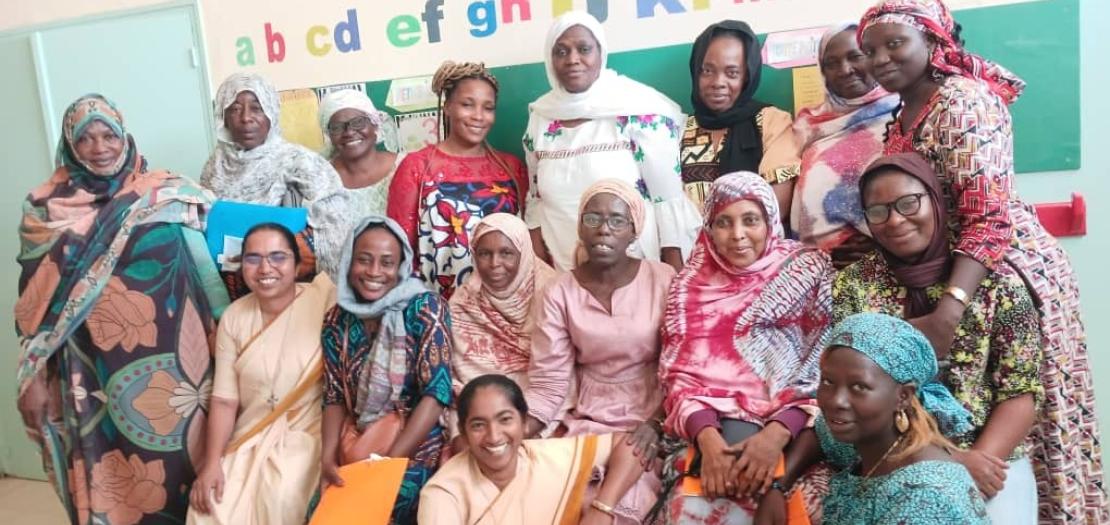
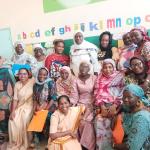
The only diocese in Mauritania has just celebrated its 60th anniversary. Bishop Victor Ndione, who has led the Diocese of Nouakchott for two years, speaks to Catholic charity Aid to the Church in Need (ACN) about the challenges of being a pastor in a transit country affected by irregular migration.
What is it that makes your diocese unique?
The Church in Mauritania, which has just one diocese established in December 1965, comprises around 6,000 members, exclusively foreigners, mostly from neighboring countries such as Senegal, Gambia, Mali, and Guinea-Bissau. The diocese has two bishops (one of them emeritus), 13 priests – only two of whom are incardinated, all the others being religious or fidei donum – and about 30 religious sisters, all foreigners. The Church enjoys the goodwill of the authorities and of the population, thanks to its social and charitable activities. The Holy See has had diplomatic relations with Mauritania since 2016, but the Church is not recognized as a legal entity. The process of formal recognition has begun and based on what we are hearing from the authorities we hope that it will soon be complete.
Islam is the state religion in Mauritania. Are Christians well received?
In Mauritania, there is no overt persecution from Islam, which is traditionally moderate and marked by Sufism. However, we are noticing the growth of Salafist Islam, which is infiltrating the country, and which does not look kindly on the Catholic Church or on moderate Muslims.
The question of migration and related issues are at the heart of activity in your diocese. What can you tell us about it?
Mauritania is a stop-off on the route for those who dream of being elsewhere. In the context of irregular migration, lives are regularly lost at sea, and no one is happy about that. There are sometimes issues in our little community, especially in Nouadhibou, in the west. People have to be fairly desperate to ignore the dangers of being shipwrecked. In the parish of Nouadhibou, we had a young man who was responsible for burying the dead people who washed ashore. One would think that he would be the first to recognize the risks of this form of emigration, but he was himself drowned while attempting this impossible adventure. That caused us a lot of sadness.
What is the role of the Church in this context of Islam and migration?
The Church tries to demonstrate charity to everyone, based on faith in Jesus Christ — Mauritanians or non-Mauritanians, without distinction of religion or social standing. This consists firstly of responding to basic needs: food, health, education and accommodation. However, Islam being the state religion, our Church does not proselytize.
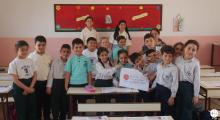
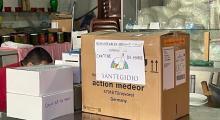
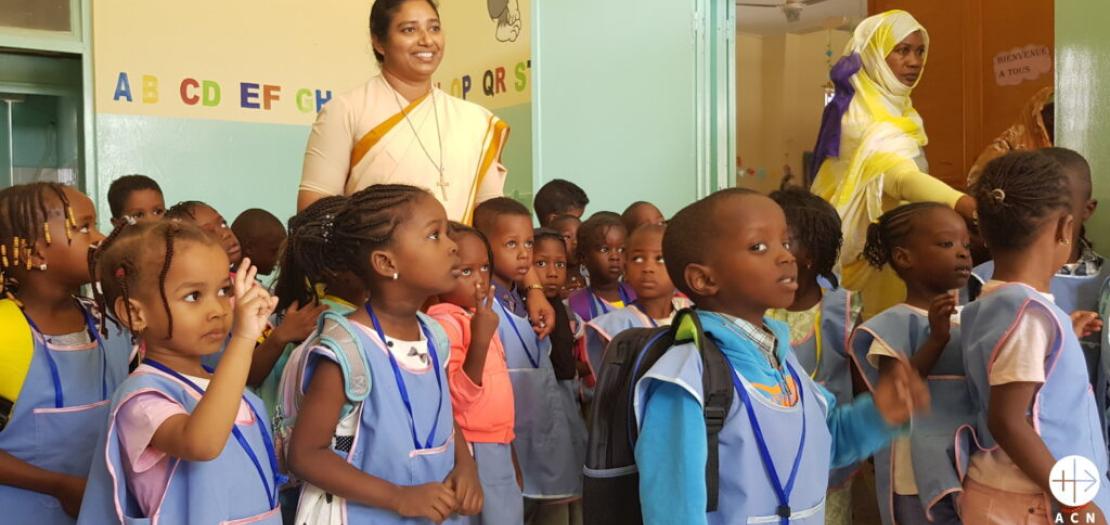
Life in our diocese is marked by the phenomenon of migration, because Mauritania is a transit country. Many migrants try to leave Africa because they lack opportunities, both in their home countries and during their passage through Mauritania, often due to limited education. That’s why we work a lot on the professional formation of the migrants in Nouakchott, through a professional training center that welcomes not just migrants, but mostly Mauritanians. In Nouadhibou, our activity focuses on the areas of baking, carpentry, electricity, and literacy.
In this respect, it’s the governments of the departure countries that I want to call on. If certain sectors were developed locally in sub-Saharan countries, that would limit the drama of irregular migration.
How do you handle the pastoral challenge of a community in a state of constant movement?
The challenge of mobility is the major factor in my ministry. I compare myself to Sisyphus, who constantly begins again heaving the rock up the mountain: training community leaders, catechists, teachers, and people to work with children, knowing perfectly well that they might not be there in six months.
The challenge of mobility also concerns the pastoral agents. All the priests are foreigners: most are missionaries and from one day to the next they could be recalled by their congregation. That’s also true for the religious sisters. Although there were already very few of us, a female religious community has just closed in our diocese. It’s a real concern, definitely a difficulty. I regularly turn to the Lord of the harvest and ask Him to send workers, and I ask people to pray for that.
What support do you get from Aid to the Church in Need?
Not being a legally recognized entity, we are unable to carry out income-generating activities to raise the funds necessary for our ministries which need financial support. Even if Christians contribute and put money in the collection, they are poor and their number is decreasing. Mauritania has recently adopted measures to combat immigration and many have had to leave the country, which has reduced the contributions. The Mass intentions provided by ACN are an important source of income to us. The solidarity of the universal Church and the support of organizations like ACN are a soothing balm and a breath of fresh air, whether in accompanying migrants and Mauritanians – with education, food, health, and so on – or in the life of the Church. ACN has helped us rebuild a pastoral center in Nouakchott capable of welcoming 200 people; young people and couples can come and gather, receive catechesis, prepare for marriage, and go on spiritual retreats. That is something fundamentally important.