Issued by the Catholic Center for Studies and Media - Jordan. Editor-in-chief Fr. Rif'at Bader - موقع أبونا abouna.org

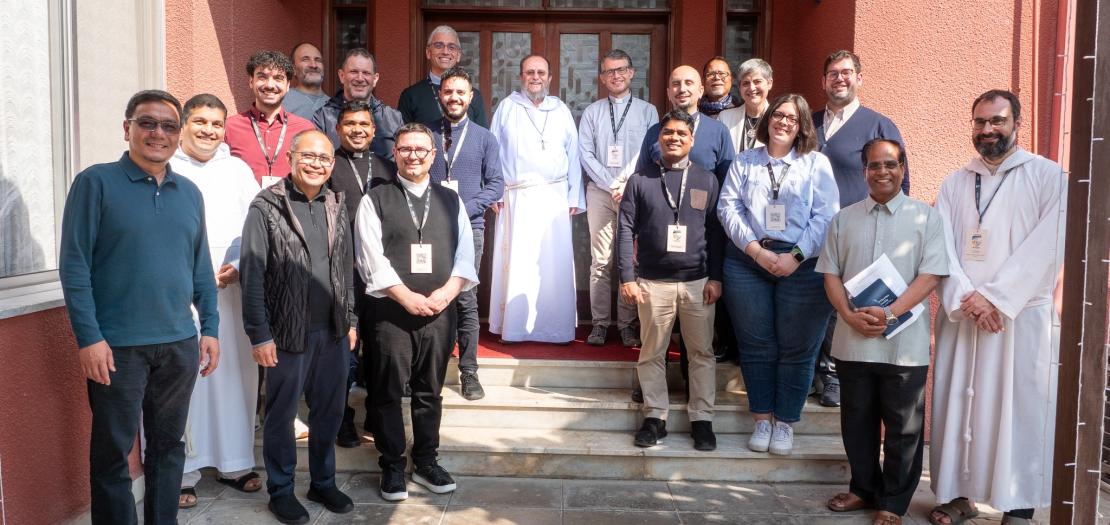
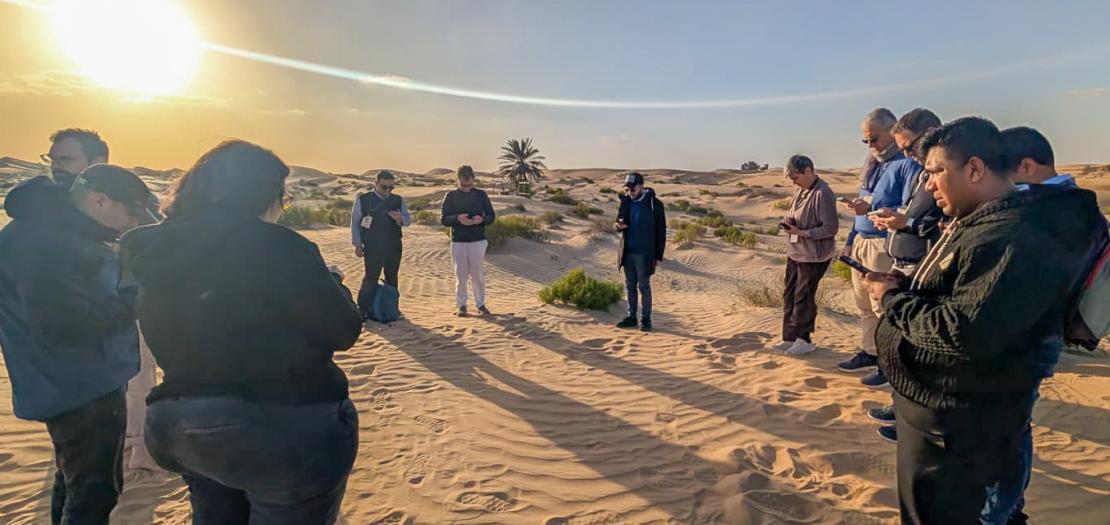
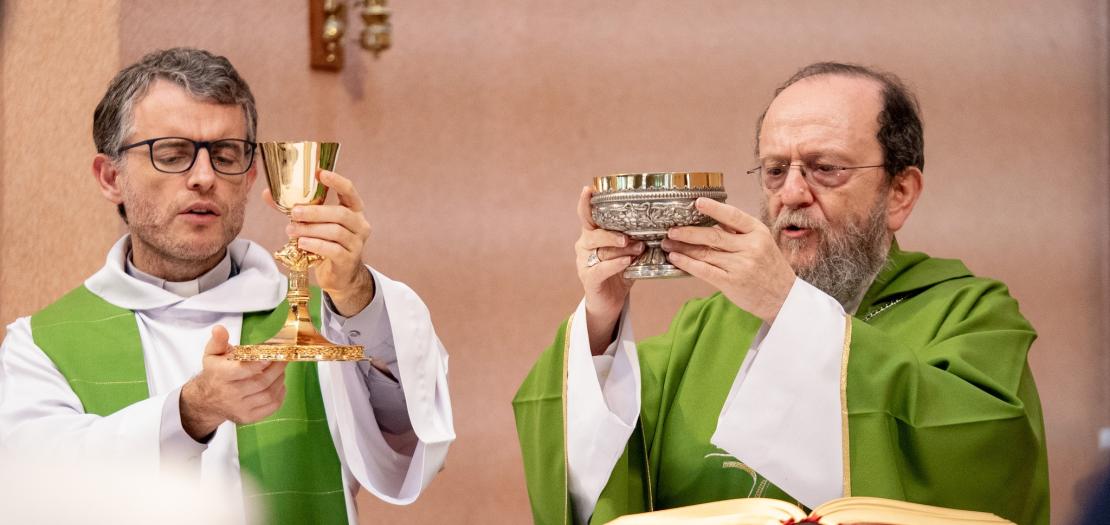
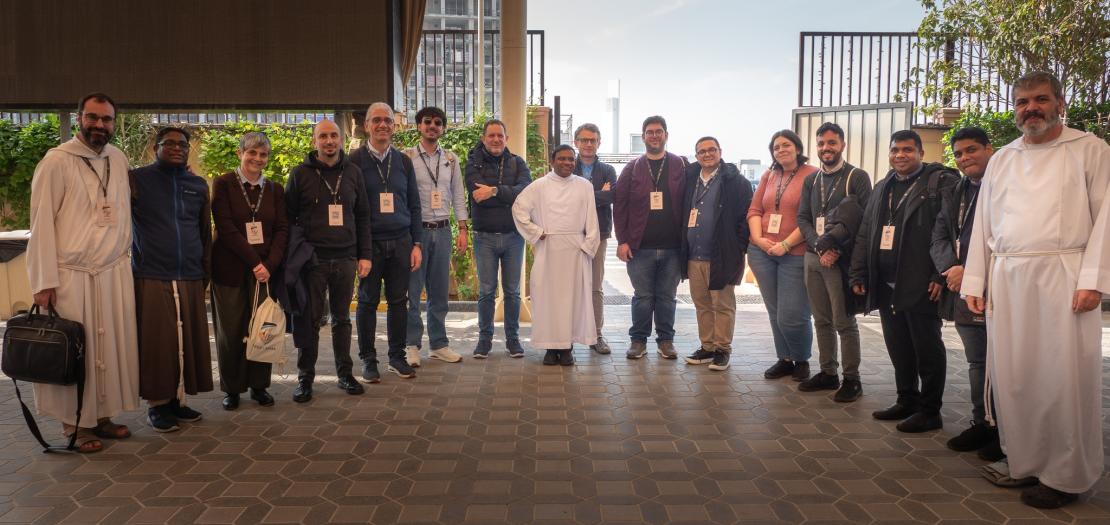
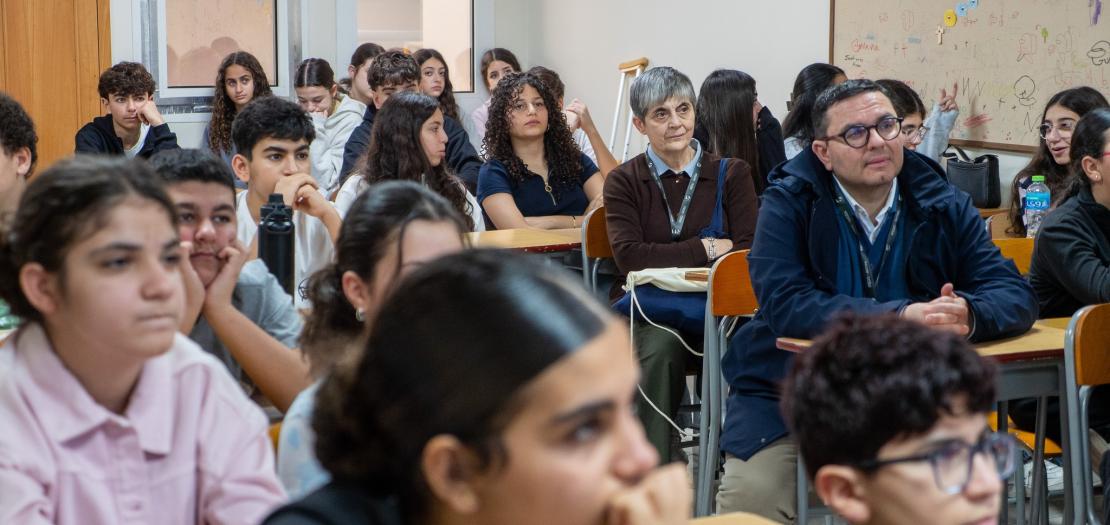
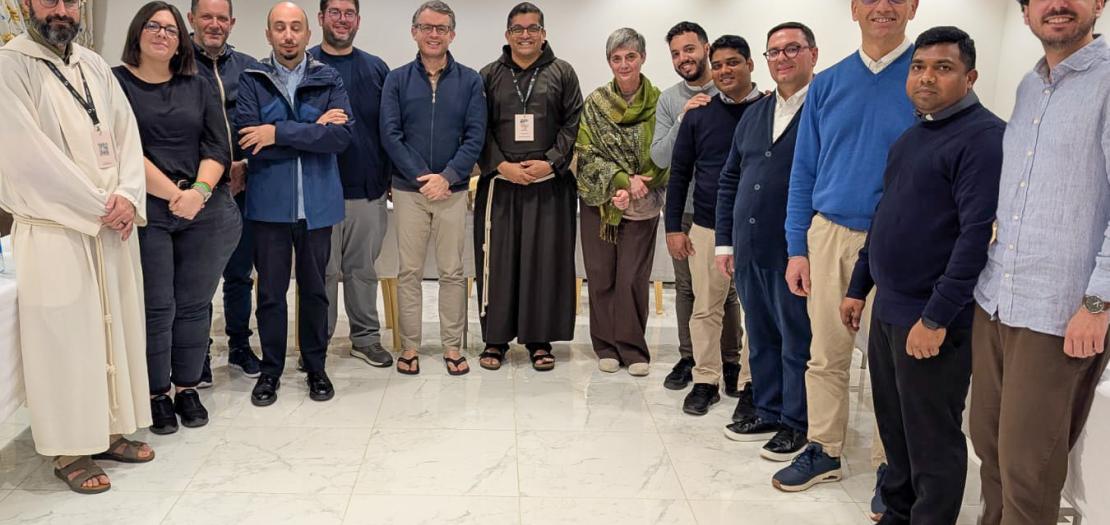
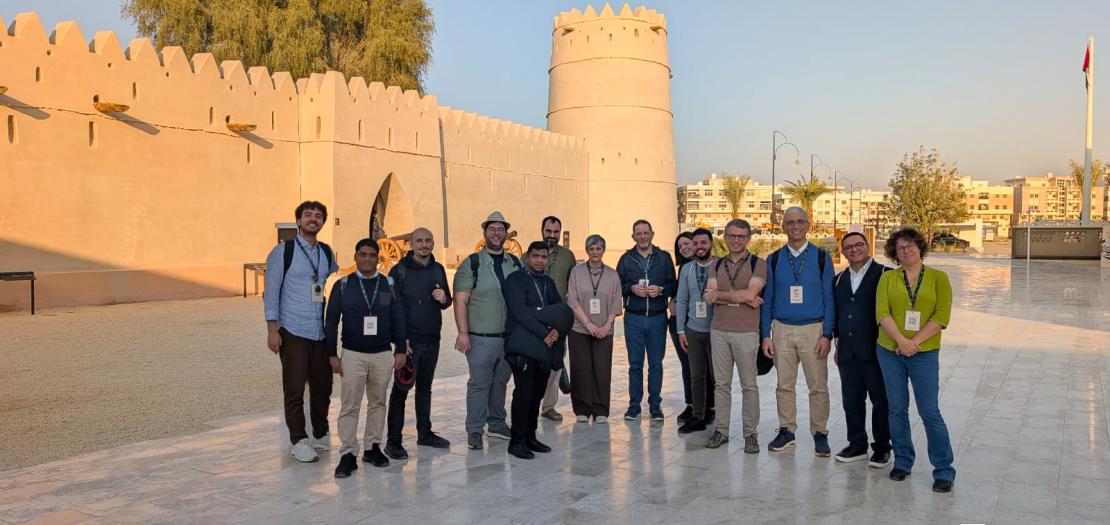
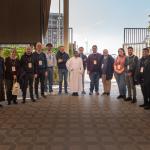
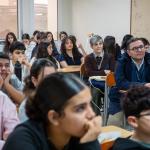
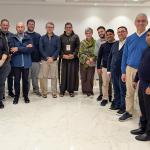
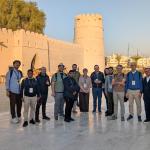
A group of 12 students and professors from the Pontifical University Antonianum has visited the Apostolic Vicariate of Southern Arabia in order to “experience first-hand” what is often only studied in theory.
The initiative was organized by the Vicariate’s Interfaith & Ecumenical Dialogue Office (IFEDO). This residential week represents an intermediate stage of the on interreligious dialogue promoted by the Franciscan Institute of Spirituality of the Pontifical University Antonianum, in partnership with IFEDO.
“This experience,” explains Fr. Stefano Luca, Director of IFEDO, “was designed to allow students to engage directly with the context of our Vicariate. After the first months of theoretical formation, the aim was to offer them the opportunity to experience first-hand a Church characterized by daily dialogue: with other religions, with different Christian denominations, and among diverse cultures within the same Catholic Church.”
The participants included eight students—selected from among the more than 40 Antonianum students enrolled in the course—and four professors, among them the Dean of the Faculty of Theology, Fr. Carlos Esteban Salto Solà, and the President of the Franciscan Institute of Spirituality, Fr. Luca Bianchi. During the week-long visit, they had the opportunity to learn about the pastoral reality of AVOSA, its ecumenical and interfaith initiatives, meeting parish priests, office directors, faithful, and the Bishop.
For Fr. Carlos, the experience had strong formative value: “The Church in the Gulf is often perceived as a distant reality. Coming here was important in order to see, breathe, touch, and be touched by this reality, to understand both its challenges and its beauty, and to recognize that it is an ecclesial reality that concerns the whole Church.”
The dean was particularly struck by the testimony of faith of many people encountered in the parishes, despite uncertainty about work and their future in the country. “It is a living faith,” he observed, “accompanied by deep questions about personal and communal identity, and about faith as identity.”
Dialogue and multiculturality
Among the most significant aspects of the experience, both the Dean of the Faculty of Theology and the President of the Franciscan Institute of Spirituality highlighted the ecumenical dialogue and the multicultural dimension of this Church.
“We study ecumenism at a theoretical level, but here it is clear that ecumenism is part of the Church’s ordinary life; it is a constitutive dimension of being Christian and Catholic, one of which we must regain awareness also in the West,” noted Fr. Carlos.
According to Fr. Luca Bianchi, the experience showed that “unity among Christians is possible,” even while deep differences remain: “Those who work in ecumenism often risk thinking of unity as something that will happen only at the end of History. The day dedicated to ecumenical dialogue, during which we visited different Christian communities, met pastors and faithful, and visited their churches, made a strong impression on me. Returning to speak about, think about, and work for a possible unity encouraged me greatly.” Being different, he summarizes, does not necessarily mean being separated. “The ‘unity in diversity’ applies at different levels also to ecumenical dialogue. The atmosphere experienced that day was very encouraging from this point of view.”
From Antonianum’s perspective, the initiative also fits into a broader effort focused on multiculturality and interculturality. “Our students increasingly come from diverse cultural backgrounds,” Fr. Luca observed, “and this challenges us to rethink our way of teaching, valuing diversity as a resource.”
A continuing journey
For AVOSA, the collaboration with Antonianum is already bearing concrete fruit. As Fr. Stefano recalls, more than 60 participants from the Vicariate are enrolled in the course, most of them catechists: “The formation of adults and of key figures for the transmission of the faith is a priority for us. This project represents a real exchange: we receive skills and tools, while at the same time sharing our pastoral and theological experience as a migrant Church, in constant dialogue with its context.”
A shared journey that both institutions intend to continue, in different forms and modalities, convinced that interreligious and ecumenical dialogue represent an increasingly central dimension of the life and mission of the Church.
“Ecumenism and interreligious dialogue will be essential for the future of the Catholic Church,” according to Fr. Carlos Esteban Salto Solà. “I believe it is important for us, as an academic institution, to promote these experiences. They certainly benefit the Vicariate, but they benefit us greatly as well, since we come from culturally and historically diverse countries.”
The formation program will continue in the coming months with further sessions, which will place greater emphasis on the Franciscan dimension of dialogue. This choice is also linked to the special “Franciscan Year” proclaimed by Pope Leo to mark 800 years since the death of Saint Francis of Assisi. “The Antonianum is a Franciscan faculty,” added Fr. Stefano, “and this aspect harmonizes well with our Vicariate, where most priests are Capuchin friars. It is a charism that helps shape the pastoral style of the Vicariate and that we also wish to share with our faithful.”