Issued by the Catholic Center for Studies and Media - Jordan. Editor-in-chief Fr. Rif'at Bader - موقع أبونا abouna.org

In the most prominent front-page article in its January 10 edition, L’Osservatore Romano highlighted the plight of Catholics in Yemen amid the nation’s civil war.
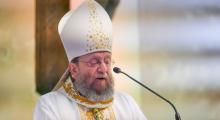
Bishop Paolo Martinelli, OFM Cap, the Apostolic Vicar of Southern Arabia, told the Vatican newspaper that “I am in constant contact with the Christian community in Yemen, and in particular with the priest currently in the country.”
“The Christian community is numerically very small,” he said. “We don’t know precisely how many Catholics there are, because after ten years of civil war most have left the country, especially the migrants who lost their jobs.”
“Unlike other Gulf countries, in Yemen there are also native Christians, Yemeni Catholics, alongside the faithful from different parts of the world,” Bishop Martinelli continued.
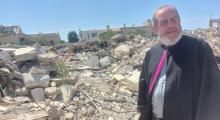
He added: I would like to recall in particular that in 2016, at the beginning of the internal conflict, four nuns of the Missionaries of Charity of Mother Teresa of Calcutta were killed by an extremist group. Furthermore, all four of our churches were severely damaged and are now unusable.
In northern Yemen, two communities of the Missionaries of Charity remain, who, despite the 2016 attack, continue to operate in the country. In their two houses they welcome the poorest of the poor with over a hundred people in each house, especially the sick and elderly. They truly perform miracles of charity with the few resources available.
With them is a priest, the only one present in Yemen, belonging to the male branch of the Missionaries of Charity. I have very frequent contact with him, sometimes daily. He keeps me updated on the life of the Christians, the situation of the nuns, and the conditions of the sick they assist. When possible, we also maintain contact with the nuns through video conferences, despite the difficulties of connection.
A small group of faithful meets regularly to pray and participate in Mass, celebrated in the chapels of the two communities. It is a small group, but very united: they truly care for each other. The presence of the nuns and the priest is an immense gift for the few Christians who remain.
In the south, unfortunately, we do not have an official presence: the churches are destroyed, although charitable organizations are operating. For this reason, we identified the chapel of the Missionaries of Charity in Sana’a—the capital city for the north—as a place of pilgrimage for the Holy Year. When I communicated this decision to the sisters and the faithful, they were very happy. I explained that this chapel would be the place to confess and receive the plenary indulgence. It was an important sign not only for Yemen, but for the entire vicariate: the news made everyone feel closer to this community that has suffered so much.
The Apostolic Vicariate of Southern Arabia, which Bishop Martinelli leads, comprises the United Arab Emirates, Oman, and Yemen. Islam is the state religion of Yemen, a nation of 34.5 million; over 99 per cent of Yemenis are Muslim.