Issued by the Catholic Center for Studies and Media - Jordan. Editor-in-chief Fr. Rif'at Bader - موقع أبونا abouna.org

Between Christ and Genghis Khan: A comparison out of place and time
A shocking and unjustified comparison has surfaced between Lord Jesus Christ and Genghis Khan on the heels of remarks by an occupation prime minister suggesting that military strength and conquest make great leaders superior to those who carry moral messages. At its core, this comparison does not reveal an overview of history as much as it reflects a crisis in comprehending what strength truly means.
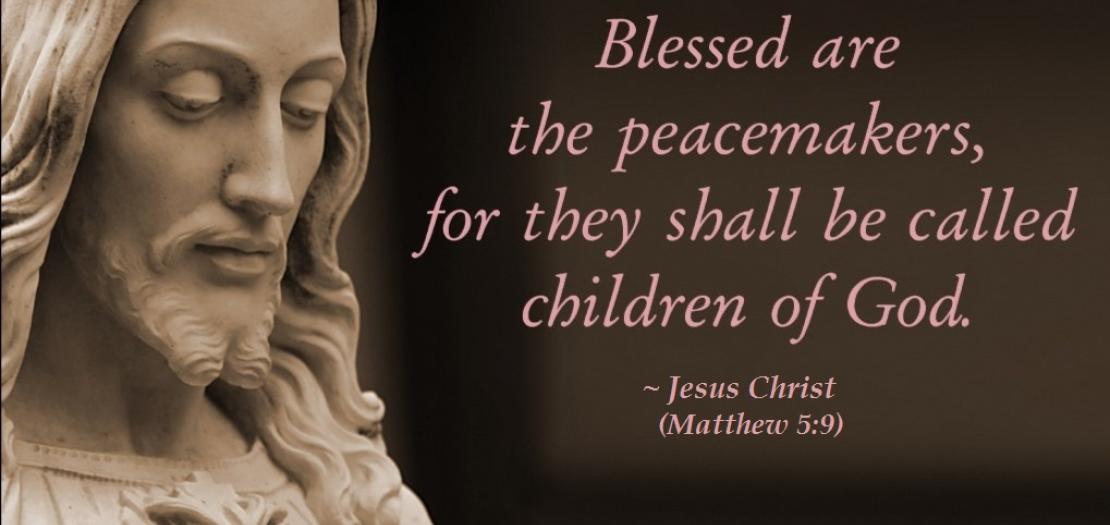
Lord Jesus Christ, according to both the Gospels and historical accounts, was neither a war leader nor did he seek to establish an earthly kingdom based on sword. He rather stated clearly when he stood before Roman leader Pilate saying, “My kingdom is not of this world” affirming that his authority was not based on domination or subduing people, but rather on transforming the human heart. When Peter drew his sword to defend him, Lord Jesus responded firmly: “Return thy sword to its place, for all those having taken sword, by sword shall perish.” This is a philosophy opposed in toto to the concept of violence and grounded in a profound vision based on peace: “Blessed are the peacemakers, for they shall be called children of God.”
On the other hand, Genghis Khan represents a completely different model in history, namely a military leader who built his empire through expansion, hegemony, and bloodshed. His historical impact cannot be denied, but it is an impact deeply associated with destruction as it is with strength. Here lies the paradox: Is human greatness measured by the ability to dominate others or by the ability to elevate humanity? It is relevant to revert to historical recounts that when Genghis Khan was born, his father saw him clutching a clot of blood, which was taken as a sign that he would become a fierce warrior. How does such a birth be compared to the birth of “the Prince of Peace,” in a small and quiet manger in Bethlehem, with angels proclaiming, “Glory to God in the highest, and on earth peace?”
The comparison between Lord Jesus Christ and Genghis Khan do not match, at it is almost absurd and malicious because it places two entirely different standards on the same scale, namely the fleeting power of material force versus the enduring strength of moral authority. The first may subdue nations for a time, but fails to build humans, while the second may appear weak on the surface, yet it transforms the course of history from within.
Perhaps the most striking paradox is that history itself, is often referred to a “heartless” because it merely records and unveils with the passing time which values endure. In the same 13th century that witnessed the rise of Genghis Khan, there lived Saint Francis of Assisi, a man of peace who gave up everything to serve humanity. This saint who founded the Franciscan order--which continues to this day, while his memory is still honored eight centuries later (he died in 1226)—has millions of people visit his tomb in Assisi by honoring his message of love he extended. Meanwhile, the grave of Genghis Khan (who died in 1227) remains unknown. Francis risked his life traveling to Egypt to meet the Fatimid ruler at the time, and engaged in a pleasant dialogue that continues to inspire interfaith conversations up to this day.
Thus, the whole issue is not about denying historical events or ignoring its facts, but rather about how we interpret it. Glorifying violence under the pretext of “strength” is nothing but a modern justification for old policies and an attempt to give moral legitimacy to practices that cannot be justified on human grounds. As people say in everyday life in Jordan, “In the end, one really takes nothing but a good reputation!”
Lord Jesus Christ did not triumph by the sword, but he triumphed in the conscience of humanity. He did not establish an earthly empire, yet he set in a living moral force that continues to move millions toward goodness. That is the kind of power that does not fade. When the speaker says: "Jesus Christ has no advantage over Genghis Khan," this is, in fact, a true testimony about Christ who cannot be compared in terms of brutality, military dominance, or the harmful use of artificial intelligence nowadays, which destroys human dignity and ruins people in their homes. The speaker intended to show that he follows the model of Genghis Khan which is marked by violence, arrogance, and recklessness, rather than the model of Lord Jesus Christ which is characterized by gentleness, humility, and a culture of peace.
At a time when the voices of war grow loud, the exigent need is to restore the true meaning of strength, namely the strength of mercy, the strength of justice, and the strength of peace. They--rather than strength of sword--are the ones that earn a lasting place of light in history. They are as well not compared by history to the followers of brutality, intimidations and forced displacement.