Issued by the Catholic Center for Studies and Media - Jordan. Editor-in-chief Fr. Rif'at Bader - موقع أبونا abouna.org

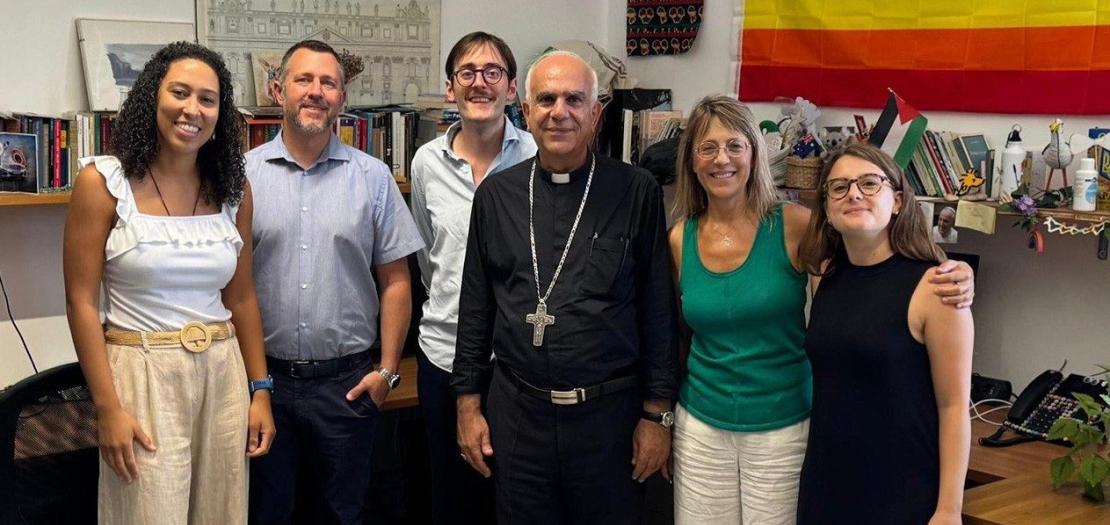
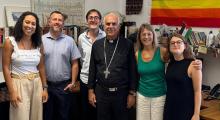
Bishop Jamal Daibes, Bishop of Djibouti and Apostolic Administrator of Somalia, says the international community must exert diplomatic pressure to stop attacks and violence against Palestinians in the Holy Land.
Speaking to Vatican News in Rome after meeting Pope Leo XIV with the Latin Bishops of the Arab Regions, he warned that fear and violence are pushing Palestinians to consider leaving a land where Christians have lived since the earliest days of the Church.
“It’s about human dignity. It’s about human life. It’s about living in freedom.”
For Bishop Daibes, the conflict in the Holy Land cannot be reduced to competing political claims. At its heart, he says, is whether people can remain in their homeland and live there with dignity, security and freedom.
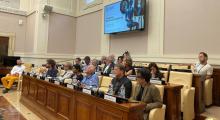
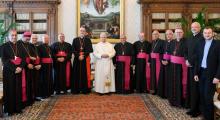
The Bishop of Djibouti and Apostolic Administrator of Somalia was speaking following an audience with Pope Leo XIV and members of the Conference of Latin Bishops of the Arab Regions (CELRA), whose annual meeting brings together bishops serving communities across the Holy Land, the Middle East, the Gulf and the Horn of Africa.
The bishops come from different realities but share the experience of living in predominantly Muslim societies, accompanying people affected by war and responding to migration and displacement.
For Daibes, who was born in the West Bank town of Jenin and comes from the Latin Patriarchate of Jerusalem, the situation in the Holy Land remains particularly urgent.
“We need to stay”
Palestinian Christians, he said, are suffering alongside the wider Palestinian population, but recent attacks on Christian villages and towns have added a new dimension.
“I think Christians, like all the other Palestinians, are suffering under occupation,” he said. But he added, “These last weeks, there is something new: this attack on Christian villages and towns, by settlers, supported by the political leaders, etc.”
Daibes said the purpose of such attacks is to create fear and ultimately persuade people to leave. He described how, alongside visible attacks and destruction of homes, olive groves and farmland, taxes on water and all imported goods as well as rules that impede workers from travelling to other cities and villages, are suffocating livelihoods and annihilating hopes for the future of the people.
“The goal is the intimidation of that population to make people leave the country,” he said.
The consequences, he warned, are already being felt within the Christian community and beyond.
“We are a small, you know, in numbers,” he said. “We need to stay there. But we need to live in dignity freely in this country and not under attack.”
His concern is not only for the immediate security of Christian communities but also for their future presence in the land where Christianity began.
“The situation is getting worse and worse every day,” he said. “There are a lot of new settlements, many of them around Christian villages and towns, and this is dangerous for the future.”
He also pointed to signs placed by settlers on roads saying, “There is no future in Palestine.”
“So that’s dangerous,” he said. “They want people to despair, to leave the country.” But leaving, he insisted, is not the answer for Palestinian Christians.
“That’s our country; we’ve been there for long centuries. Since Pentecost. Until now. And we want to continue as Christians to live in the Holy Land. To be the living stones of the Holy Land.”
The Bible as “good news”
Daibes also expressed concern about the use of the Bible to justify violence.
He said Palestinian Christians seek to present Scripture as a message of salvation rather than as a religious justification for violence against others.
“So, what we are trying to do as Palestinian Christians is to preach the Bible as the Word of God, as good news, and not as a justification to commit atrocities and violence against others,” he said.
He described what he called “religious Zionism” as dangerous when religious ideas are used to justify violence.
Another part of the problem, he argued, is the absence of sufficient international pressure.
“Another aspect of it is that they continue without any pressure from the world for what they are doing,” he said. “So they feel free to do whatever they want.” The result, he said, is “the logic of using force and violence.”
It’s time to step up the pressure
Bishop Daibes’ appeal is therefore directed both at the Churches and at the international community: “We need the solidarity of churches, the solidarity of the international community, and to make pressure so that this stops.”
“The consequences of those attacks is this fear on the part of Palestinians, and many began to think about immigration, about leaving the Holy Land, which is dangerous,” he reiterated.
And while the Church, he said, continues to support Christian communities, including those in Gaza, he noted that pastoral closeness, however, cannot replace political action.
“I think it’s about time to put some pressure. Also, diplomatic.”
For Daibes, this is not a matter of political alignment but of defending the dignity and freedom of people living in the Holy Land.
“It’s about human dignity. It’s about human life. It’s about living in freedom.” Christians, he said, carry with them “this treasure that is the Word of God.”
A Church that remains
The question of numbers is particularly significant for the small Christian communities of the Arab world and for Daibes, the experience of the early Church offers a reminder that a community’s size does not determine the importance of its mission.
“I come from the Holy Land, and we have an experience there because we began with 12 people who believed in Christ, and then they spread the good news all over the world,” he said.
“So, it’s not about the numbers. It’s about being faithful to the Gospel of the Lord.”
During his audience with Pope Leo XIV, Daibes said he loved it when the Pope encouraged those present not to be afraid of their “littleness” and also recalled the witness of Christians who have died because of their faith, including Sister Leonella Sgorbati in Somalia and the Missionaries of Charity killed in Yemen.
“That’s our mission as a Christian community, as Churches there, this witness and keeping hope alive,” he said, “especially in difficult circumstances.”
As he meets with Latin-rite Bishops from Arab regions, Pope Leo XIV urges the Church to confront conflict and division with solidarity for the poor and bear witness that it is...
The universal Church is close
For Bishop Daibes, one of the most important aspects of the meeting with Pope Leo was hearing directly from him that Christians living in the region are not alone.
“He encouraged us to go back and to carry with us the Gospel and hope for our people,” he said.
The bishops will “convey to our faithful that there is the universal Church in the person of the Pope himself, that he knows about what’s going on, and he’s close to the Christians there.”
“We know that already,” he added, “but now meeting with him and hearing it directly from him, that was very, very important for us.”
“I’m looking for the whole text of his speech,” he said. “I want to communicate it to our faithful.”
From the Holy Land to Somalia
Daibes’ work and responsibilities extend beyond the Holy Land to the Horn of Africa, where he encounters communities affected by conflict, displacement, migration and humanitarian hardship.
In Somalia, he said, large numbers of people have been internally displaced by war, tensions and drought. During his meeting with Pope Leo, he had the opportunity to speak about the displaced people served by the Church through Caritas Somalia.
He expressed concern that the humanitarian crisis is receiving diminishing international attention and assistance and asked whether people in Somalia feel forgotten by the international community, Daibes answered: “I would say yes.”
“No one talks about Somalia in the news; there is no interest in helping them.”
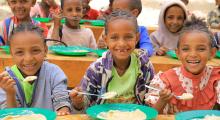
In Djibouti, meanwhile, Caritas works with migrants arriving principally from Ethiopia, including children living on the streets. Some are escaping conflict and drought, while others are seeking work in the Gulf states.
The Church provides food, medicine, education and other basic assistance, while helping some migrants who wish to return to Ethiopia to do so in a dignified way.
Catholic schools, he revealed, have also been operating in Djibouti since the 19th century, and local authorities are very grateful for their precious work.
“Even though we are small in numbers, it doesn’t mean that our mission is not important,” Daibes reiterated.
“It begins in Jerusalem”
There is much to talk about of a region which is rich in diversity but affected by interconnected crises. Djibouti may be stable, he said, but it is impacted indirectly by conflicts in the Middle East, while regional tensions and rising prices have consequences for its population.
His thoughts, however, return to Jerusalem and the future of the Christian presence in the Holy Land.
The objective, he insists, must be to enable people to remain in their homeland and live there in freedom and dignity: “We need to live in dignity, freely in their country and not under attack.”
For Christians, he underscores, remaining in the Holy Land is also a form of witness: “We want to continue as Christians to live in the Holy Land, to be the living stones of the Holy Land.”
And what happens there, he believes, will have consequences far beyond the region.
“It begins in Jerusalem, but it will spread all over the world from Jerusalem.” For that reason, he says, international engagement cannot stop at expressions of concern.
“If we can have peace in the Holy Land, the whole Middle East will be peaceful, and it will affect the whole world positively.”