Issued by the Catholic Center for Studies and Media - Jordan. Editor-in-chief Fr. Rif'at Bader - موقع أبونا abouna.org

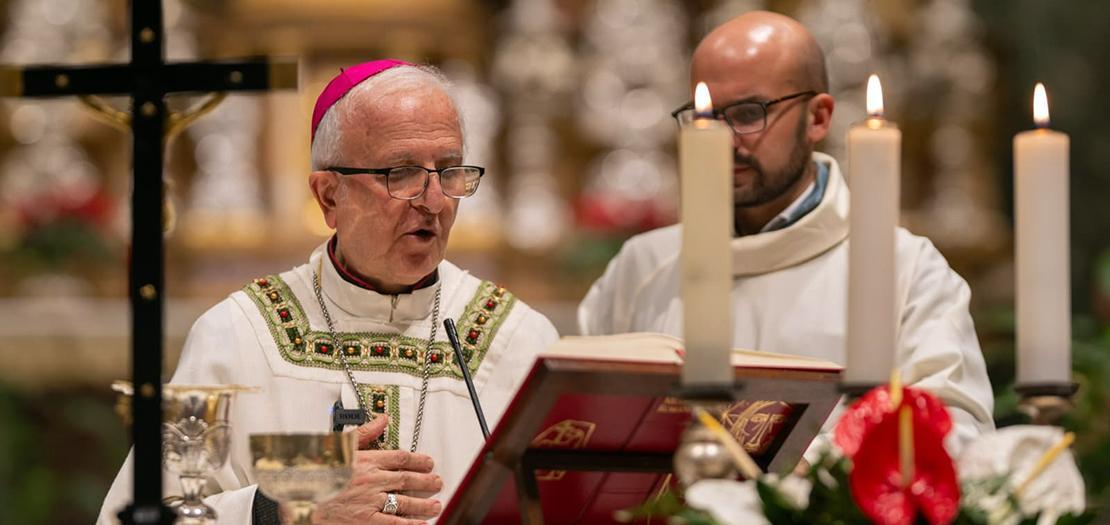
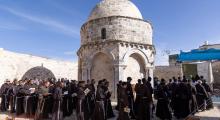
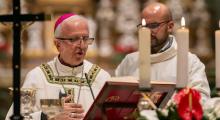
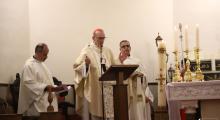
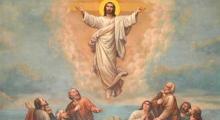
Assaults, intimidation, closure of holy places... This upsetting observation commands respect: if forgiveness and reconciliation are "easy words to pronounce", they are nevertheless "difficult to live in the Holy Land" humbly testifies the prelate. How, then, can we continue to hope when violence and hatred seem to sweep everything away? For the Christians of the Holy Land, the answer lies first and foremost in faith. Invited to the shrine of Our Lady of Laus, Bishop William Shomali celebrated the Mass of the Ascension in front of a fervent assembly of 700 people. A grace for the sanctuary, confides someone from the diocese of Gap: "The providential coming of Bishop Shomali to teach us about peace offers a magnificent opening of our colloquium "Blessed are the peacemakers" which will be held from June 26 to 28." Despite what he calls "a return to the Stone Age" as the living conditions have become so difficult, the bishop testifies to the hope of a people, rooted in prayer, adoration of the Blessed Sacrament and the intercession of the Virgin Mary. A faith that holds them together and nourishes this unshakeable certainty: "All these prayers, one day, will bear fruit. God remains at work."
Aleteia: Today, what does it mean to be a Christian in the Holy Land on a daily basis?
Archbishop William Shomali: It is accepting to live in the Holy Land and to flee the temptation to leave. It is trying to accept the other better, to accept forgiveness and reconciliation. These are easy words to pronounce, but difficult to live with in the Holy Land. On a daily basis, it depends on which region we are talking about. In Gaza, life is hellish. Food, money, work are lacking. The promised reconstruction of Gaza has not yet begun and they are returning to the Stone Age. In the Palestinian territory, in the West Bank, the situation is aggravated because of the settlers' action. There is also unemployment, there are no more work permits in Israel. Pilgrimages are interrupted. The future is unclear, people are afraid and the temptation is great to go in search of a more secure future.
Do you sense discouragement in your faithful or, on the contrary, signs of hope?
It is paradoxical, in Gaza the situation is very bad, Christians go to pray every day at the adoration of the Blessed Sacrament. They are resilient and strong. Christians who come to church and pray receive a lot of strength, others may be depressed. So faith is an element that creates a big difference.
Are we witnessing an increase in intimidation and aggression against Christians in Jerusalem?
Yes, attacks on Christians have always existed. But there has been a gradual growth. It started with spitting, especially when there is a procession. There were anti-Christian graffiti, attempts to set fire to two or three monasteries, and this time a physical attack on a nun. The attacker came from the back in a cowardly manner, and there was an attempt at homicide because he used all his force. When he saw that she was still moving, he went back to complete his action. She would not have made it if it had not been for the help of another, more compassionate Jew to defend her. Violence is linked to hatred, hatred of everything that is not Jewish. But all is not lost, there are still people with whom we can dialogue. We are a minority that does not believe in violence, that is our vocation as Christians in the Middle East.
Is peace in the Holy Land possible from a human point of view?
From a human point of view, peace is not possible because conflict is ideological in nature, where each excludes the other. It is like a dialogue of the deaf, each one speaks but does not listen to the other, without understanding or sympathizing with the suffering of the other. Everyone claims to belong to this land. However, sometimes more difficult wars find a solution. So we believe as Christians, and this is our hope, that God is a protagonist in the history of humanity and that prayer can bear unexpected fruit. Take the example of the reunification of Germany, which seemed almost impossible. This proves that miracles of this kind are always possible. We know that there are millions of people who pray for peace, all these prayers, one day, will bear fruit.
Is there a verse in the Bible that accompanies you personally in these painful times?
This is the motto on my episcopal insignia: "Pray for the peace of Jerusalem," it is a verse that I often repeat and say in front of others: "Pray for the peace of Jerusalem."
You are at Notre-Dame du Laus, between this Marian shrine and Jerusalem, do you see the same call from Mary for peace and reconciliation?
Mary has always called for peace. During her apparitions, she only repeated the importance of penance, conversion and prayer. The Blessed Virgin wants peace. And in this month of May which is dedicated to him, we pray the rosary for his intentions.