Issued by the Catholic Center for Studies and Media - Jordan. Editor-in-chief Fr. Rif'at Bader - موقع أبونا abouna.org

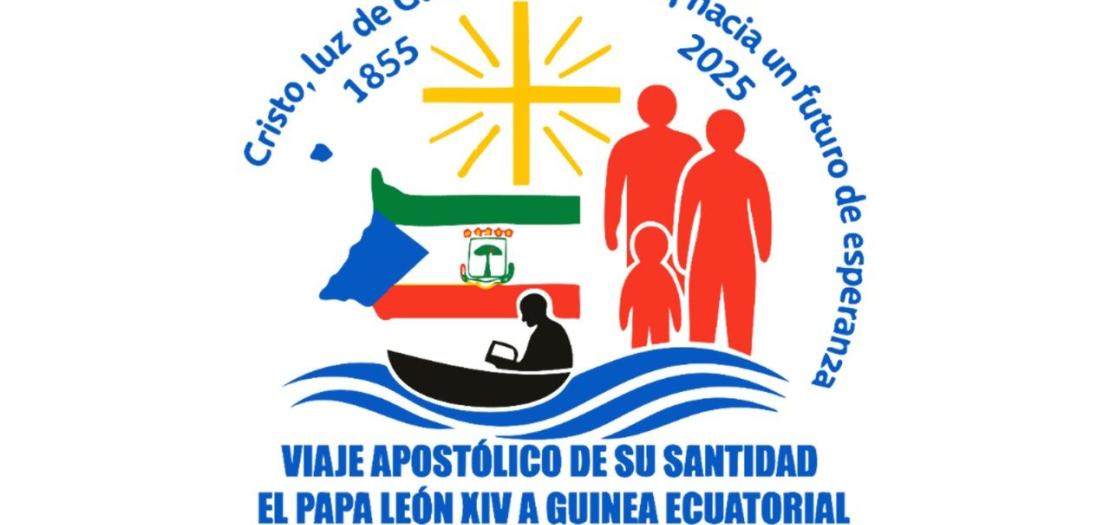
Just under two weeks before Pope Leo XIV’s apostolic visit to Equatorial Guinea—scheduled from April 21 to 23, 2026, as the conclusion of his visit to Africa—the local Church is intensifying its spiritual preparation with a two-fold call: to renew the priestly ministry and rekindle the faith of the People of God.
“Strengthening and renewing the foundations of our life and priestly ministry” is the central invitation that the Episcopal Conference is extending to the priests of Equatorial Guinea. In a message signed by Bishop Juan Domingo-Beká Esono Ayang of Mongomo and President of the Conference, the Church gives thanks to God for the “inestimable gift of the priestly vocation,” understood as a mystery of love in service to the Church.
The text reminds the faithful that the essential mission of the Church is “to restore the communion of men with God” and emphasizes the priest’s identity as alter Christus (another Christ), called to make visible the saving action of Christ.
In this context, the bishops insist on the care of interior life: prayer and spiritual life are “pillars of a credible priesthood.” Without a daily relationship with God, they warn, pastoral action loses its power. Against the temptations of activism or superficiality, all apostolic work must flow from a deep inner life: “We carry this treasure in earthen vessels, so that it may be clear that the power comes from God.”
At the same time, the letter highlights that the experience of priestly fraternity remains “an unfinished task despite being fundamental to the spiritual and pastoral well-being of priests.” In this regard, it underscores the urgency to “be both closer to God and to men, cultivating silence, for God speaks in silence.”
A “time of grace” for the entire people
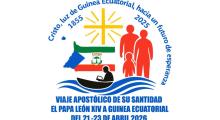
This exhortation to the clergy is part of a broader message directed to the whole People of God, signed by the bishops in February under the theme of Pope Leo’s journey to the country: “Christ, Light of Equatorial Guinea, towards a future of hope.”
The upcoming papal visit is presented not only as a historic event but as a true kairós: a time of grace to reexamine one’s history, renew faith, and open oneself to the future with hope. In this sense, the priests invite the faithful to rediscover the core of the Christian life: a personal encounter with Christ, the light that guides and transforms life.
“We are called to shine,” they say, quoting the Gospel. It is not enough to profess the faith. It must be lived through concrete works of justice, service, and charity in everyday life.
Memory and challenges of faith
The bishops’ message also recalls the historic visit of Pope St. John Paul II in 1982, which was considered a “miracle visit” that helped the country recover from years of crisis. However, the bishops acknowledge that, decades later, the faith faces new challenges.
They speak of a Christian experience marked by “lukewarmness and coldness,” evident in the loss of the sense of the sacred, the decline in sacramental practice, the rise of religious syncretism, and divisions caused by fundamentalist interpretations.
There is also the breakdown in the transmission of faith from parents to children; the superficiality in parish groups and associations; the lack of role models or social institutions that inspire young people with good manners and the commitment to grow in noble ideals and aspirations. These are compounded by social phenomena such as corruption, the fragility of the family, and the growing alienation of young people from the Church.
Far from a pessimistic outlook, this situation is interpreted as an opportunity for renewal. Just like a tree that appears dry but strengthens its roots, the Church is called to deepen its faith to bear new fruits.
Conversion, reconciliation, and hope
In this context, the bishops propose a clear path of preparation for the papal visit: intense prayer, sincere conversion, and communal reconciliation.
Pope Leo’s arrival, they recall, will be an opportunity to “receive God’s embrace” and also to rebuild relationships among Equatoguineans. The fundamental question is direct and challenges all sectors of society: Will our relationships be better after this visit?
A visit with pastoral significance
The Pope’s itinerary in the country will reflect this integral dimension. In Malabo, he will focus on education as a path to dignity and hope; in Mongomo, the memory of the evangelizers will be celebrated; and in Bata, the attention will particularly be directed to the youth and families, who are the protagonists of the future.
To prepare for this event, parishes are invited to intensify prayer, include specific intentions in the Eucharist, and promote catechesis to help the faithful understand the meaning of the visit.
Ultimately, the Church in Equatorial Guinea is preparing to welcome the Successor of Peter as an opportunity to renew Christian life, strengthen the evangelizing mission, and rekindle hope, especially among the neediest.
With their eyes fixed on Christ, the light of the world, the bishops invite the entire country to not forget God and to rediscover a living faith capable of transforming society from within.