Issued by the Catholic Center for Studies and Media - Jordan. Editor-in-chief Fr. Rif'at Bader - موقع أبونا abouna.org

Following is the text of the meditation by His Beatitude Cardinal Pierbattista Pizzaballa, Latin Patriarch of Jerusalem, marking the 26th Sunday of ordinary time, dated October 4, 2026:
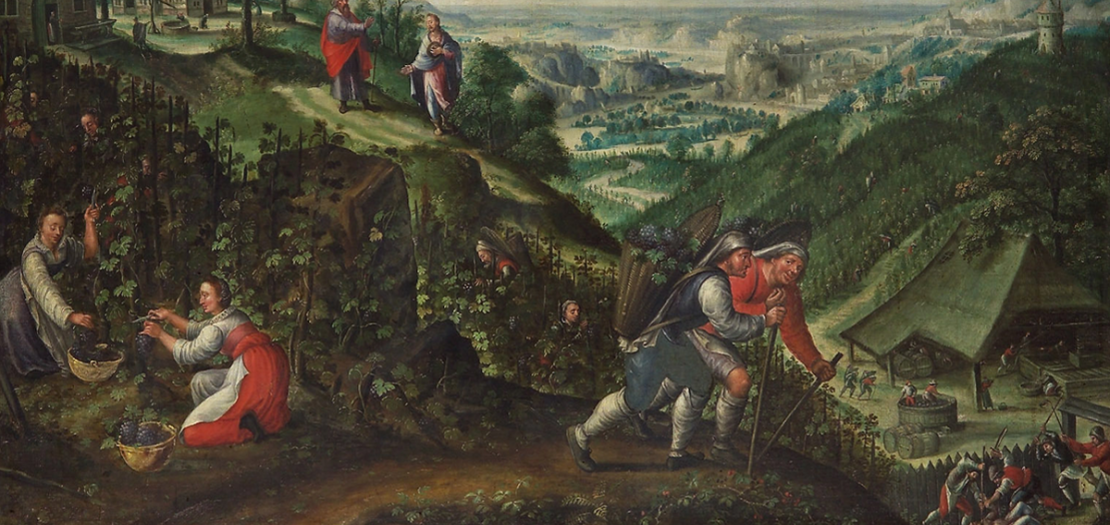
The theme of the vineyard is also at the center of to Sunday’s Gospel reading, (Mt 21:33–43) which presents us with a parable in which we find a landowner, tenants, and a vineyard to be cultivated.
We could say that today’s parable answers to an important question: how can we receive and enjoy God’s gift in our lives? How can this gift make life flourish, make it fertile, and enable it to bear fruit?
The answer to this question cannot be taken for granted.
In the past Sundays, we have encountered people who, although working in the vineyard, were unable to fully appreciate this opportunity. The workers hired at the first hour, in the parable of Matthew 20:1–16, failed to learn to rejoice in the joy of others and remained trapped in a logic of justice based on merit and reward. Others, as in last Sunday’s parable, (Mt 21:28–32) were too certain of their own religious privileges to truly set out on a path toward a radical renewal of life.
We see something similar even today. The parable, addressed to the chief priests and the elders of the people (Mt 21:23), speaks of a man who owns a piece of land and plants a vineyard on it. He then entrusts it to some tenants and leaves for a distant place. (Mt 21:33) When the time comes for the fruits to be harvested, he sends servants to the tenants of the vineyard to collect the harvest. However, rather than handing over the fruits, they attack the master’s servants, even going so far as to kill some of them. (Mt 21:34–36)
The same thing happens a second time. Then the landowner decides to send not servants, but his own son, thinking that they will respect him. But this is not what happens. On the contrary, the tenants kill him precisely because he is the landowner’s son, thinking that by doing so they will take possession of the inheritance. (Mt 21:37–39)
Everything the tenants do is based on self-deception, and on two vain illusions.
The first is the belief that it is possible to take possession of something at the cost of someone else’s blood. In the Bible, this is the root of all violence: to believe that what one gains must be taken away from others. In reality, the biblical story teaches that those who live this way never truly gain anything, and that violence is never a means of possessing something, but a means of losing everything.
The second illusion is that the vineyard can belong only to a few, rather than to everyone. Here too Scripture teaches that what belongs to God always belongs to everyone, and that the logic of the Kingdom is exactly the opposite of the logic of the tenants: in order to possess something, one must accept that one does not have exclusive ownership and welcome it as a gift given to self just as it is given to everyone else.
These two illusions have a common root: to desire things without limits, meaning, the thought that one must possess everything in order to live life to the fullest. This is the original sin recounted in Genesis 3.
The vineyard, instead, bears fruit only if it is inhabited by the logic of the Son, which is the logic of giving. The people who produce fruit — “The kingdom of God will be taken away from you and given to a people that will produce its fruits” (Mt 21:43) — are not another ethnic or religious group. Rather, they are those who receive God’s gift with gratitude, without ever taking possession of it, overcoming violence with an abundance of love.
In fact, the parable inevitably lends itself onto a Christological reading. The son of the owner of the vineyard — who was seized, thrown outside, and brutally killed (Mt 21:39) — is the Lord Jesus, who comes among humanity, reveals himself and gives himself over, only to be put to death by them.
His death is overcome not by an act of power, but by his own love, which gives itself completely to the very end.
The vineyard flourishes again not because the owner punishes the murderous tenants, but because the Son remains faithful to the logic of a love that does not seek to possess anything, not even his very own life. Precisely because of this, he can continually receive his life from the Father, bearing the fruits of communion and unity for all who repent, (Mt 21:32) renouncing the logic of violence, and believes in the power of love.
+Pierbattista