Issued by the Catholic Center for Studies and Media - Jordan. Editor-in-chief Fr. Rif'at Bader - موقع أبونا abouna.org

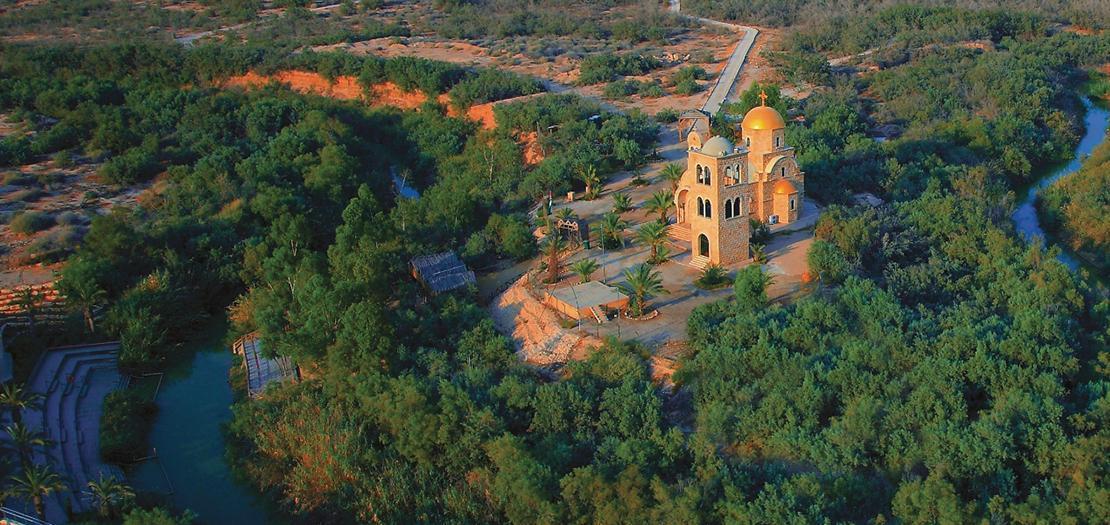
Following the formal incorporation of Al-Maghtas ( the Baptism Site) into the National Protected Areas Network, the Baptism Site Commission has begun rolling out an integrated environmental management strategy designed to handle unprecedented visitor growth ahead of the 2030 Millennium of Christ’s Baptism.
In an interview with the Jordan News Agency (Petra), Director-General of the Baptism Site Commission Abdullah Al-Bawarid outlined the operational roadmap that will reconcile large-scale religious tourism with fragile riverine conservation over the coming decade.
Under the newly expanded operational mandate, the Commission is finalizing a dedicated site management plan centered on environmental rehabilitation and active monitoring across the 10-square-kilometer territory. The initiative prioritizes re-establishing degraded native vegetation, conducting systematic research on local flora and avian species, and implementing strict deterrents against environmental encroachments along the Jordan River and its adjacent valleys.
To execute this framework without administrative overlap, the Commission is establishing multi-agency operational protocols alongside the Ministry of Environment, the Jordan Valley Authority, security bodies, and specialized research institutes. This inter-institutional alignment aims to build a rapid-response network capable of mitigating ecological threats, regulating land use, and maintaining real-time environmental surveillance.
The operational overhaul serves as a core pillar in Jordan’s national readiness strategy for the 2030 bicentennial commemorations, when global Christian pilgrimage traffic to the Jordan Valley is projected to peak. Al-Bawarid noted that protecting the surrounding landscape and watercourses is directly linked to preserving the solemn, contemplative atmosphere that pilgrims expect from the site.
The Commission plans to introduce controlled visitor-routing protocols, limiting foot traffic in ecologically sensitive zones while expanding sustainable eco-tourism programs and environmental awareness initiatives.
Al-Bawarid highlighted that this long-term management strategy is structured to generate economic opportunities for surrounding local communities through expanding hospitality, logistics, and service demands, provided that commercial growth remains strictly aligned with environmental preservation and the sacred identity of Al-Maghtas.