Issued by the Catholic Center for Studies and Media - Jordan. Editor-in-chief Fr. Rif'at Bader - موقع أبونا abouna.org

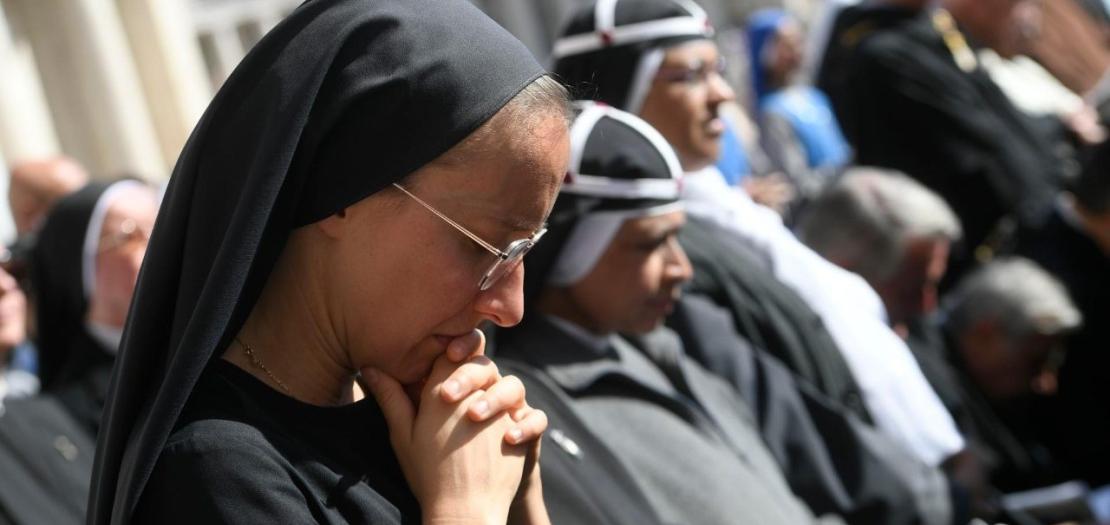
The Dicastery for Institutes of Consecrated Life and Societies of Apostolic Life sent a letter reaching out to all the consecrated men and women “in every part of the world, in the places where you live and carry out your mission”.
Signed by the Prefect, Sr. Simona Brambilla; Pro-Prefect, Cardinal Ángel F. Card. Artime; and Secretary of the Dicastery, Sr. Tiziana Merletti, the message begins by expressing their gratitude for fidelity to the Gospel and the gift of life consecrated women and men have given. “A life sometimes marked by trials, but always lived as a sign of hope”, as the letter describes.
We remain in complex situations
Reflecting on the past year, the heads of the Dicastery note the gift of making pastoral visits and traveling to meet “the faces of many consecrated persons called to share complex situations”. These are people living in places marked by conflict, poverty, forced migration, religious minority status, social and political instability, among other factors.
These challenges showcase, as the letter highlights, how consecrated life is “as a ‘presence that remains’ alongside wounded peoples and individuals, in places where the Gospel is often lived in conditions of fragility and trial.”
How this presence looks depends on the situation and society, which differ from place to place. The letter stresses that it is precisely where the “political and social situation tests trust and erodes hope”, the consecrated people’s “faithful, humble, creative, and discreet presence becomes a sign that God does not abandon his people.”
To remain with love
“Evangelical ‘remaining’ is never immobility or resignation”, the letter points out, “It is active hope that generates attitudes and gestures of peace”. This can take the form of disarming words in the midst of conflict, relationships that push for dialogue, choices dedicated to protecting “the little ones”, etc.
This choice to remain is not a personal or communal one. Rather it transforms into a prophetic word for the Church and the whole world.
Apostolic life helps make evident an “active closeness that supports wounded dignity; contemplative life safeguards, through intercession and fidelity, hope when faith is tested; Secular institutes bear witness to the Gospel as a discreet leaven in social and professional realities; the Ordo virginum manifests the power of gratuitousness and fidelity that opens to the future; eremitic life recalls the primacy of God and the essential that disarms the heart.”
In these various forms of life, one aspect or, as the letter describes it, a prophecy emerges: “to remain with love, without abandoning, without remaining silent, making one’s life the Word for this time in history.”
In this prophecy, the witness of peace grows. As Pope Leo XIV has repeatedly explained, peace is not an abstract idea, but a “demanding and daily journey” which calls for listening, patience, dialogue, conversion of heart and mind, and the refusal of the mentality of the strong prevailing over the weak.
“Peace is not born from opposition”, the letter furthers, “but from encounter, from shared responsibility”. When one listens with love, dialogue and peace can develop. That is why consecrated life, when it chooses to stay close to those in need without turning to conflict, can become “an artisan of peace.”
The letter concludes with an exhortation to persevere in the mission of consecrated life, in light of the Jubilee of Consecrated Life in 2025. During that experience, all who are consecrated were called to become pilgrims of hope on the road to peace. This is the evangelical style the letter calls all consecrated men and women “to embody every day, wherever dignity is wounded and faith is tested.”
The heads of the Dicastery entrust all consecrated people to the Lord to be in their mission “a prophecy of presence and a seed of peace.”