Issued by the Catholic Center for Studies and Media - Jordan. Editor-in-chief Fr. Rif'at Bader - موقع أبونا abouna.org

The Sovereign Order of Malta is following with great concern the evolution of the humanitarian situation in the Middle East, where the military escalation and ongoing conflicts are worsening already extremely fragile conditions for millions of people. In a region that for years has hosted a high number of refugees and displaced persons, the intensification of hostilities is increasing humanitarian needs and placing further pressure on healthcare systems and local communities.
In this context, the Order of Malta recalls the various appeals for peace and dialogue made by Pope Leo XIV, emphasizing the importance of diplomatic methods and negotiated solutions to avoid a further deterioration of the regional situation.
The Order also reiterates the need to respect international humanitarian law and its application in all circumstances to ensure the protection of civilian populations and health and humanitarian workers and to guarantee safe access to aid.
The concern and commitment of the Order of Malta in Lebanon
There is particular concern about the situation in Lebanon, a country already deeply affected by years of economic, political, and social crisis and by previous conflicts. The deterioration of security has caused hundreds of victims and a rapid increase in internally displaced persons, now over one million, forced to leave their homes. Within this context, there is the hope for a ceasefire that alleviates the suffering of the population and paves the way for the stabilization of the country, historically characterized by coexistence among different religious and ethnic communities.
Among the victims of the conflict is Chadi Ammar, a young member of the Order of Malta staff in Lebanon, who was killed in an airstrike in the town of Aïn Ebel. Ammar was involved in agro-humanitarian programs dedicated to food security in the southern region of the country.
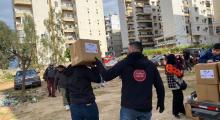
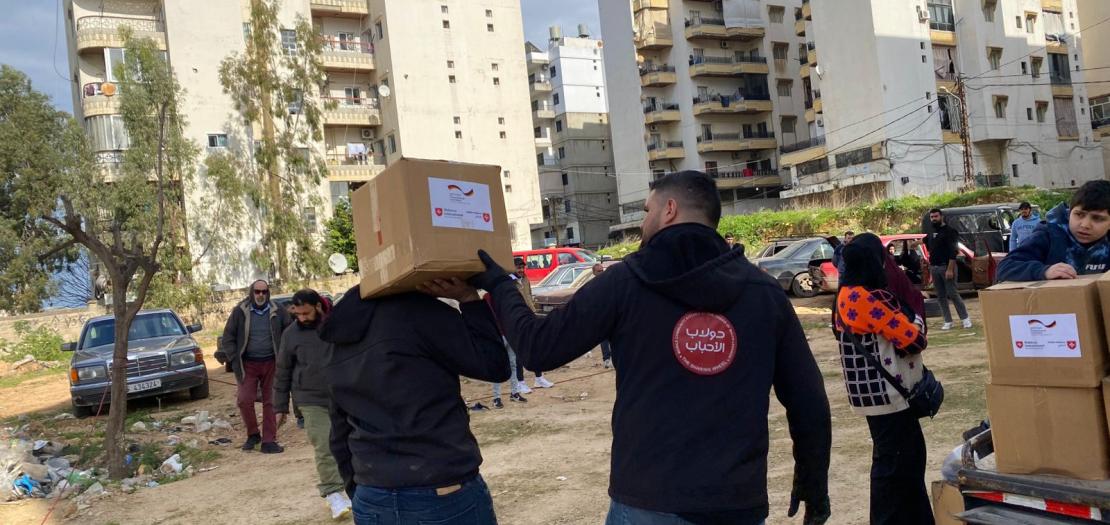
Despite the deteriorating situation, the Order of Malta continues to operate throughout Lebanon with a network of health, social, and agricultural programs that include primary healthcare centers, mobile medical units, agro-humanitarian centers and mobile community kitchens, as well as the distribution of food and basic necessity kits to displaced families. These activities are also supported by the Order’s international relief agency, Malteser International, which flanks local teams in the humanitarian emergency response.
The Order of Malta in the Middle East
The activities in Lebanon are part of a broader presence of the Order of Malta in the Middle East, where for many years it has been carrying out health, social and humanitarian programs in several countries of the region, including Palestine, Syria and Iraq.
In Palestine, in Bethlehem, Ordre de Malte France runs the Hospital of the Holy Family, a reference point for maternity and neonatology in the region. Since 1990, over 110,000 babies have been born, approximately 4,000 each year, and the facility is the only center in the area equipped with neonatal intensive care for babies born before the 32nd week. In the Gaza Strip, through Malteser International and in collaboration with the Latin Patriarchate of Jerusalem, approximately 200 tons of food aid have been distributed to thousands of families since 2024. In addition, the Mar Youssef (St. Joseph) Primary Health Care Clinic in Gaza City was set up, designed to provide essential health services – including internal medicine and family medicine – and ensure access to basic medicines in a context where health facilities operate far beyond their capacity and basic services are severely compromised. In view of the massive displacement of the population to the central and southern areas of the Strip, the Order of Malta also plans to open a second clinic in Deir al-Balah, to offer basic health services to both the local population and internally displaced persons in areas close to the Khan Younis area.
In Syria, the Order supports eight hospitals and primary health-care centers in the northern regions, particularly in the Idlib and Aleppo areas, where outpatient services, immunization and nutrition programs are provided, as well as interventions in the WASH (Water, Sanitation and Hygiene) sector for displaced communities. In 2022, over one million treatments were provided. Following the February 2023 earthquake, Malteser International coordinated emergency aid from the EU and Germany, supporting hospital repairs, allowances for healthcare workers and providing hygiene kits, medical supplies, and support for food and medical campaigns in Aleppo. In 2024, livelihood programs were expanded in northern Syria and Turkey, supporting farmers with agricultural inputs and female-headed households with food processing training, equipment, and “cash-for-work” initiatives.
In Iraq, a country once again exposed to regional tensions, Ordre de Malte France supports the Fraternité en Irak association, which provides assistance to religious minorities victims of violence, and the Mary Mercy Centre, run by the Diocese of Souleymanie and dedicated to the rehabilitation of children with autism-spectrum disorders through language therapy, sensory rehabilitation, and hyperactivity treatment programs. For several years, Malteser International has been active in the Nineveh Plains, where humanitarian assistance and reconstruction programs – supported by a total allocation of €30 million – have encouraged the return of Christian communities and other religious minorities displaced by the Da’esh violence. The initiatives have contributed to the reconstruction of housing and infrastructure, support for local economic activities and promotion of coexistence among the region’s various ethno-religious communities.
The Order of Malta is determined to continue its commitment to supporting the populations of the region, by providing humanitarian, health and social assistance in increasingly complex contexts. To this end, it calls for growing support from public and private donors, which is essential to ensure the continuity and effectiveness of its interventions.