Issued by the Catholic Center for Studies and Media - Jordan. Editor-in-chief Fr. Rif'at Bader - موقع أبونا abouna.org

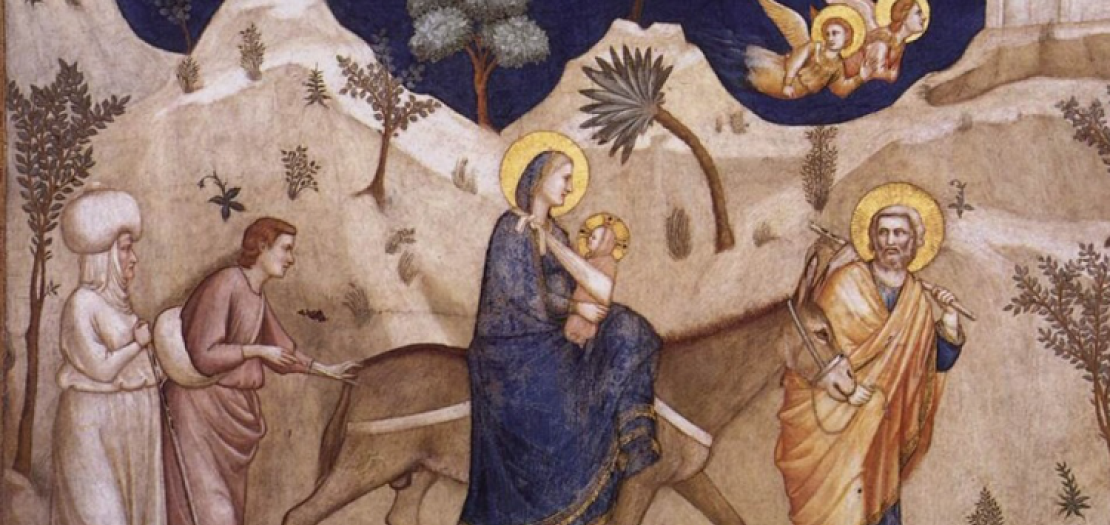
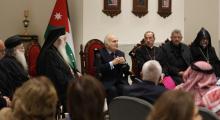
Following is the text of the meditation by His Beatitude Cardinal Pierbattista Pizzaballa, Latin Patriarch of Jerusalem, on the Feast of the Holy Family of Jesus, Mary and Joseph, dated December 28, 2025:
The Gospel of this Sunday after Christmas, the feast of the Holy Family, (Matthew 2:13–15, 19–23) tells us that God enters the world not as a powerful figure, but as a fragile and vulnerable child, a child who needs to be welcomed, cared for, and protected.
Matthew emphasizes this by recounting what follows the visit of the Magi (Matthew 2:1–13): their passage through Jerusalem arouses the suspicion and concern of King Herod, who then decides to have all children two years old and under put to death. (Matthew 2:1–16)
Herod, like his son Archelaus later on; represents the figure of the powerful man, one who believes he can freely dispose of the lives of others. Their power is described as a power of death, a cruel power. But God does not choose to be powerful.
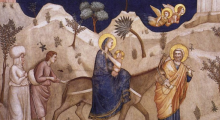
An angel therefore appears to Joseph in a dream, instructing him to protect the life of the child by fleeing to Egypt, returning to the place where the people of God had once been foreigners and then slaves.
This is a first way of saying that the life of this child is no different from that of the people to whom he belongs, that his story is not different, not easier or more secure.
It is the story of every human being. God, therefore, chooses the path of fragility to reveal Himself.
He does not stand among us as an almighty God who needs nothing and no one. On the contrary, the very first thing God does is to need us and our care.
What allows him to grow within us and among us is the care that we give to him.
Joseph is presented to us as the icon of this care, of this good power that safeguards life: he is the exact opposite of King Herod and every powerful ruler on Earth.
But what does Joseph actually do to exercise this good power, to protect the fragile life of the Son of God?
Let us highlight some of his attitudes.
The first is obedient listening. An angel appears to him in a dream (Matthew 2:13) to reveal God’s plans to him, to show him how he can save the life of Jesus, and Joseph listens, trusts, and makes room for the words he has heard. In the following verses as well, (Matthew 2:19–20) when it is time to return to Israel, Joseph does the same: he waits for a Word, listens to it, and only then sets out on the journey back.
He can protect Jesus because he first protects the word addressed to him by God.
This, then, is the first way of caring, that of listening.
The second is that, after listening, Joseph acts promptly, without delay: in order to protect, one must be willing to be disturbed, one must allow one's plans and projects to be altered, one must accept that the life of another person is a priority.
But what is striking, and fundamental in terms of safeguarding, is that these two attitudes are deeply united; they are one and the same. What Joseph hears, he does.
The text makes this very clear: the angel appears and tells him to rise, to take the child and his mother with him, and to flee to Egypt.
And the text says that Joseph rose and took the child and his mother and flees to Egypt. He does nothing else—nothing more and nothing less.
This is a constant in Joseph’s life. We have already encountered this attitude at the beginning of the Gospel, when there was another life to protect, that of Mary (Mt 1:18–24): there too an angel appears to him in a dream, tells him what to do, and Joseph obeys and “did as the angel of the Lord had commanded him.” (Matthew 1:24)
In our own lives too, the Lord enters as something fragile and delicate, something to be cared for.
He does not impose himself, he does not demand anything.
But if we want his presence to grow within us and his life to become our life, we must take care of his presence, doing as Joseph did: waiting for the Word, listening to it, and then allowing that Word to shape our thoughts, gestures, steps, actions, attitudes and our very life.
+Pierbattista