Issued by the Catholic Center for Studies and Media - Jordan. Editor-in-chief Fr. Rif'at Bader - موقع أبونا abouna.org

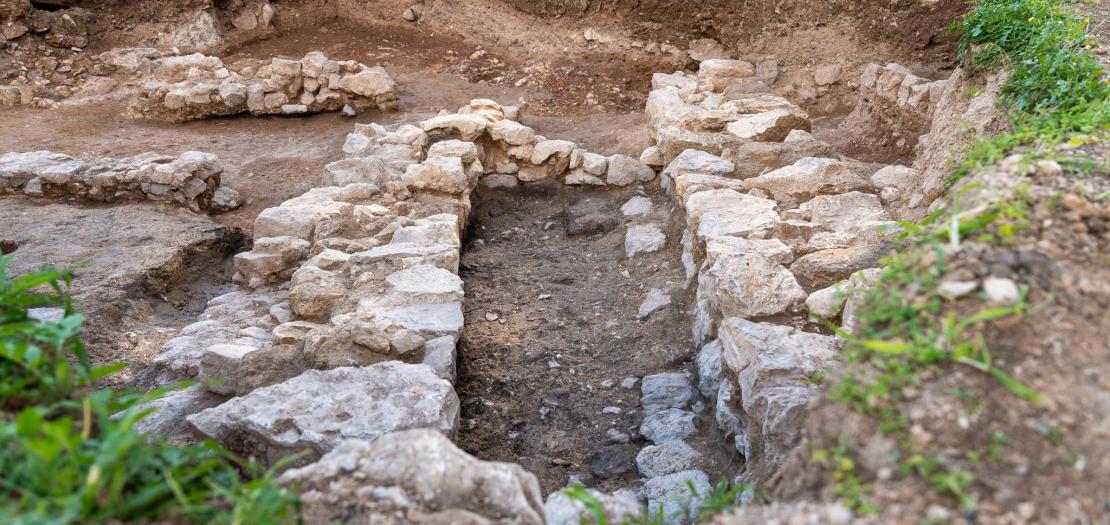
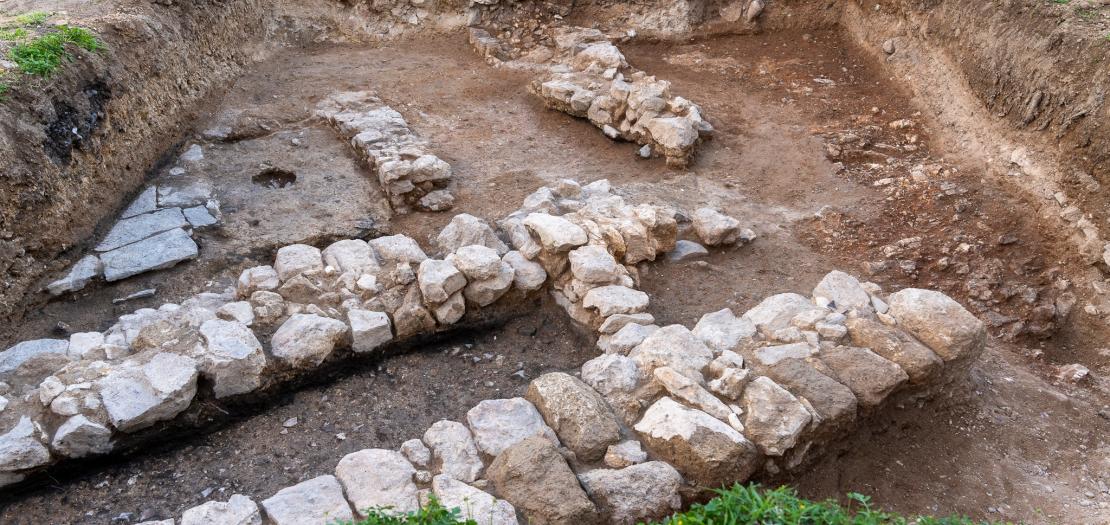
Since February 2023 the Shepherds’ Field, one of the most significant places of the Gospel tradition near Bethlehem, has been involved in a new and complex archaeological excavation campaign, the result of the collaboration between the Pontifical Institute of Christian Archaeology and the Custody of the Holy Land. A project that combines scientific rigor, attention to pilgrimage and sensitivity toward the local population, in a context marked by profound political and social difficulties.
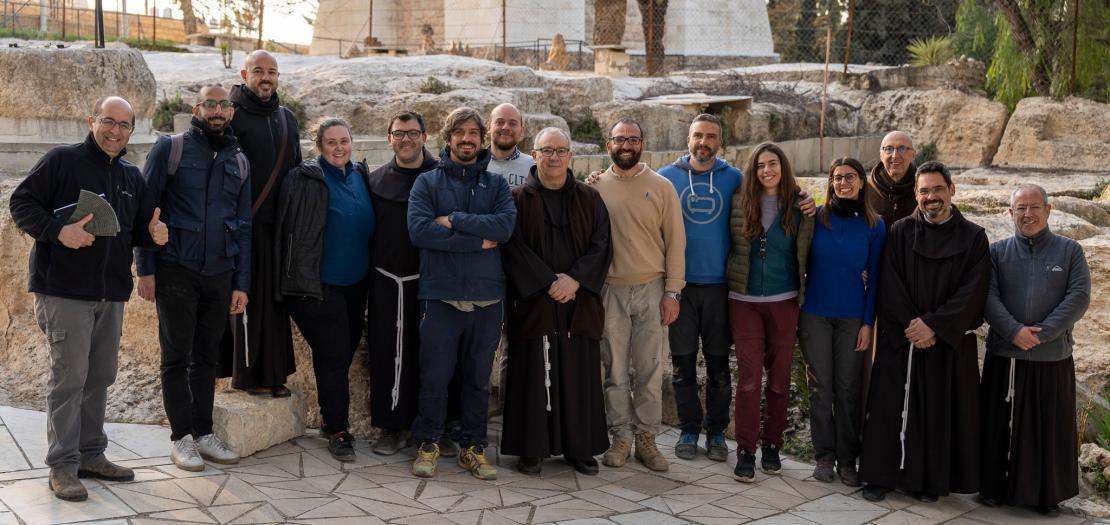
Leading the work in the field is a team composed of scholars and researchers, including Professor Gabriele Castiglia, professor of Topography of the Orbis Christianus Anticus, and Fr. Simone Schiavone, Conventual Franciscan friar and PhD candidate in Christian archaeology. As the researchers recount, the project initially began with an apparently simple objective: a campaign of cleaning and new documentation of the already known archaeological structures, in order to update their interpretation and evaluate their possible future accessibility.
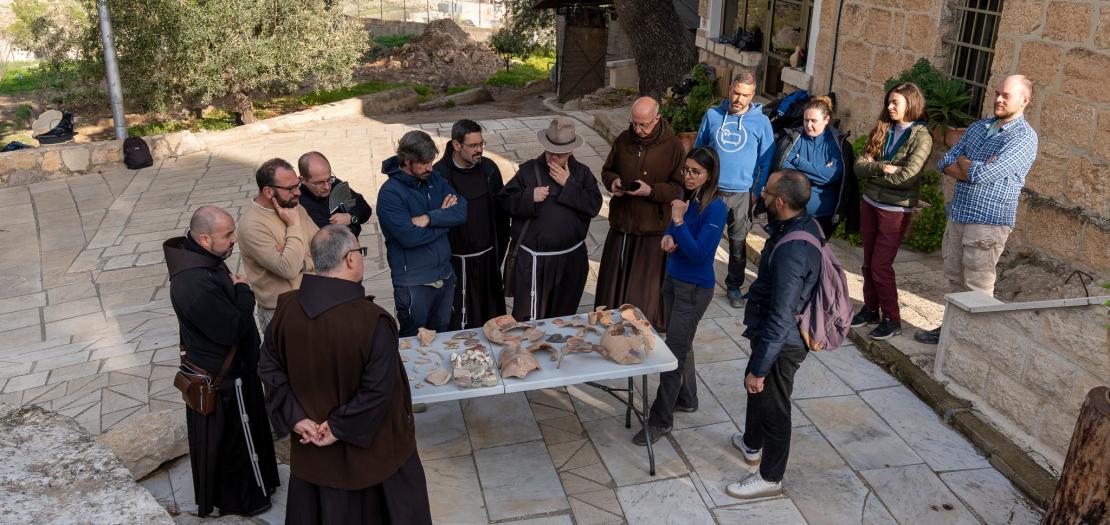
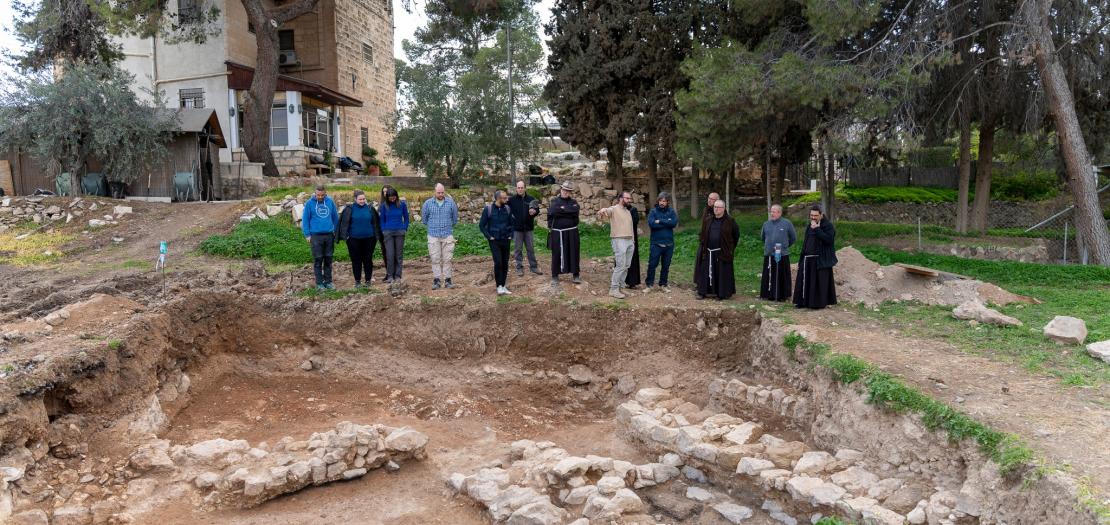
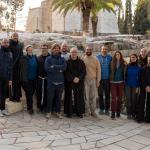
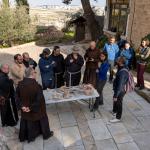
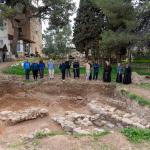
Within this context, the visit that took place yesterday, February 4, designed to illustrate to the Custos of the Holy Land, Fr. Francesco Ielpo, and other friars of the Custody, the Custodial Secretary, Fr. Alberto Pari, the Guardian of the Shepherds’ Field, Fr. Luis Enrique Segovia and others, the progress of the research and the future perspectives of the works at the Shepherds’ Field.
Following the excavations of Fr. Virgilio Corbo
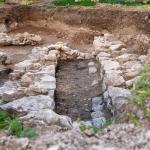
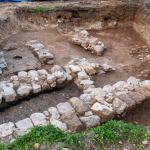
The current interventions are in continuity with the research carried out in the 1950s by Fr. Virgilio Corbo, Franciscan archaeologist of the Studium Biblicum Franciscanum, who excavated a significant part of the area, bringing to light ecclesial structures connected to the Christian memory of the site. Starting precisely from those historical investigations, the team resumed the excavation of the church area, already partially explored by Fr. Corbo, alongside new investigations in sectors that had remained unexplored until now.
As Professor Castiglia emphasizes, the exploratory trenches opened in the last two years have returned data of great interest, showing that the site is probably much more extensive than previously known, and that not even Fr. Corbo had been able to investigate it in its entirety. A discovery that opens new research perspectives and makes it difficult, at least for now, to establish precisely the overall duration of the works.
Methodologies and future prospects
Among the next steps of the project there is the hope of starting a georadar investigation campaign, a non-invasive diagnostic technique that would allow the evaluation of the extension of the site without resorting exclusively to stratigraphic excavation. The results of these analyses will be decisive in guiding future choices, both in terms of scientific research and enhancement of the area.
The team, also engaged in teaching and study activities, cannot guarantee a continuous presence in the field, but the intention is to return between September and October to further expand the areas already investigated. In perspective, together with the Custody of the Holy Land, the goal is also to seek more substantial funding for the overall arrangement of the site: protective coverings, new panels and paths that allow a clearer and more engaging visit.
Excavating during the war
One of the most touching aspects that emerged from the explanations of the researchers concerns the context in which the research took place. The team was in the Holy Land on October 7, 2023, an event that deeply marked the progress of the works. In the following months, logistical difficulties, increasingly strict controls and a widespread climate of fear made the organization of excavation campaigns and the very mobility of scholars complex.
Despite this, the decision to return to the field also matured as a symbolic choice: offering a sign of activity, of future and of hope in a territory where many people have lost their jobs and struggle to imagine tomorrow. Archaeology thus becomes not only the study of the past, but also a concrete gesture of presence and solidarity.
Research, pilgrimage and local community
As Fr. Simone Schiavone emphasizes, the objective of the project is not exclusively scientific. The Shepherds’ Field is one of the most important sites of the Custody of the Holy Land, and the work also aims to offer pilgrims something new to see, expanding and enriching what is already known thanks to historical excavations. At the same time, great attention is reserved for the involvement of the local population, so that it may feel an active part in the knowledge and enhancement of the site.
In this direction goes the agreement with Bethlehem University, active since 2023, which allowed the participation of local students in the excavation campaigns before the conflict. A formative experience that the team intends to resume whenever conditions allow, in the conviction that the future of the site also passes through competencies rooted in the territory.
Being friars and archaeologists today
Fr. Simone also offered a broader reflection on the meaning of Franciscan archaeology today. For Fr. Simone, working as an archaeologist in the Holy Land means rediscovering the original charism of Saint Francis, who invited the friars to work with their own hands and to place at the service of the community the skills developed before religious life. In a context where there is the risk of progressive secularization, fieldwork also becomes a form of witness, capable of holding together fraternal life, faith and professionalism.
Following the path traced by figures such as Father Virgilio Corbo, the excavations at the Shepherds’ Field thus confirm themselves not only as an archaeological project, but as a profoundly human and ecclesial experience: a bridge between past and present, between scientific research, pilgrimage and hope for a wounded land still capable of generating future.