Issued by the Catholic Center for Studies and Media - Jordan. Editor-in-chief Fr. Rif'at Bader - موقع أبونا abouna.org

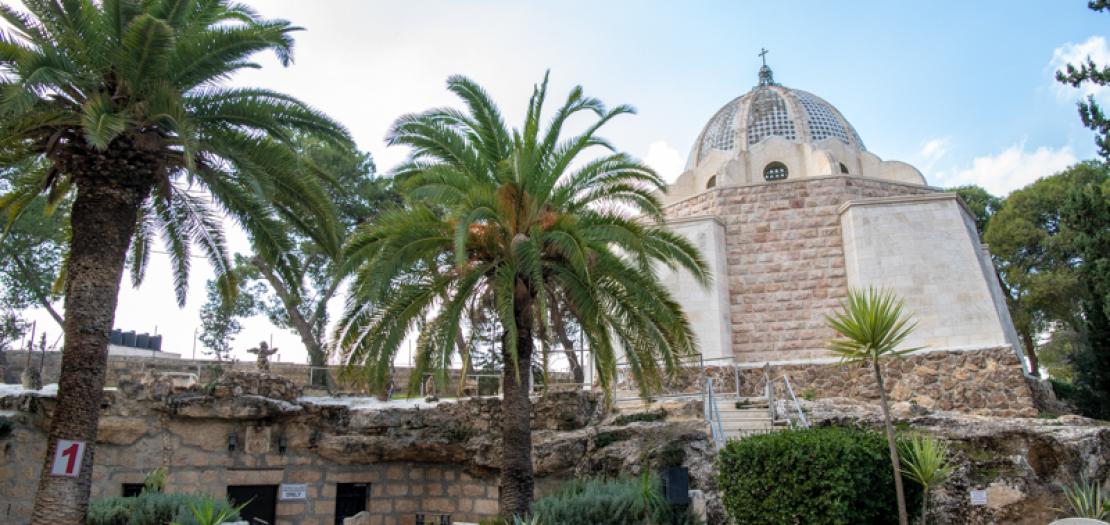
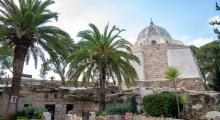
A new archaeological area has been discovered in the Shepherds' Field in Beit Sahour, under the Custody of Holy Land, as part of a scientific collaboration between the latter and the Pontifical Institute of Christian Archaeology in Rome, according to an agreement signed in 2022. The project aims to study and bring to light the residential area of the monks, dating back to the 6th and 7th centuries AD, offering important historical and archaeological data on the monastic life of the region.
Fr. Simone Schiavone/ of the Pontifical Institute of Christian Archaeology says, “We are inside a monastery already discovered 70 years ago by father Virgilio Corbo. The monastery presents a phase of life between the 4th and the 6th century. As for our excavation area, the results achieved indicate with certainty two phases of life, placed in the final phases of existence of the complex, between the 6th and the 7th century, according to what the archaeological data attest, including the ceramic ones. These two phases, datable to the 6th and 7th century, are interspersed with a period of abandonment, marked by a fire that affected the entire northern half of the excavation area. The monks therefore lived in these environments; later, due to the fire, the spaces were abandoned. The site was however reoccupied for a final phase, before the definitive abandonment.
Fr. Simone Schiavone added, “We are inside the archaeological area that the Pontifical Institute of Christian Archaeology opened last January 18. By now the works are concluded and what we can observe in this space is the presence of several walls, with a notable articulation of wall structures of different phases, also interspersed with floor levels that attest to the frequentation of the area by the monks. The archaeological material found, in particular ceramic, allows us to date the occupation of this site between the 6th and, at most, the 7th century AD.”
He continued, “At this point, in particular, we can identify the remains of a floor level with stone slabs, placed on a preparation in yellow mortar. In another area, instead, the stone cladding is not present, but we can observe, from the remaining residues, the presence of a mortar floor, which in antiquity served also as a walkable surface. These are certainly two rooms, whose dimensions however we cannot yet establish with precision, both because the excavation is limited to the visible part, and because future research will be necessary to obtain clearer and more complete data.”
In the 1950s, Br Virgilio Corbo, a Franciscan archaeologist, led important excavation campaigns north of the Shepherds' Field, in Beit Sahour. In a few years he managed to bring back to light a monastery of the Byzantine era. Among the discoveries emerged the entrance to the monastery and the relative access system, in addition to the production area, which included oil and wine presses, cisterns and a complex system of channels for the collection and distribution of water.
The importance of these excavations is not limited to the discovery of new archaeological spaces, but also consists in the recovery of living historical areas, contributing to deepening the knowledge of the memory of the place. They open new horizons to pilgrims, highlight the historical value of the site and confirm the continuity of the Franciscan presence, underlining its role in the custody of the heritage of the Holy Land.