Issued by the Catholic Center for Studies and Media - Jordan. Editor-in-chief Fr. Rif'at Bader - موقع أبونا abouna.org

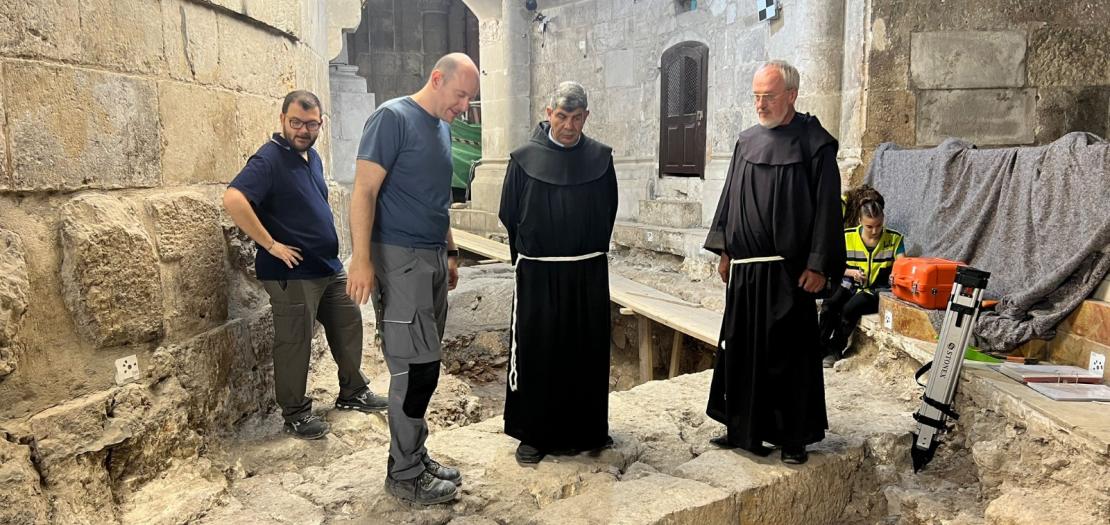
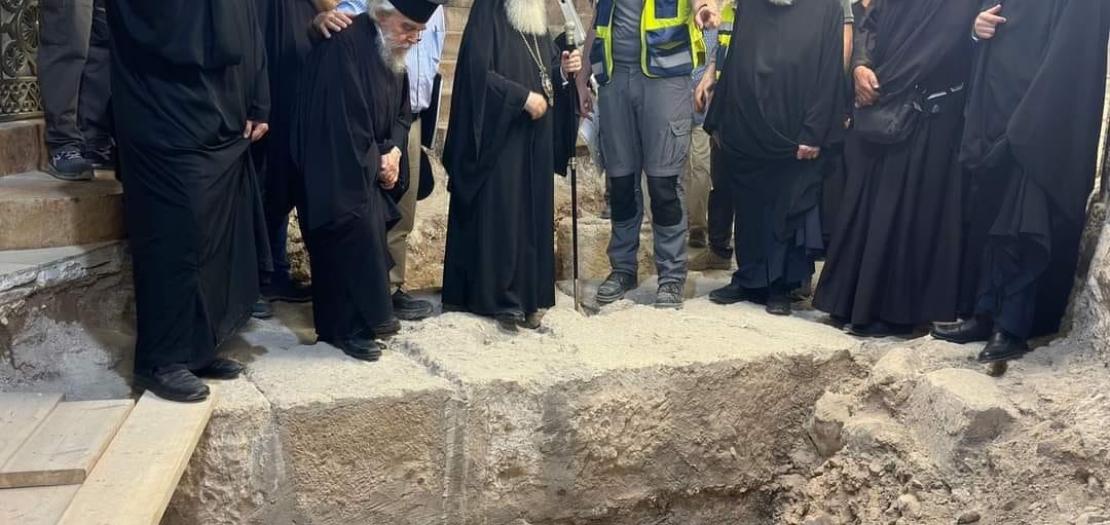
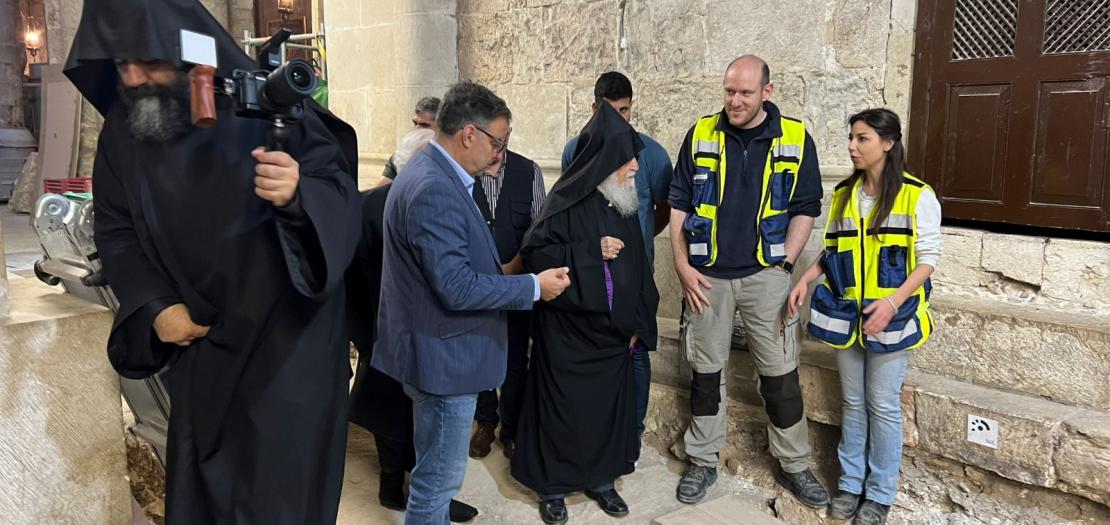
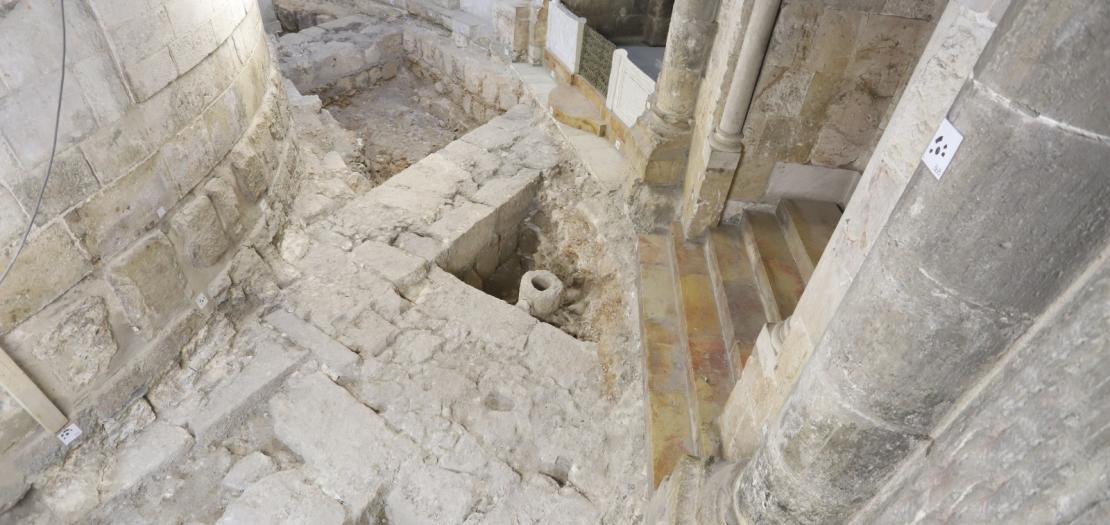
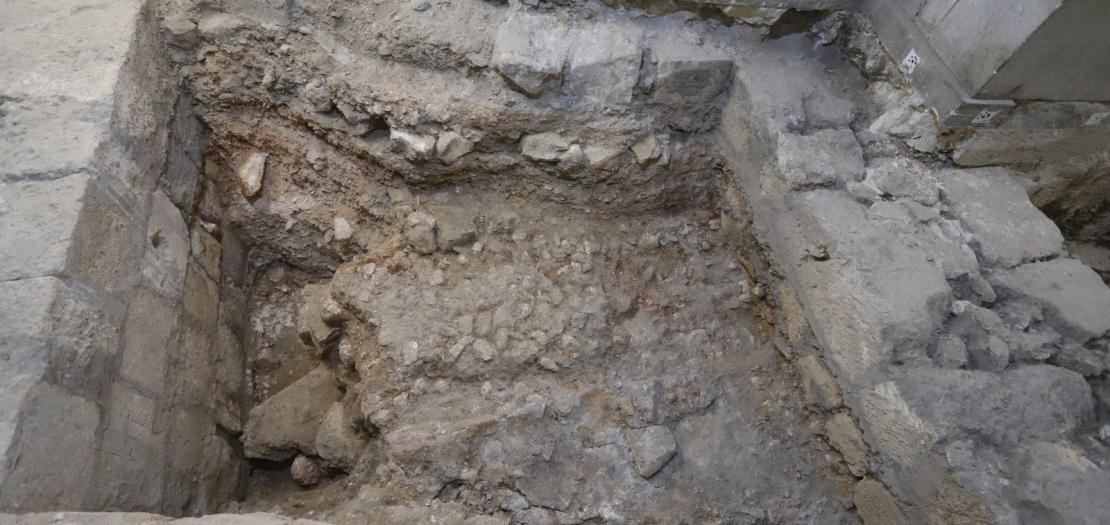
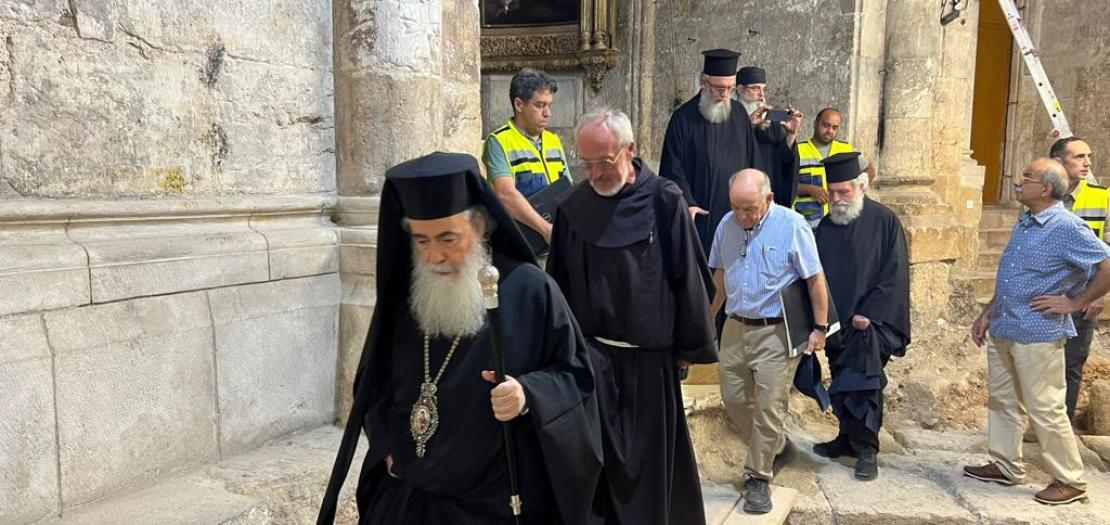
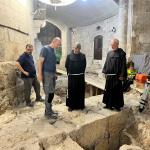
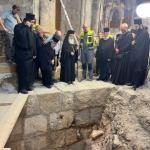
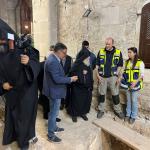
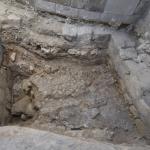
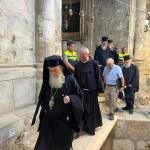
"Between May 15 and June 9, 2023, during the visit of Community leaders to the archaeological site in the Holy Sepulcher complex in Jerusalem, the excavation work being carried out by the Department of Antiquities of the University of Rome Sapienza was presented. The archaeological investigations are connected with the restoration of the floor of the basilica, by the Fondazione Centro Conservazione e Restauro per i Beni Culturali La Venaria Reale of Turin, and are continuing steadily from May 2022, with day and night work. The archaeological area was illustrated by Alessandro Melega, a member of the team of archaeologists from the University of Rome Sapienza.
The areas concerned so far have been part of the north aisle, a large part of the Rotunda and in the last phase concentrated in the northern area of the medieval ambulatory.
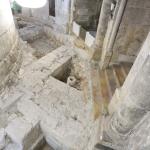
The archaeological excavations concerned the connection area between the eastern wing of the early Christian triporticus and the coeval liturgical basilica, revealing, from west to east: the common wall between the eastern arm of the triporticus and the head of the early Christian church; a rectangular room, already hypothesized by Fr. Virgilio Corbo on the right side of the apse; the head of the apse and the attachment of the dividing walls between the nave and the right aisle of the basilica. At the prominent point of the nave wall, the presence of a conduit made of lithic elements for rainwater runoff, similar to those already found along the same wall at other points during previous investigations, can be noted.
All of the masonry of the Early Christian basilica can be connected with that found during previous archaeological investigations in the Church of the Holy Sepulcher (under the Katholicon and in the chapel of St. Vartan) and contribute to completing the plan of the Early Christian complex. The masonry technique consists of large blocks, also reused, cemented with great care; the foundation sealing technique recalls that of the north perimeter wall of the religious complex.
The foundations are at very different heights, depending on the depth of the previous structures or the rock surface. Some of them rest on the statumen of a modest road axis that runs in an east-west orientation underneath the early Christian religious structures, which was cut for their installation. Among the materials found in backfill stratigraphy, two fragmentary bricks with the stamps of the Legio X Fretensis should be noted.
The early Christian archaeological deposit was heavily affected by the medieval building site, which was used for the construction of the ambulatory of the present basilica, as well as the later chapels.
As the archaeological excavation proceeds in portions, it will again be necessary to complete the area in order to be able to read the archaeological deposit in its entirety.