Issued by the Catholic Center for Studies and Media - Jordan. Editor-in-chief Fr. Rif'at Bader - موقع أبونا abouna.org

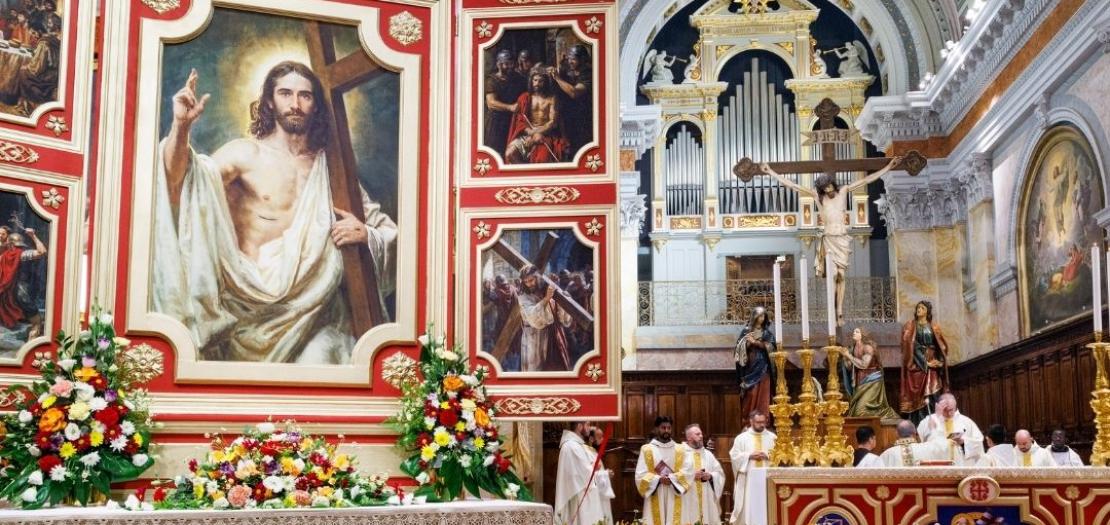
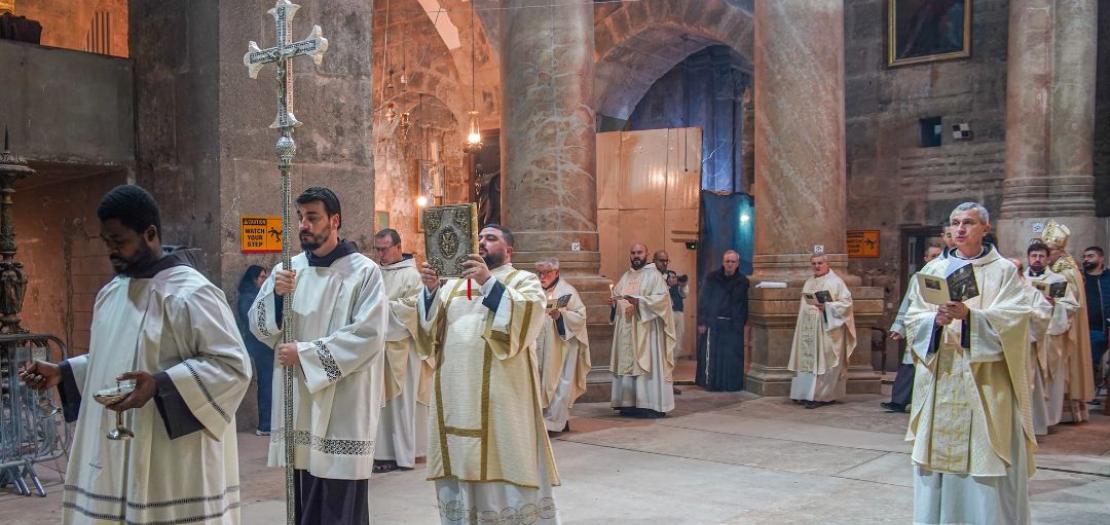
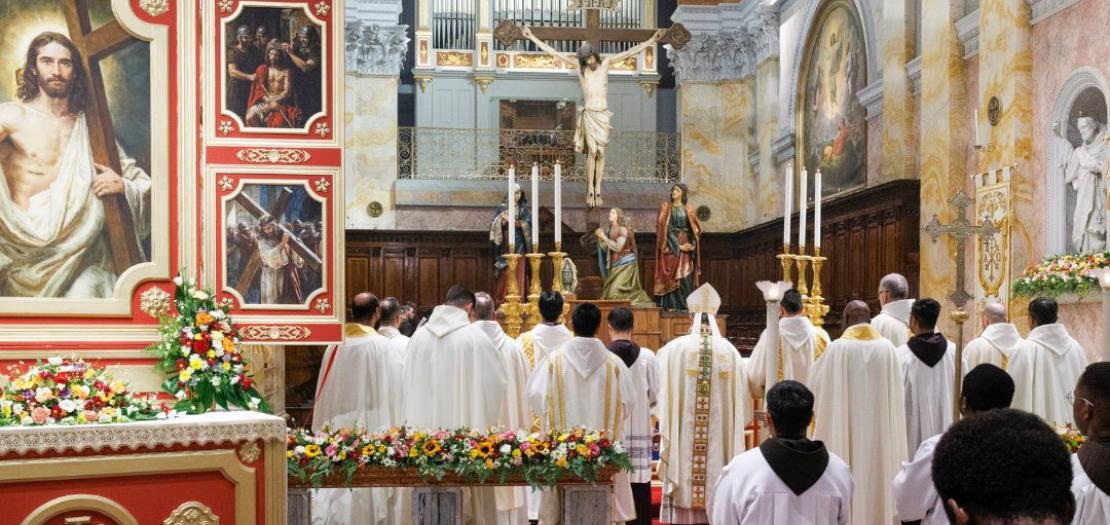
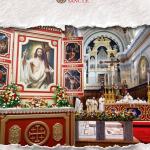
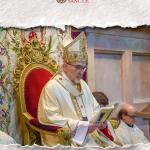
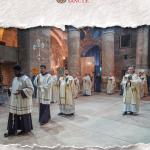
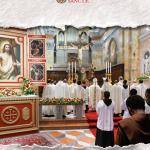
On Easter morning, at the Church of San Salvatore, Fr. Francesco Ielpo, Custos of the Holy Land, presided over and solemnly concluded the Easter Triduum together with the friars of the Custody of the Holy Land.
The Consul General of Italy in Jerusalem, Domenico Bellato, also took part in the celebration, as a sign of closeness to the Franciscan presence and the local Christian community.
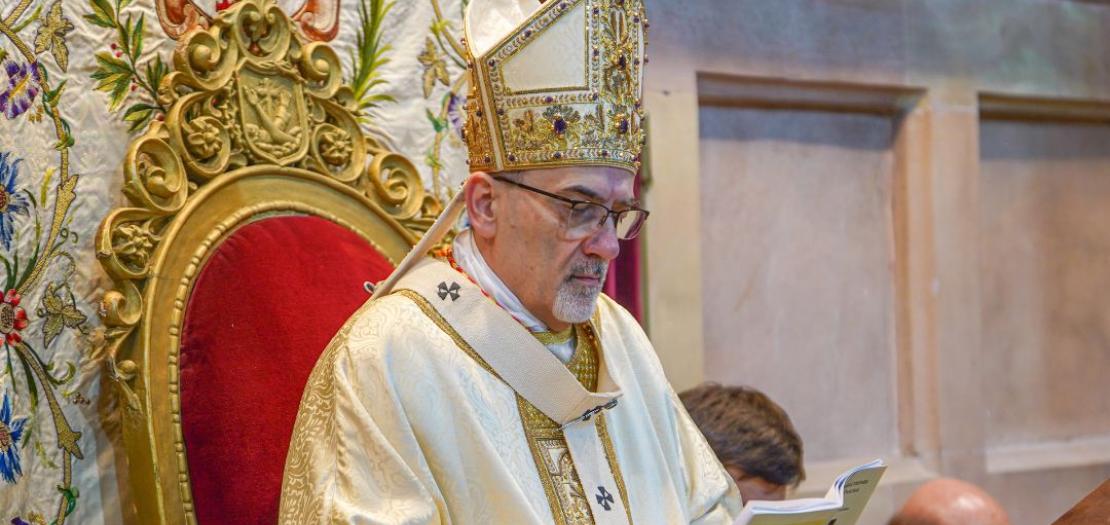
As required by the Status Quo, the Easter celebration also took place that same morning at the Holy Sepulchre, presided over by the Latin Patriarch of Jerusalem, Pierbattista Pizzaballa. Under normal circumstances, the four Consuls General of the traditionally Catholic countries that historically helped the Custody of the Holy Land and the Latin Church to maintain and acquire special rights in this land, Italy, Spain, France and Belgium, would have taken part in the Patriarch’s Pontifical Mass.
The restrictions imposed by the authorities prevented their participation, however, the new Apostolic Nuncio in Israel and Apostolic Delegate in Jerusalem and Palestine, Msgr. Giorgio Lingua, and his secretary Msgr. Nicola di Ponzio, took part in the solemn liturgy without concelebrating.
At the beginning of the Eucharistic celebration, the Custos paused before the artistic decoration prepared next to the presbytery and, with a symbolic gesture full of emotion, the two deacons simulated the opening of the tomb, opening the panels of the triptych and revealing the image of the risen and victorious Christ.
In his homily, Fr. Francesco Ielpo invited the faithful to reread the Gospel account of the Resurrection through the verbs used by John, emphasizing in particular the theme of movement: "First of all, what strikes us is the abundance of verbs of movement: Mary Magdalene goes to the tomb, then runs, Peter and the other disciple also go out, run, arrive, enter". A movement that is not only physical, but deeply interior, it is the sign of a search, of a restless heart that does not surrender to death.
Mary Magdalene goes out in the darkness, driven by the desire to remain close to the Lord, Peter and the beloved disciple run moved by news they do not understand, but which sets them on a journey. "They start from mourning, from pain, from loss. They go to the tomb to look for someone they believe to be dead. And yet, without knowing it, they are going to encounter the mystery of Easter".
The Custos then highlighted a second central element of the Gospel account, seeing.
"The Gospel insists greatly on the verb to see. But seeing is not enough. One can see and not understand". A reflection that takes on particular meaning in the context of the Holy Land, marked by suffering and conflicts: "The signs of death are well known here in the Holy Land, they have a very concrete face: they are the signs of war, of fear, of destroyed homes, of wounded and displaced families". Yet, precisely in the empty tomb, the decisive passage occurs: "The beloved disciple moves from seeing, to seeing and believing. He sees the signs of death, the cloths, the shroud, and believes. The signs of death become signs of life".
Fr. Francesco finally underlined how faith in the Resurrection is born within a living relationship: "Faith in the Resurrection is a gift, and to receive it one must enter into the logic of love". And again, the beloved disciple does not walk alone, but waits for Peter, recognizing the importance of ecclesial communion: "One passes from seeing to believing within a relationship, within an ecclesial communion". Love and communion thus become the fundamental coordinates of the Easter journey.
In the heart of a land marked by deep wounds, the message of Easter resounds as a concrete invitation: "The difficulties, the wounds, the struggles of life, the many 'tombs' we encounter, even those marked by war, can become places in which to recognize the Risen One".
The Custos’ final exhortation is an invitation to hope and to a shared journey: "Let us set out, then, as men and women loved by Christ, within the communion of the Church. And we will experience the Risen One even in places marked by death". Christ is Risen. Happy Easter from the Holy Land.