Issued by the Catholic Center for Studies and Media - Jordan. Editor-in-chief Fr. Rif'at Bader - موقع أبونا abouna.org

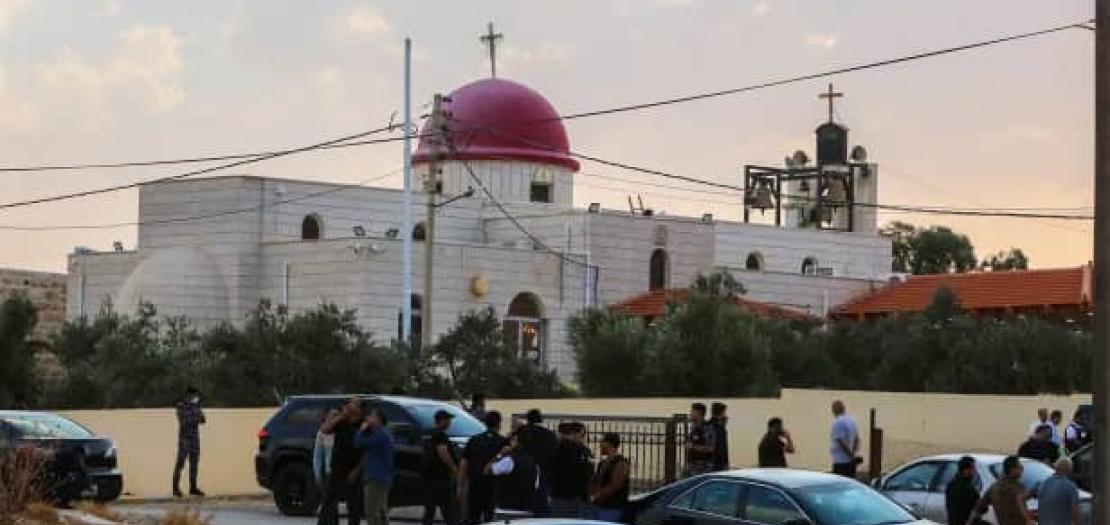
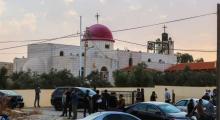
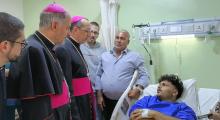
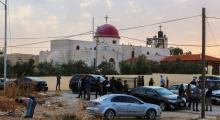
There are moments in a nation’s life when tragedy exposes not only the cruelty of those who seek to destroy it, but also the values that enable it to endure. The terrorist attack in Karak was one such moment. It was an assault not only on innocent lives and a Christian place of worship, but also on the very idea of Jordan: a nation shaped by shared history, collective dignity and a sense of belonging that transcends religious differences.
Jordan is different—not because it is immune to extremism or violence, but because its national identity does not depend on excluding one community to affirm another. Christians and Muslims are not strangers learning to coexist. They are partners in a shared homeland, heirs to a common history and custodians of a collective future.
The bullets fired in Karak were intended to kill. Yet, terrorism seeks more than physical destruction. It aims to fracture trust, replace solidarity with suspicion and turn religious differences into political divisions. Its ultimate objective is to undermine the bonds that hold society together.
That is why the response to terrorism must go beyond condemnation. It must reaffirm the principles that violence seeks to destroy.
The message conveyed by His Majesty King Abdullah in the aftermath of the tragedy carries significance beyond the immediate response to terrorism. It reaffirms a fundamental principle of Jordanian statehood: national unity is not a temporary reaction to danger, but a lasting foundation of citizenship, security and collective responsibility.
The principle is clear: An attack against one Jordanian is an attack against all Jordanians. Human dignity cannot be protected selectively, and national security cannot be separated from the safety and well-being of every citizen.
Jordanian Christians are not guests in their own country, nor is their belonging dependent on the tolerance of others. They are an integral and historic part of Jordan’s national identity, institutions, culture and public life.
The significance of this message, therefore, extends beyond solidarity in grief. It calls on Jordanians to recognize that their country’s strength lies in refusing to allow violence to redefine the relationships among its citizens.
Terrorism begins with brutality, but its most dangerous consequences emerge when fear becomes distrust and distrust becomes division. Its defeat begins when society refuses to surrender its shared humanity.
The intellectual vision of His Royal Highness Prince El Hassan Ibn Talal offers a valuable framework for understanding the broader implications of the Karak tragedy.
For decades, Prince El Hassan has emphasized human dignity, interfaith understanding, shared responsibility and the close relationship between human security and sustainable peace. Within this vision, religious diversity is not a threat to be contained, but a historical and moral reality that can enrich society.
The distinction is important. Coexistence can mean little more than the peaceful presence of different communities alongside one another. Shared citizenship demands more: equal dignity, mutual responsibility and recognition that the suffering of one community diminishes the security and humanity of all.
In Jordan, Christians and Muslims are not separate communities united only by national necessity. Their lives, memories, aspirations and responsibilities are woven into the same national fabric.
The tragedy in Karak is therefore a moral challenge as well as a security challenge. It asks whether grief can be transformed into renewed responsibility, whether education can overcome prejudice, and whether religious and civic institutions can protect future generations from the narratives of hatred that enable extremism.
Jordan’s distinctiveness should not be understood as a claim of superiority over other nations. Rather, it reflects a historical experience in which religious plurality has long formed part of the country’s social fabric and national identity.
In Karak, as elsewhere in Jordan, Christian and Muslim families have shared neighborhoods, traditions, public responsibilities and generations of collective memory.
Jordan is different because its unity does not depend on the absence of differences, but on the ability to transcend them through shared belonging. Its strength does not lie in being beyond harm, but in refusing to surrender its humanity when wounded.