Issued by the Catholic Center for Studies and Media - Jordan. Editor-in-chief Fr. Rif'at Bader - موقع أبونا abouna.org

Following is the text of the Letter of the Prefect of the Dicastery for the Eastern Churches dated March 16, 2025:
Dear Brother,
How we had hoped that peace would finally restore life and hope to the Holy Land! Dialogues and agreements multiplied, yet the weapons did not fall silent. Peace was declared, but even as the media speak of it far less today, arms continue to fire, people continue to die, lands remain contested, and Christians continue to emigrate in order to survive. Even schools often go without teachers, because they are not permitted to cross borders.
I know well that addressing you and the Christian community entrusted to your care is becoming ever more difficult, and that the words I write year after year risk sounding repetitive. I know, too, how exhausting it is to continue bandaging and disinfecting—however patiently—the wounds of a world so brutally torn apart. Yet we Christians cannot cease to hope, because God is our hope, and God does not betray us. The crucifix that hangs in our rooms and in our sacred spaces proclaims a life stronger than death—a life that passed through death itself. Much must change in us: our mentality, our sensitivity, our daily priorities. This world is progressively dehumanizing us, often without our even realizing it.
Let us never cease to pray, for God is our hope. But allow me now to propose a small gesture—small in appearance, yet decisive in its meaning—that points precisely toward this conversion: to give something of our own resources to help our brothers and sisters who live in extreme danger, so that they may endure one more day, rediscover hope, and begin again. This gesture is vital for them and essential for the Custody of the Holy Land, which has long safeguarded the places that witnessed the life of the Lord Jesus. It is also vital for us, because without sacrifice, without a real change in our way of living, we risk remaining inert before a world in flames—and thus complicit in its destruction.
This gesture will take place almost everywhere in the world—on Good Friday, though some communities observe it on another date—the day on which we commemorate the One who did not give alms, but gave His own life, His final breath, the Holy Spirit, so that the world might be healed and learn again to hope and to trust in the unexpected. The Popes have desired this gesture and continue to promote it, convinced that only through fatherhood, sharing, and supportive friendship can a reality be rebuilt that recovers its human face and reflects the plan God intended for humanity at creation.
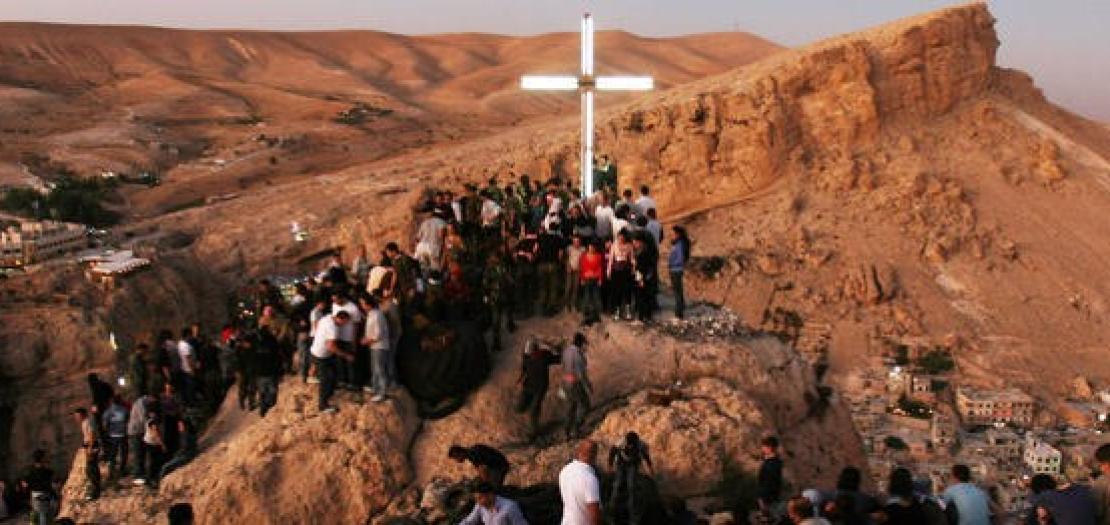
To live, our brothers and sisters also need your contribution. Many Christians in the Holy Land have lost everything, including the work that depended on the presence of pilgrims—who now, almost without exception, are afraid to return. The faithful who remain in the Holy Places know that through your support—and sometimes only through it—even if security cannot yet be guaranteed, schools can reopen, new homes can be built, and care can be provided where destruction has been total. Bombardments, followed by natural disasters, have scarred the land and rendered many areas uninhabitable, while deaths continue to mount, without a single day free from fear.
I ask you, therefore, to use words attuned to the sensibilities of your people to communicate our shared responsibility for the Holy Land, as well as for so many other devastated regions. Show images, raise awareness, and make use of the many available means that reveal the daily struggles of the small Christian communities who manage to remain on their land. Begin with the appeals of the Popes and the guidance of local pastors. Let us ensure that our people approach the Collection fully aware that giving is a powerful act of faith: a Holy Land without believers is a lost land, because it loses its living memory—the continuity with the source of salvation that has regenerated us in Christ.
Exhort, persuade, awaken consciences. Call people back to the solidarity of the one Body of Christ, the Church spread across all nations. Sacrilege is not only an offense against the Eucharist; it is also an offense against the Body of Christ, which is the Church. Saint Augustine insists on this truth: when you receive the Body of Christ at the altar, know that you receive what you are. “You become what you see, and you receive what you are.” (Sermon 272)
I am convinced that our people—your people—will not remain indifferent to this appeal. The deepest fibers of the heart, those shaped by Baptism and made part of the universal longing for good that prepares us for the encounter with God, await only to be strengthened—or even simply awakened. Pope Leo XIV continually reminds our minds and hearts of this call to unity, so that peace may emerge—not a temporary truce, not entrenched hatred, not endless investment in weapons, but a genuine contribution to our common rebirth:
“I would like to thank God for the Christians who, especially in the Middle East, persevere and resist in their lands, stronger than the temptation to abandon them. Christians must be given the opportunity, not only in words, to remain in their lands with all the rights necessary for a secure existence. I beg you, let us commit ourselves to this!”
(Audience with participants in the Jubilee of the Eastern Churches, 14 May 2025)
How many times have I personally visited those Christian minorities who awaken each day fearing that they may no longer have a place to exist. Help us to offer them concrete hope, not merely words of consolation—for we who visit them will leave, while they remain with their fears, even with the terror that, precisely because they are Christians, they may be eliminated. The Collection for the Holy Land, sustained daily by the invaluable work of the Franciscans and those who serve in local communities, may seem like a drop in the ocean. Yet the ocean, deprived of its drops, becomes a desert.
May the Lord abundantly bless all those who, even on this Good Friday, recognize their debt for the life they have received and choose to become co-workers in a creation that brings the earthly Jerusalem closer to the heavenly one. Thank you, dear Brother, for listening. May the Father sustain your efforts for peace and your commitment to bringing life to the innocent victims of war. Cain and Abel still walk the earth. Yet the Son of God has shown us that, when a choice must be made, we do not take the life of another—we give our life for another.
Claudio Card. Gugerotti
Prefect
Michel Jalakh, O.A.M.
Archbishop Secretary