Issued by the Catholic Center for Studies and Media - Jordan. Editor-in-chief Fr. Rif'at Bader - موقع أبونا abouna.org

Following is the text of the meditation by His Beatitude Cardinal Pierbattista Pizzaballa, Latin Patriarch of Jerusalem, on the fourth Sunday of Easter, dated April 23, 2026:
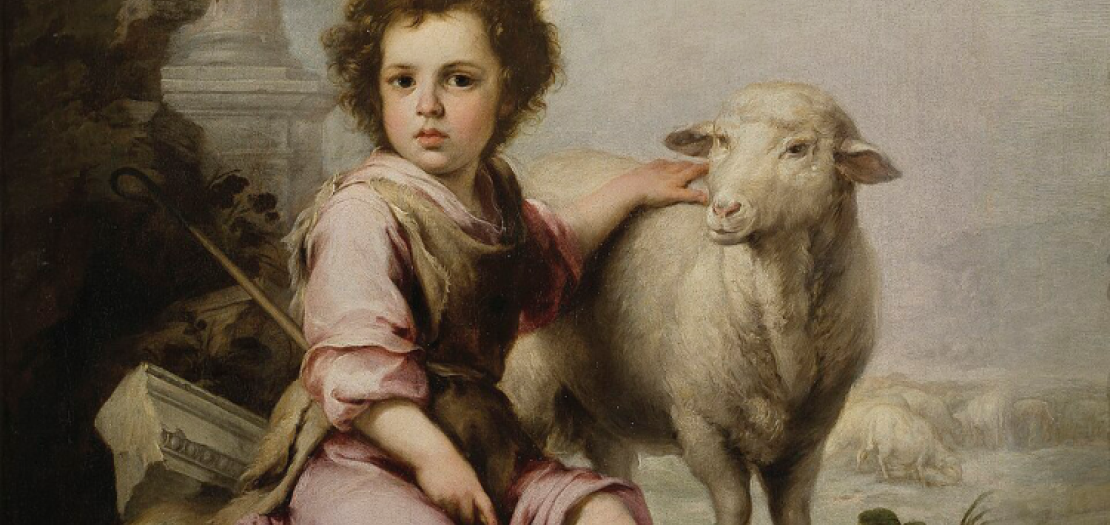
In the past few Sundays, we have seen that the Risen One is the Good Shepherd, who goes in search of the scattered sheep and leads them back to the place where they can find life, where they can rediscover the flock to which they belong.
The Gospel of this Fourth Sunday of Easter, taken from chapter ten of the Gospel of John, (Jn 10:1–10) develops precisely this image: there are the sheep and there is the shepherd; there is the keeper of the sheepfold and there is the gate; but there are also strangers, thieves, and robbers, who do not so much wish to give life to the flock as rather to pursue their own interests, to gain something for themselves.
And they do so with violence: the thief comes only to steal, kill, and destroy (Jn 10:10); the Good Shepherd comes with gentleness, and He comes so that His own may have life, and have it abundantly. (John 10:10)
But how does it happen that the Risen One gives His own abundant life?
He can do so because, before being shepherd, Jesus is the gate (John 10:7,9): in these few verses, Jesus repeats it twice. He is the gate of the sheep, and whoever passes through Him will be saved and will find life.
The image of the gate is a fundamental one.
In the biblical tradition, access to God was governed by spaces, rituals, purifications, and mediations.
The gate of the Temple was a boundary: one could enter only under certain conditions.
There was a distance between God and humanity, and this distance spoke of two separate worlds, between which communication was not easy.
In religious history, gates often separated: inside only the pure, the devout, the worthy could enter. Everyone else remained outside.
But the image of the gate is fundamental also for another reason.
The passage from John emphasizes, in fact, that the good shepherd enters the sheepfold through the gate; whoever climbs in from another place is a thief and a robber. (John 10:1–2)
What does this mean?
We can understand it if we return, once again, to chapter three of Genesis.
Adam and Eve, in fact, do not “pass through” a gate, but rather climb over a boundary, like the thief of whom Jesus speaks of in today’s Gospel. They do not pass through relationship, trust, or the word they received. They want to enter into abundant life without entering through the right gate, which is the gate of freedom in obedience.
After sinning, Adam and Eve hide themselves—that is, they lock themselves in: they neither go out nor come in, nor do they find pasture. And the expulsion from the garden is, in some way, a gate that closes. But it is not a definitive condemnation; t is a threshold left suspended.
This is why, in the history of salvation, a gate was necessary—someone who would reopen the possibility of a relationship between God and us.
Jesus thus presents Himself as this gate: The Gospel accounts tell us that whoever encounters him finds the passage towards life. A passage that was often blocked by mistakes, sins, feelings of guilt… Jesus opens a passageway, and whoever passes through it is born anew.
It is interesting that Jesus says that, through this gate, one can enter and one can exit: people are no longer divided between those who are inside and those who are outside. Everyone is both inside and outside, because the door is open in both directions, and offers everyone, always, the possibility of passaging through.
Jesus, therefore, is the gate, so that no one may remain shut out: so that no one may remain shut outside, and so that no one may remain shut inside.
One final note.
We have seen that anyone who does not enter through this gate and presents himself as a shepherd capable of giving life is a thief who, instead of offering life, brings death: he steals, kills, and destroys.
The gate, on the other hand, is a gentle symbolism: it does not force, impose, invade, or divide.
The gate waits to be passed through. And when someone passes through, the gate does not hold them back, but lets them go. It does not fear movement, but rather permits it and favors it.
The gate is also a space for discernment; it is an invitation to live in truth: the thief steals life, but whoever enters through the gate has nothing to hide and welcomes everything as a gift.
It renounces shortcuts, takes off masks, and purifies one’s desires; for abundant life passes only through the humble truth of oneself.
+Pierbattista