Issued by the Catholic Center for Studies and Media - Jordan. Editor-in-chief Fr. Rif'at Bader - موقع أبونا abouna.org

Following is the text of the statement issued by the Middle East Council of Churches condemning aggression against Lebanon dated May 2, 2026:
The Middle East Council of Churches (MECC) condemns the barbaric aggression against Lebanon and affirms the right of the Lebanese people to security, dignity, and life. It considers that protecting the homeland is achieved not only by defending its land and sovereignty, but also by safeguarding social unity, closing ranks, and preventing political differences from devolving into civil divisions or campaigns of defamation and abuse.
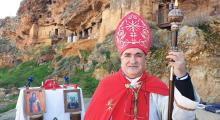
In this context, the MECC expresses its severe denunciation and categorical condemnation of the insults directed at His Beatitude Maronite Patriarch Cardinal Mar Bechara Boutros al-Rahi, President of the Assembly of Catholic Patriarchs and Bishops in Lebanon, on social media platforms, affirming its full and unwavering solidarity with him. This targeting does not merely affect a specific individual; rather, it strikes at a national and spiritual authority of historical and religious significance, constituting an assault on the moral values that call for respecting human dignity and safeguarding religious symbols.
While affirming His Beatitude's spiritual and national standing, the Council calls for the respect and preservation of the dignity of all religious authorities, as they are a fundamental part of our society's identity and spiritual values, and a unifying reference in the life of our people.
Guided by its mission to consolidate a culture of living together, the Middle East Council of Churches affirms that freedom of expression is a fundamental right, but it does not justify insults, incitement, or the targeting and mocking of religious and national symbols. Differences in political stances, regardless of their magnitude, do not permit compromising personal dignity, using the language of treason, defamation, or insult, nor do they allow public discourse to be turned into an arena for hate speech, vilification, and the descent into a logic of elimination.
Commending the responsible stances issued by religious, political, and media authorities expressing their rejection of abuses that disregard media ethics, the Council calls upon all Lebanese, particularly political officials, media professionals, and social media activists, to close ranks in the face of dangers threatening civil peace in Lebanon and facilitating external seditious projects. It also urges refraining from any rhetoric that incites hatred, sows division, or offends spiritual and national authorities. Furthermore, it calls for self-restraint and the adoption of responsible language that preserves the right to differ, without destroying bridges of respect, harming societal unity, or undermining shared living.
Living Together is not a fleeting slogan in a homeland of pluralism and diversity; rather, it is a national, moral, and spiritual choice to protect Lebanon. In times of anxiety, fear, and division, the Middle East Council of Churches calls for clinging to hope as a spiritual and moral force that drives responsible behavior, refuses to surrender to hatred, and paves a path for the Lebanese toward trust, dialogue, solidarity, and the protection of life and dignity.
The Council emphasizes that the current phase requires inclusive, not exclusionary, rhetoric. It also affirms that safeguarding civil peace, respecting religious and national authorities, confronting hate speech, and defending Lebanon's sovereignty and its people's dignity are interconnected responsibilities that are religiously, politically, and judicially inseparable. Hence, the Council renews its call upon the media to shoulder its responsibility in building a general culture centered on living together, dialogue, unity, and human dignity.
Beirut, May 2, 2026