Issued by the Catholic Center for Studies and Media - Jordan. Editor-in-chief Fr. Rif'at Bader - موقع أبونا abouna.org

The Nicaraguan authorities have banned the ordination of priests and deacons in four dioceses whose bishops are in exile.
The government of President Daniel Ortega and his wife and vice-president Rosario Murillo implemented the measure at the start of March, affecting the Dioceses of Jinotega, Siuna, Matagalpa and Estelí.
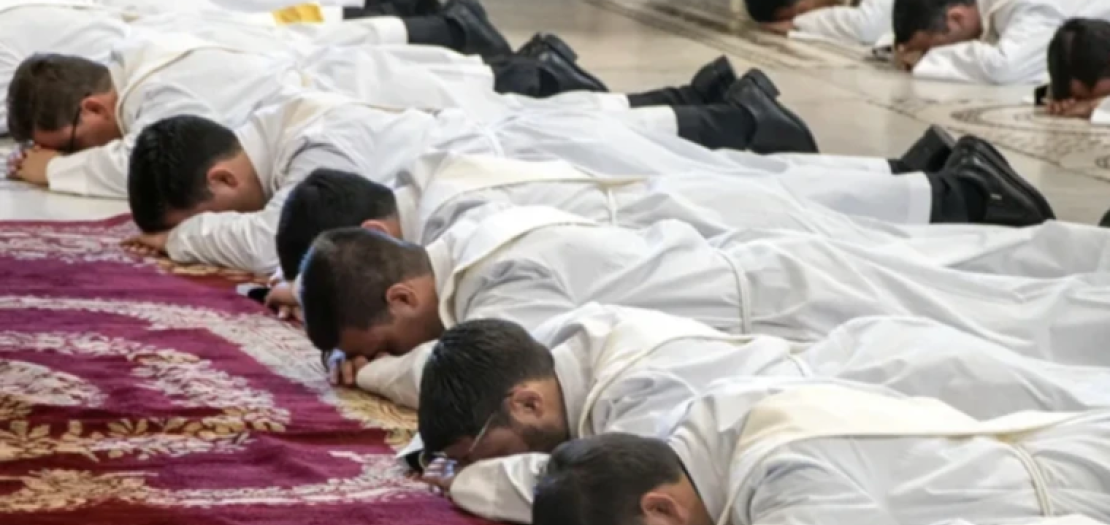
It was enforced weeks after two Nicaraguan seminarians were secretly ordained in Costa Rica. On 7 February, the Bishop of Limón, Costa Rica ordained the seminarians in a liturgy their families did not attend for fear of political reprisals.
The Nicaraguan daily Mosaico CSI published extracts from the homily preached during the ordination liturgy by Bishop Javier Gerardo Román Arias of Limón.
“You arrive at this point with a history marked by the Cross. You did not leave your country by choice but through fidelity. And today you will be ordained far from your family, without the embrace of your people, in a restrained, almost hidden ceremony,” he told the ordinands.
“But none of this is sterile. On the contrary: this ordination experienced in silence is already a powerful testimony of faith, because it proclaims that vocation is not dependent on circumstance but on the faithfulness of God.”
He added: “We are not here to celebrate a human event but to see a work of God that is not held back by frontiers, nor extinguished by persecution nor broken by exile. Today, the Church is praying in silence, because it knows that when God calls, even silence becomes fruitful.”
Martha Patricia Molina, author of the report “Nicaragua: A Persecuted Church”, told ACI Prensa: “The human drama is concentrated in the seminaries. Dozens of young men who have successfully completed their studies in philosophy, theology, and pastoral training find themselves in a legal and spiritual limbo. They possess the aptitude and the calling, but they cannot receive the sacrament [of holy orders].”
She said the impact of Ortega’s ban on priestly and diaconal ordinations in four dioceses was “alarming”.
The Diocese of Matagalpa was “currently operating with barely 30 per cent of its active clergy. Seven out of 10 priests have been forced into exile or banishment,” explained Molina.
She added that Estelí and Jinotega had “experienced reductions of up to 50 per cent in their pastoral capacity, leaving entire communities without the regular celebration of the Eucharist”.
In November 2024, Bishop Carlos Herrera of Jinotega, the president of the Nicaraguan bishops’ conference, was expelled from the country after criticizing a pro-Ortega mayor who had played loud music outside a church where Herrera had been celebrating Mass.
Months earlier, Herrera had ordained a priest and seven deacons in the neighboring Diocese of Matagalpa, whose Bishop Rolando Álvarez was deported to Rome in January 2024 following 18 months in detention. Álvarez was also apostolic administrator of the Diocese of Estelí.