Issued by the Catholic Center for Studies and Media - Jordan. Editor-in-chief Fr. Rif'at Bader - موقع أبونا abouna.org

Two years ago in Haiti, seven men were kidnapped from the schools they worked in. Despite the ongoing unrest and insecurity in the country, and the danger they continue to be subjected to, the dedication of these men and the rest of their congregation of the Brothers of the Sacred Heart to unarmed and disarming peace remains strong.
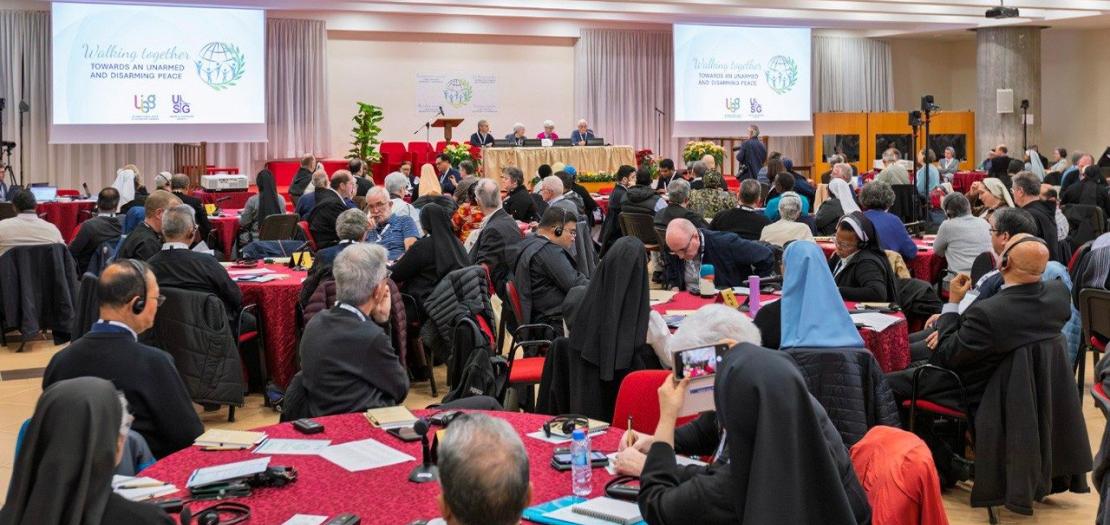
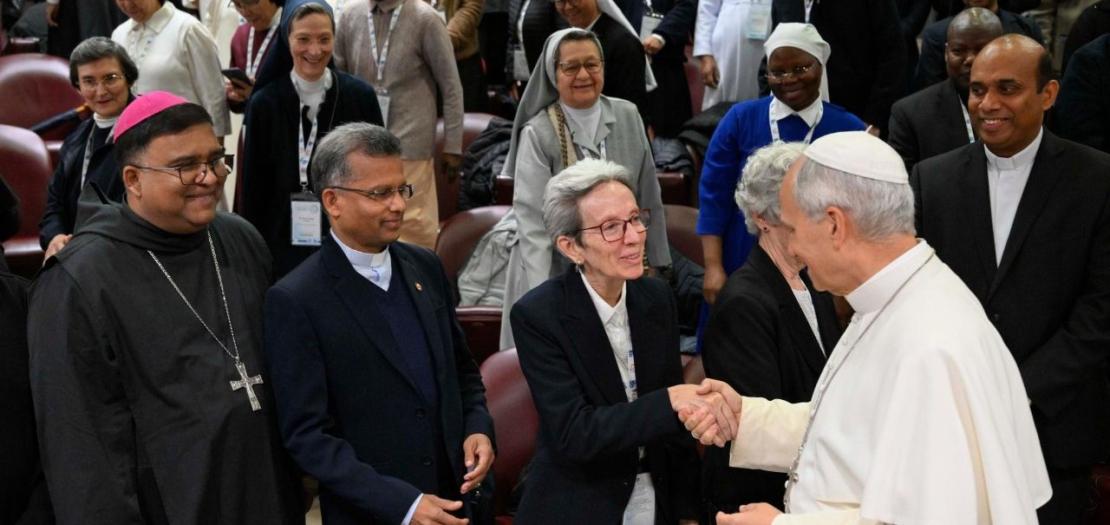
This message of working “together for an ‘unarmed and disarming’ peace”, which has been a staple throughout Leo’s papacy, is also the focus of a Joint Assembly of the International Union of Superiors General (UISG) and the Union of Superiors General (USG) in Rome from 25-27 November.
For three days, the men and women religious from around the world are holding roundtable discussions and listening to testimonies, including that of Cardinal Pierbattista Pizzaballa, Latin Patriarch of Jerusalem, and an address by the Pope.
“I think my hope is that the message, particularly of Cardinal Pizzaballa and the Pope, is one of persistence, that this is not a journey that is going to happen quickly,” Br. Mark Hilton, Superior General of the Brothers of the Sacred Heart, told Vatican News.
“The transformation of the world is something we've been working on for thousands of years as Christians,” he argued.
‘I’m not going anywhere’
For Br. Mark, this call to creating a world of peace is already something concrete. For the 40 religious brothers living in Haiti, their mission of peace finds its roots in the classroom.
UNICEF reported that more than 1,600 schools were affected by the unrest in the country during the 2024-2025 school year. More than 240,000 children and 7,500 teachers were impacted.
In the capital city, up to 90 percent of Port-au-Prince is under gang control—schools have been closed, are inaccessible, or have been destroyed.
The Superior General reflected on how the brothers can bring peace into discipline in their schools and in how children are expected to behave. “We talk about our schools as sanctuaries, places where a young person feels respected, loved, cared for, safe, and can grow to their full potential,” Br. Mark explained.
As gang violence and insecurity continue to mark daily life in Haiti, the Brothers of the Sacred Heart are committed to keeping the schools open, despite half the students being unable to attend due to safety issues.
“They are there every day doing the same thing, creating this environment in a place that has little or no peace whatsoever,” Br. Mark highlighted. The message the brothers in Haiti continue to give is: “I am not going anywhere.”
In Haiti and other places around the world where basic human systems have been hindered due to violence, “one of the great witnesses today is a peaceful environment in a world that lacks peace,” the Superior General argued.
Moving from ideas to action
A transformation towards peace in the world begins with peace within ourselves, in our relationships, and extends to our communities.
“Everyone has a vocation,” Br. Mark reiterated. For some, like his congregation of the Brothers of the Sacred Heart, their calling is to building a world of peace.
At the Assembly in Rome, this vocation to peace brought these different men and women religious foundations together. Yet, after these three days of discussions, the end goal is not to have drafted a step-by-step plan on how to resolve all conflict. Rather, the hope is to have ongoing discussions and an agenda on what the congregation can do to promote peace in the world.
“There was a lot of talk about programs on conflict resolution, educating formation programs so that our members can have a greater idea of how to resolve issues of conflict,” the Superior General explained.
Furthermore, he shared that the goal is to put this education into practice—to move beyond ideas and theories.
In each of the congregations, Br. Mark underlined, “We try to find a way within our particular apostolic work to ensure that peace is not simply a matter between nations, arms, and violence. But it is really about the personal relationships we nurture with people.”