Issued by the Catholic Center for Studies and Media - Jordan. Editor-in-chief Fr. Rif'at Bader - موقع أبونا abouna.org

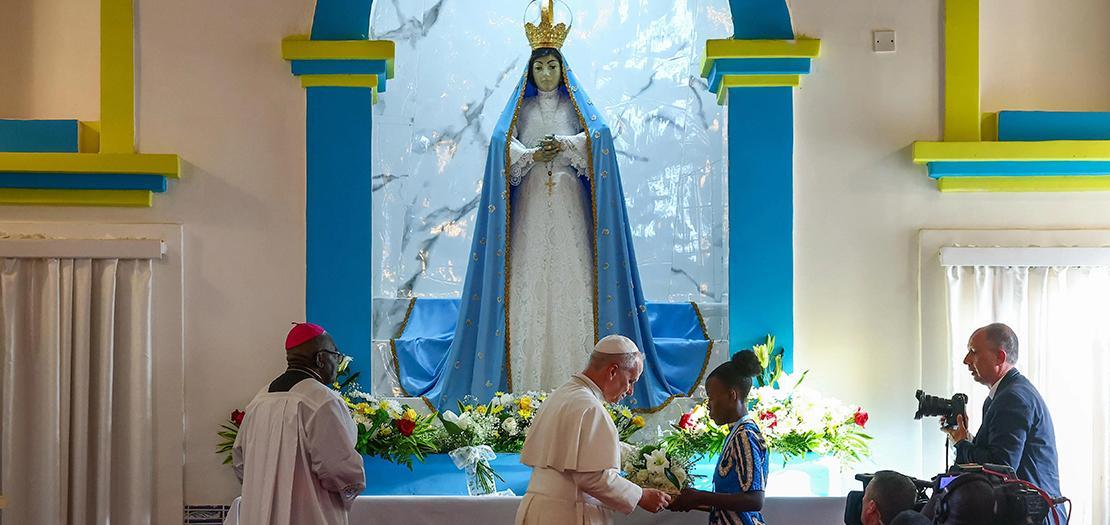
Pope Leo XIV on Sunday visited the Marian Shrine of Mamã Muxima, in Angola, one of the country’s most important pilgrimage sites, where he joined the faithful in praying the Rosary.
Located about 130 kilometers from the capital city, Luanda, the Shrine of Mamã Muxima - meaning “Mother of the Heart” in Kimbundu - has, for centuries, been a place of prayer for Angolans. Built in the 16th century, it became a center of devotion during difficult periods in the nation’s history, including colonial rule and the long civil war. Today, it continues to attract thousands of pilgrims each year.
Addressing young people, members of the Legion of Mary, and other devotees gathered at the shrine, the Pope expressed his appreciation for the opportunity to share what he described as a "moment of Marian prayer" with the local Church.
He reflected on the Rosary, which they had just prayed, as a simple and accessible form of prayer rooted in the Church’s tradition. Quoting Saint John Paul II, he described it as a prayer that retains the "freshness" of early Christianity and continues to inspire believers to proclaim Christ in the world.
Pope Leo then highlighted the strong sense of faith among the people, describing it as both "living and young". He also acknowledged the historical significance of the shrine as a place where generations have come to pray in times of both joy and hardship.
"Mamã Muxima welcomes everyone, listens to everyone and prays for everyone", he said.
As the Pope’s visit to the shrine comes during the Easter season, he emphasized that the Resurrection points those who believe towards their ultimate destiny while also calling them to live out their mission in the present.
He encouraged the faithful to look to Mary as a model, particularly her capacity to reflect on and treasure the events of her Son’s life. In doing so, he said, Christians are invited to grow in a love that is "universal" and attentive to others.
The Pope then noted that prayer must lead to concrete action, especially in caring for those in need. He pointed to key areas such as access to food, healthcare, education, and dignified living conditions for the elderly, describing these as essential expressions of Christian charity.
"A mother loves all her children", he said, adding that this example should guide the faithful in their commitment to others, particularly the most vulnerable.
The Pope also referred to the ongoing construction of a new, larger shrine intended to accommodate the growing number of pilgrims. He described this project as a sign of hope and an invitation, especially for young people, to help build a more just and peaceful society. Addressing the young people directly, he then called on them to work towards a world free from war, injustice, poverty, and corruption, where the values of the Gospel can shape both personal lives and broader social structures.
"It is love that must triumph, not war", he said.
Bringing his address to a close, Pope Leo XIV invited the faithful to entrust themselves to Mary and to carry God’s blessing into their daily lives and encouraged them to leave the shrine as "messengers of life", bringing hope and solidarity to others.
Day Seven in Africa: Pope invites Angolans to begin anew, loving with a mother's heart
Pope Leo XIV only held two public events on his seventh day in Africa, but that didn’t detract from the day’s intensity or the people’s enthusiasm.
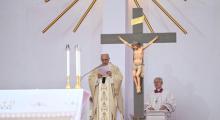
The first event was Holy Mass in Kilamba, a planned urban development about 30 kilometers from the Angolan capital. People from different parts of the world gathered for the liturgy on Sunday, 19 April, despite the intense heat and high humidity.
In his homily, the Holy Father reflected on the Gospel passage about the disciples who encounter the Risen Jesus but fail to recognize him on the road to Emmaus.
“In this opening scene of the Gospel,” said the Pope, “I see a reflection of the history of Angola, of this beautiful yet wounded country, which hungers and thirsts for hope, peace and fraternity.”
He noted that “the conversation along the road between the two disciples, who reflected with sorrow on what had happened to their Master, brings to mind the pain that has marked [Angola]: a long civil war with its aftermath of enmities and divisions, of squandered resources and poverty.”
Given this difficult context, the Pope urged Angolans “to begin anew,” knowing that the Lord accompanies them and has compassion on them, as He did with His disciples. After Mass, he prayed the Regina Coeli with the assembly. He expressed closeness to the people of Ukraine amid intensified attacks and appealed for dialogue and diplomatic efforts in Lebanon.
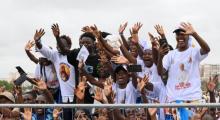
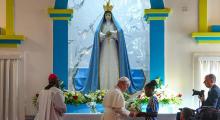
In the afternoon, tens of thousands of faithful gathered in Muxima, the most important pilgrimage site in Angola, to pray the Rosary with the Holy Father. Nearly 130 kilometers from Luanda, it houses the shrine of Mamã Muxima, meaning Mother of the Heart, the Kimbundu name the people of Angola reserve for the Virgin Mary.
Fr Daniel Malamba, a Divine Word Missionary, explained that “for the faithful in Angola, Mamã Muxima is everything.” Angolan religiosity is firmly rooted in love for her, he said, which is why so many people wanted to see the Pope alongside Our Lady.
Many of the faithful expressed their joy at the opportunity to join the Pope in honoring Mamã Muxima. “She listens to our prayers” and is there “for all the problems that we have,” said Conceição António, who was there with a group of pilgrims.
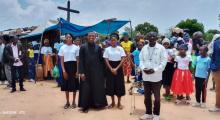
Fernanda, a volunteer helping out at the event, said many people had arrived days earlier, camping out in tents to prepare to welcome the Holy Father.
Their patience was finally rewarded when Pope Leo arrived in a helicopter from Luanda. He prayed inside the chapel at the shrine and left white flowers at the foot of the statue of Mamã Muxima. He then sped through the crowd in the popemobile, people cheering and running after him, trying to get as close as possible to the Successor of Peter.
After the Marian prayer, the Pope told the people present that praying the Rosary commits one “to loving every person with a mother’s heart—concretely and generously—and to dedicating [oneself] to the good of one another, especially the poorest.”
Addressing young people, he urged them to work towards a world free from war, injustice, poverty, and corruption. "It is love that must triumph, not war," he said.
The Holy Father then returned to the Apostolic Nunciature in Luanda for the night.