Issued by the Catholic Center for Studies and Media - Jordan. Editor-in-chief Fr. Rif'at Bader - موقع أبونا abouna.org

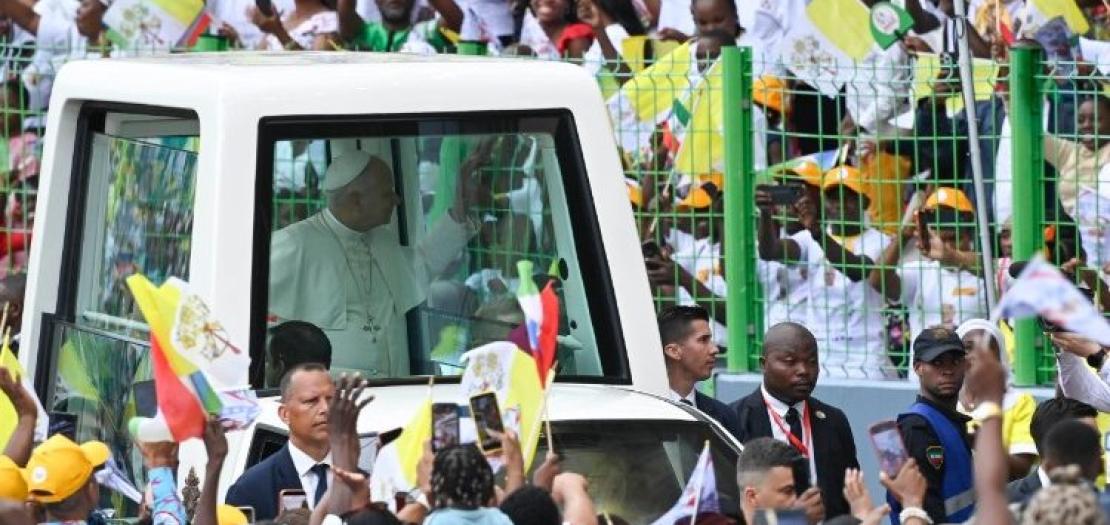
Through Scripture, God reveals to us the meaning of our lives, shows us His love, and encourages us then to spread it to all, Pope Leo XIV said during Mass at the Malabo Stadium in Equatorial Guinea on Thursday, April 23.
"Our problems do not disappear in the Lord’s presence, but they are illuminated. Just as every Cross finds redemption in Jesus, so too the story of our lives finds its meaning in the Gospel,” the Pope highlighted in his homily.
“In Jesus, we are given an astonishing prospect: God gives Himself for us. Do I trust that His love is stronger than my death? By deciding to believe in Him, each of us chooses between inevitable despair and the hope that God offers.”
“Our hunger for life and justice is then satisfied by Jesus’ words: 'The bread that I will give for the life of the world is my flesh',” he emphasized.
In this regard, he encouraged “the living Church in Equatorial Guinea” to carry on “the mission of Jesus’ first disciples with joy.”
“As you read the Gospel together, proclaim it with passion,” he underlined. “And as you celebrate the Eucharist together, bear witness through your lives to the faith that saves, so that God’s word may become good leaven for all.”
Final Mass of his Apostolic Journey
Pope Leo began his homily by expressing his “heartfelt condolence” for the passing of the Vicar General of the Archdiocese of Malabo, Fr. Fortunato Nsue Esono, who died suddenly on April 17, only a few days before the Pope’s arrival in the country.
“I invite you to live this moment of sadness with a spirit of faith, and I trust that, without being swayed by speculation or rash conclusions, the circumstances surrounding his death will be fully clarified,” the Pope said.
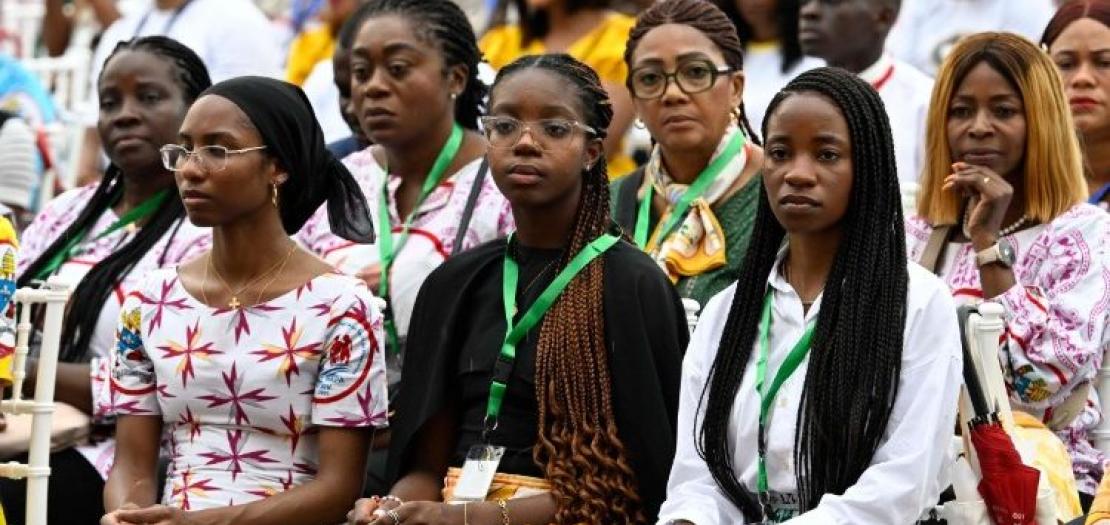
Welcomed by a crowd of around 30,000 people, this is the last Mass that the Pope will preside over during his 11-day Apostolic Journey that has brought him across four African nations: Algeria, Cameroon, Angola, and Equatorial Guinea. It is also his last appointment before the farewell ceremony at the Malabo International Airport, from which he will depart to return to Rome.
Word of God bears fruit and sets us free
Pope Leo XIV underlined that interpreting Scripture is “both serious and providential,” as it “prepares us to read together the book of history, that is, the pages of our own lives, which God continues to inspire with His wisdom.”
The Pope reflected on the first reading from the Acts of the Apostles, in which the deacon Philip explains the Scripture and proclaims Jesus to the eunuch of the Queen of Ethiopia.
Pope Leo noted that the eunuch is intelligent and cultured but not fully free, and all he has is his labor, which benefits others. Even his body, the Pope explained, shows this, as being a such he cannot give life, and thus “all his vitality is placed at the service of a power that controls and rules over him.”
“Yet, as he returns to his homeland of Africa, which for him has become a place of servitude, the proclamation of the Gospel sets him free. The Word of God that he holds in his hands bears unexpected fruit in his life,” the Pope said.
Through Philip, the eunuch is transformed from a spectator of the sacred texts “into a protagonist in the very story that captivates him, because it now concerns him personally.”
“This African man thus enters into Scripture, which welcomes every reader who seeks to understand God’s word,” the Pope continued. “He steps into salvation history, which embraces every man and woman, especially the oppressed, the marginalized, and the least among us.”
The Pope pointed out that this word becomes a lived reality as, at the end of this passage, the eunuch is baptized by Philip and through this sacrament, “becomes a child of God, our brother in faith.”
“Though a slave and childless, he is reborn into a new and free life in the name of the Lord Jesus.”
Christ is everything for us
Pope Leo XIV reminded those present that like the eunuch, we too have become Christians through our baptism and thus receive the same faith through which we read the Word of God, that then helps us “proclaim the Gospel in our lives.”
Reading Scripture, “therefore, is always both a personal and an ecclesial act; it is never something done in isolation or in a merely mechanical way,” the Pope said, highlighting also the importance of a guide who accompanies us on our journey of faith, like Phillip did with the eunuch.
Pope Leo then noted that the eunuch was reading a passage from the prophet Isaiah, which speaks of “Jesus, whose passion, death and resurrection, redeem us from sin and death.” In Him, every word of God finds fulfillment; “He reveals its original intention, full meaning, and ultimate purpose.”
Referring then to the Gospel, taken from John, Pope Leo underlined that “through the actions of Jesus, the Redeemer, He brings to fulfillment what He has always done: giving life. He creates the world, saves it, and loves it forever.”
In the Gospel, Christ also reminded those listening of His “constant care" by recalling how God provided for the Israelites through the Manna during their forty-year journey through the desert.
This Manna “is a sign, a blessing, and a promise that Jesus comes to fulfill,” the Pope explained, underlining that now it gives way to the Eucharist, the “eternal Covenant.”
“We praise you and bless you, because you chose to become for us the Eucharist, the bread of eternal life, so that we might live forever,” the Pope said, adding that “Christ is everything for us” and in Him “we find the fullness of life and meaning.”
Proclaim the Good News to all
Given this Good News about how God “always loves us first” and His word “is the Good News for us,” the Pope insisted that “we have nothing greater to proclaim to the world.”
“All of us are called to this evangelization from the moment of our Baptism, the sacrament of fraternal unity, the cleansing water of forgiveness, and the source of hope,” he emphasized. “Through our witness, the proclamation of salvation is made visible in action, service, and forgiveness—in a word, it becomes the Church!”
The Pope also warned against allowing our interior life to be caught up in its own interests, not allowing space for others. He noted that “in the face of such closed attitudes, it is precisely the Lord’s love that sustains our efforts, especially in the service of justice and solidarity.”