Issued by the Catholic Center for Studies and Media - Jordan. Editor-in-chief Fr. Rif'at Bader - موقع أبونا abouna.org

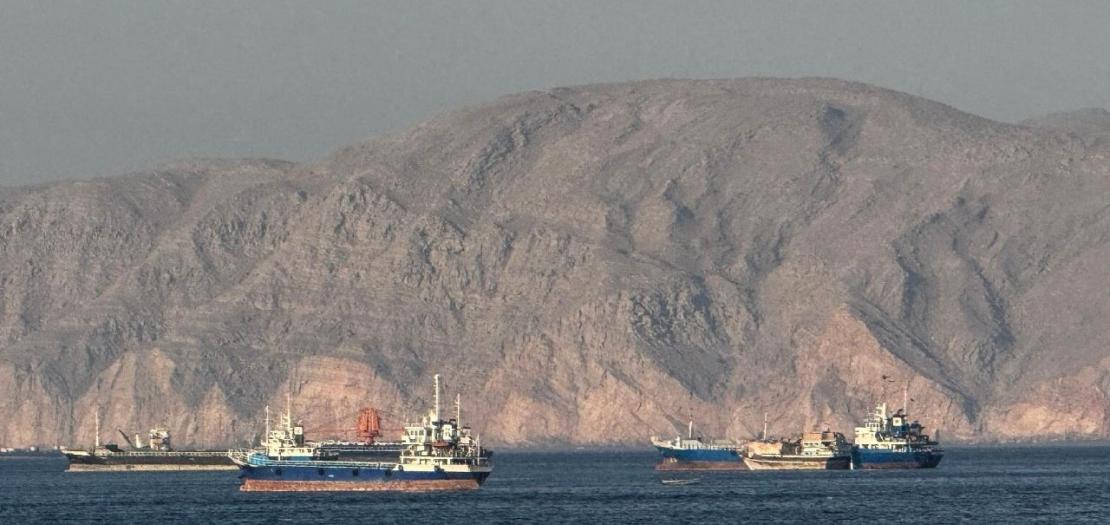
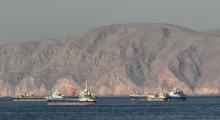
Oil tankers blocked in the Strait of Hormuz
On the first Sunday of his summer stay in Castel Gandolfo, after praying the Angelus in front of the Apostolic Palace facing the Piazza della Libertà, Pope Leo XIV turned his thoughts to the many regions of the world affected by armed conflict, where civilians continue to bear the greatest suffering.
The Pope referred specifically to the Middle East, where tensions have flared again following the collapse of hopes for a U.S.-Iran agreement, as well as to the ongoing crisis in Lebanon. He also expressed concern over the war between Russia and Ukraine, marked by the intense attacks in recent days on Kharkiv, Dnipro, Kyiv, and Odesa.
"Unfortunately, the winds of war are blowing once again in the Middle East, in Ukraine and in many other parts of the world, sowing violence, terror and death, and once again affecting many innocent people."
The Bishop of Rome encouraged people not to lose hope and urged a return to dialogue and negotiation as the only path capable of achieving lasting reconciliation among nations.
"Let us not allow these winds to extinguish the flame of hope and peace, even when it seems fragile and flickering. I renew my hope that we will persevere on the path of dialogue, encounter and diplomacy. This is the only path capable of leading to a just and lasting peace, in which peoples can live in reconciliation, mutual security and respect for the dignity of every person."
Prayer for seafarers
On the day when the Catholic Church invites the faithful to pray for those who live and work at sea—traditionally observed on the second Sunday of July as Sea Sunday—and to reflect on the importance of an industry that supports roughly 90 percent of global trade, the Successor of Peter expressed concern about the impact of war on the already challenging working conditions faced by seafarers.
"Today is “Sea Sunday.” My thoughts go out to all sailors, fishermen and port workers around the world who, though marked by separation from their loved ones and sometimes by fear of the conflicts occur on the seas, sustain trade and the lives of many peoples through their patient and quiet labor."
In conclusion, Leo XIV recalled the centuries-old Marian pilgrimage to Częstochowa, one of the most significant expressions of faith in Poland and throughout Europe. Every year, hundreds of thousands of pilgrims travel to the Shrine of the Monastery of Jasna Góra to venerate the renowned icon of Our Lady of Częstochowa, the Black Madonna.
"Finally, I offer my prayers for the many Polish faithful gathered for the annual pilgrimage with the icon of Jasna Góra, that, as “missionary disciples,” they may be joyful witnesses to the Gospel."