Issued by the Catholic Center for Studies and Media - Jordan. Editor-in-chief Fr. Rif'at Bader - موقع أبونا abouna.org

"Search always for peace and reject war."
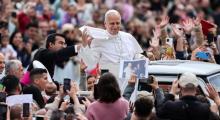
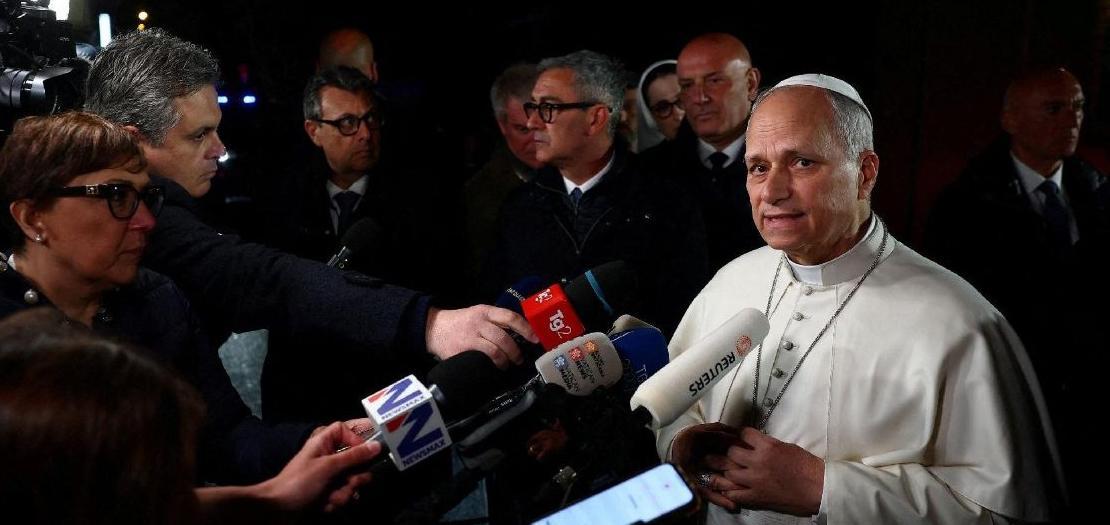
Pope Leo XIV renewed that appeal for peace in a brief statement on Tuesday evening to a group of journalists waiting for him outside Villa Barberini, the papal residence in Castel Gandolfo.
Against the backdrop of the U.S.-Israeli war against Iran and the U.S. President's threat to destroy "the whole Iranian civilisation" on Tuesday night if Tehran does not comply with a deadline set by the White House to reach a deal to reopen the Strait of Hormuz, the Pope said he wished simply to say, once again, what he had said in his Urbi et Orbi message on Sunday, "asking all people of goodwill to always search for peace and not violence, to reject war—especially a war which many people have said is unjust, which is continuing to escalate and which is not resolving anything."
Speaking in Italian, he said, “Today, as we all know, there has also been this threat against the entire people of Iran. And this is truly unacceptable! There are certainly issues of international law here, but even more, it is a moral question concerning the good of the people as a whole, in its entirety.”
The Pope did not neglect to shine the light on the wide-reaching consequences of the conflict and said, "We have a worldwide economic crisis, an energy crisis, and a situation in the Middle East of great instability, which is only provoking more hatred throughout the world."
Thus, Pope Leo urged, "Come back to the table. Let's talk. Let's look for solutions in a peaceful way."
The Pope went on to remember all those who are being unfairly harmed in the conflict.
"Let's remember, especially, the innocent: children, the elderly, the sick, so many people who have already become, or will become, victims of this continued warfare—and to remind all that attacks on civilian infrastructure are against international law, and that they are also a sign of the hatred, division, and destruction that the human being is capable of."
The Pope reiterated that "we all want to work for peace. People want peace," as he called on all people to do their part.
"I would invite the citizens of all the countries involved," Pope Leo concluded, "to contact the authorities—political leaders, congressmen—to ask them, to tell them, to work for peace and to reject war and violence. Thank you very much."
Pope expresses closeness to Christians affected by war in southern Lebanon
In a message to the inhabitants of the conflict-battered village of Debel in southern Lebanon, Pope Leo XIV expressed his spiritual closeness to those suffering amid war, and he extended his consolation “to all Christians of southern Lebanon.”
Archbishop Paolo Borgia, Apostolic Nuncio to the country, transmitted the Pope’s message on Easter Day, conveying the Pope’s “proximity and paternal tenderness” to communities affected by the ongoing violence in the area.
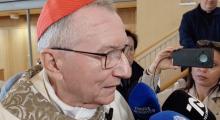
The message, signed on the Pope’s behalf by the Secretary of State, Cardinal Pietro Parolin, was originally intended to be delivered in person during a pastoral visit to Debel. The nuncio was expected to travel with three trucks of humanitarian aid, coordinated by Caritas, the Œuvre d'Orient, and the Maronite Patriarchate. However, the journey was halted due to ongoing Israeli attacks in the area.
So, forced to remain at the UNIFIL base in Deir Kifa, Archbishop Borgia read the papal message on Lebanese television, directly addressing the people of Debel and other affected communities in the south of the country.
In his Easter message, Pope Leo XIV had words of spiritual closeness to those suffering amid ongoing conflicts. In particular, he extended his consolation “to all Christians of southern Lebanon and to all people who suffer the consequences of war.”
“Today we celebrate the Resurrection of the Lord,” the Pope wrote, “May you, in the midst of feelings of pain, anxiety, and mourning, come to know in your hearts a deeper joy: Jesus has gloriously triumphed over death. It is a joy that comes from heaven and that nothing can take away.”
The Pope also reflected on the suffering of the local population, noting that in moments of injustice, abandonment, and hardship, the faithful remain close to Christ in his own Passion and victory over evil.
“In your misfortune, in the injustice you endure, in the feeling of abandonment you experience, you are very close to Jesus,” the Pope continued. “You are close to Him on this Easter day, when He has conquered the forces of evil, and which resounds for you as a promise of the future.”
Pope Leo encouraged the faithful not to lose heart, reminding them that their prayers and acts of solidarity are not in vain. “Do not lose courage,” he pleaded, “No prayer of yours, no gesture of solidarity, no sigh of weariness that you express is lost.”
Entrusting the suffering communities to the intercession of Our Lady of Lebanon, he affirmed that she “keeps everything in her heart and brings it to her Son.”
The message concluded with the Apostolic Blessing imparted upon all those addressed, including their families and loved ones.
The Pope's message came in the context of a halted humanitarian convoy. The planned mission to Debel, carrying essential supplies for civilians, was interrupted due to the security situation along the route.
Despite the suspension of the physical distribution, the Church organizations involved continue to coordinate relief efforts for communities affected by the escalation of violence in southern Lebanon.