Issued by the Catholic Center for Studies and Media - Jordan. Editor-in-chief Fr. Rif'at Bader - موقع أبونا abouna.org

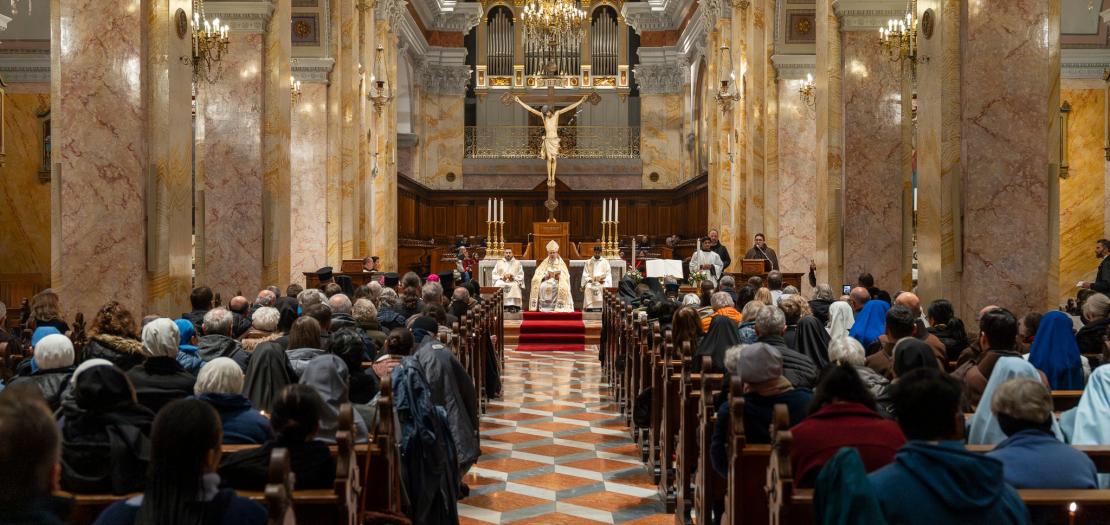
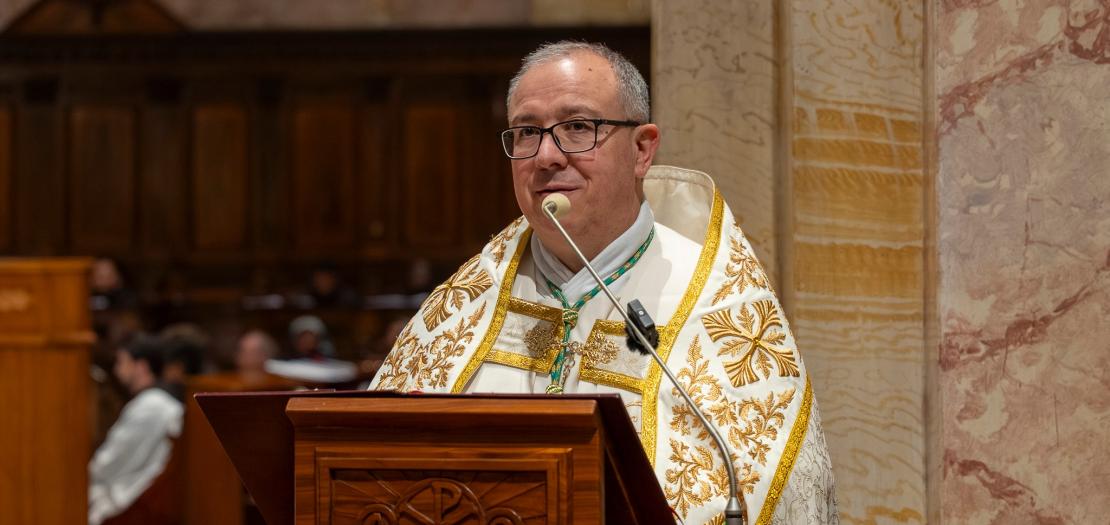
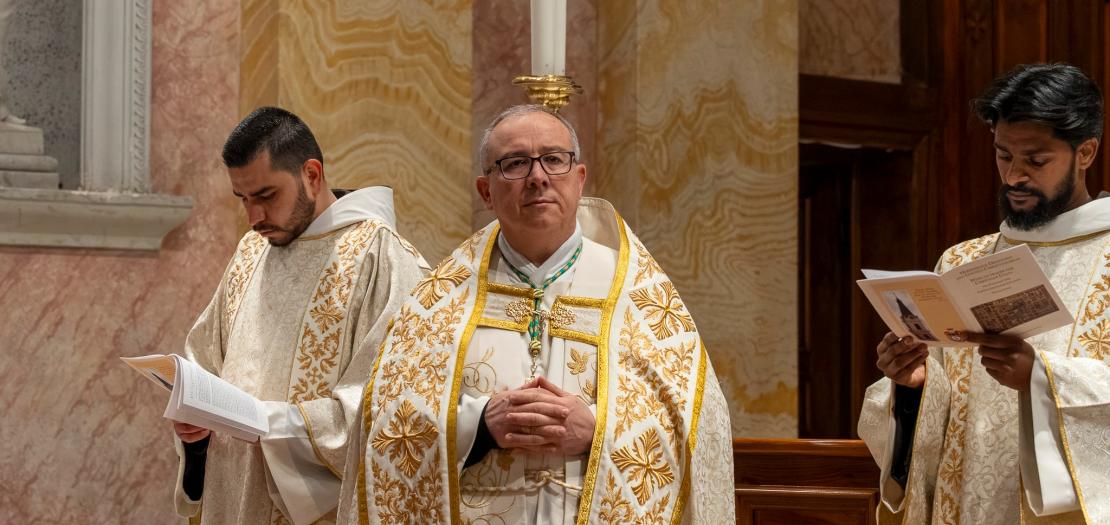
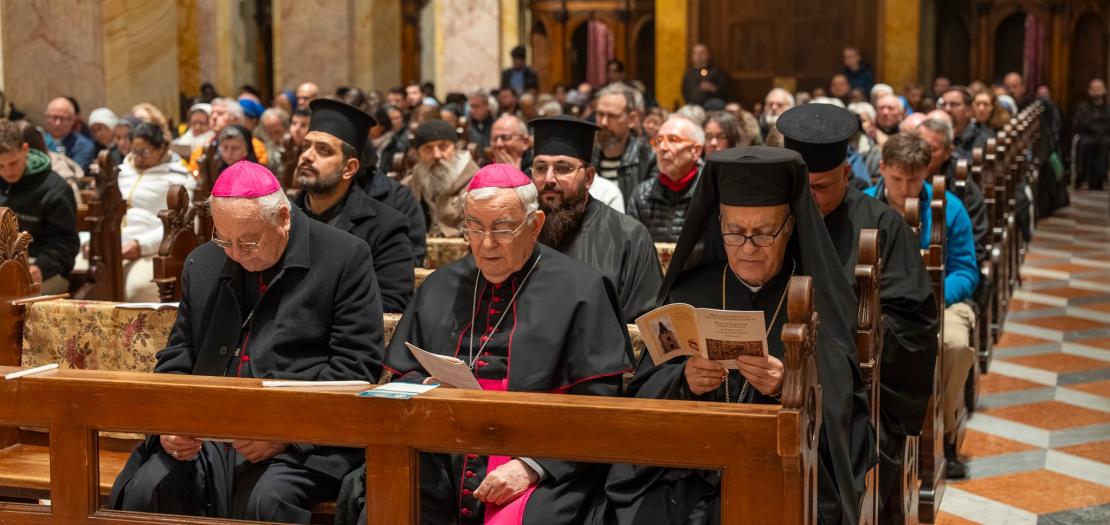
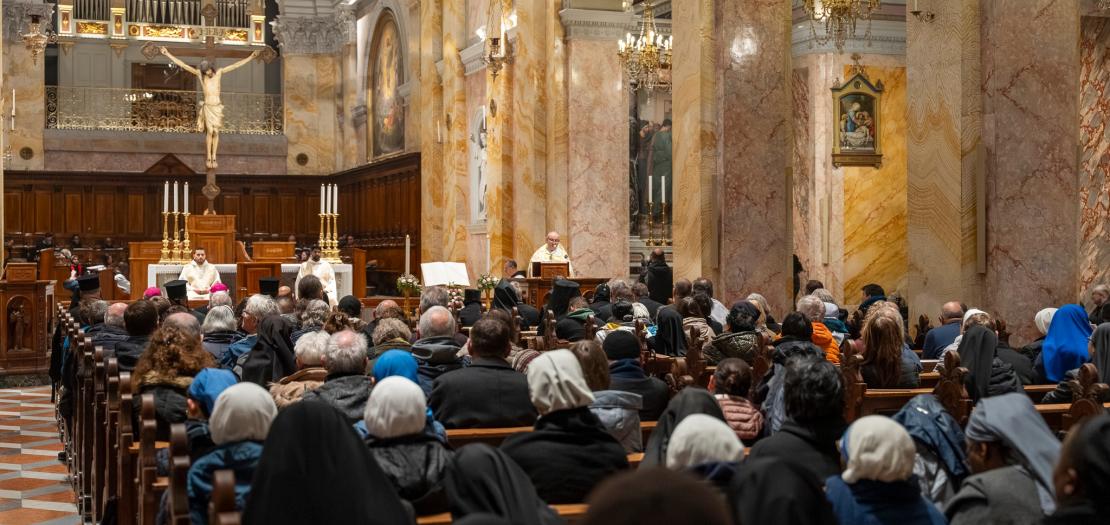
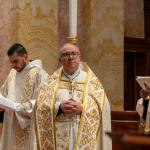
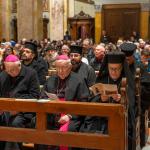
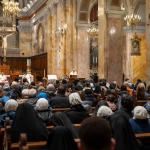
As the Week of Prayer for Christian Unity comes to an end. In the Holy Land, in Jerusalem, it took place from January 24 to February 1, each day touching a different place of worship of the various Christian confessions, from the Holy Sepulcher to the Cenacle, up to the Anglican, Lutheran, Armenian, Coptic, Ethiopian and Greek Catholic churches. The Custody of the Holy Land hosted one of the central moments at the church of St. Savior, where the Custos, Fr. Francesco Ielpo, presided over the ecumenical prayer together with representatives of the other Churches present in the city.
"There is one body and one Spirit"
The guiding thread of this year was the verse from the Letter to the Ephesians: "There is one body and one Spirit, just as there is one hope to which God has called you" (Eph 4,4), which recalls the deep vocation of Christians to recognize themselves as already united in Christ even before any human effort. In the celebration of January 28 at St. Savior, the homily of the Custos insisted on this dimension: unity is not the result of uniformity, but of communion, which does not erase differences but brings them back to a single source, Baptism in Christ. In a city where Churches live side by side, often just a few meters apart, these words take on a particular resonance and become an invitation not to consider unity as a utopia, but as a concrete responsibility.
A week in the symbolic places of Jerusalem
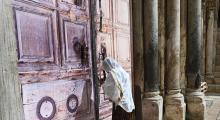
The program of the week followed the now traditional path of ecumenical celebrations in Jerusalem. It began on Saturday January 24 at the Anastasis, Holy Sepulcher, with the office of Compline of the Greek Orthodox Church, then continued on the following evenings at St. George’s Anglican Cathedral, the Lutheran Church of the Redeemer, the Armenian Cathedral of St. James and the Latin parish of St. Savior, up to the celebration at the Cenacle on Mount Zion and the Coptic and Ethiopian churches. The week concluded on Sunday February 1 in the Greek Catholic Church of the Annunciation, near the Jaffa Gate, almost sealing the journey with a shared prayer at the threshold of the Old City.
This daily “pellegrinatio” from one community to another is not only a symbolic gesture, but a concrete way of getting to know one another, praying together and sharing the wounds and hopes of the Holy Land. In a context marked by conflicts and divisions, the simple fact that Christians gather united in their respective churches, alternating languages, rites and traditions, already becomes an announcement of reconciliation and a message of peace addressed to the entire population.
Unity born from daily life
The experience of the Week of Prayer fits into a broader fabric of ecumenical relationships that, in Jerusalem, are played out above all in everyday life. As Fr. Stéphane Milovitch recalls, dialogue is not only participating in conferences or official meetings, but sharing daily life: greeting one another during respective feasts, collaborating in the custody of the Holy Places, working side by side in the shrines and institutions of the city. The very history of Jerusalem, cradle of a Church that from the beginning was composite and plural, shows that diversity is not a threat but a richness to be welcomed, when the gaze remains fixed on Christ and on the Gospel.
In this sense, the Custody of the Holy Land lives a particular vocation: to guard the Places of the Redemption together with the other Churches, keeping alive a style of hospitality and openness that helps the faithful perceive the Church as one body, present in many forms. From collaboration in the Basilica of the Holy Sepulcher to the sharing of the Basilica of the Nativity, through the many informal encounters, daily life becomes the place where unity truly begins “every day”, well beyond the sole week of January.
A vocation for the Church and the world
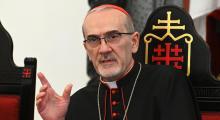
In his homily, Fr. Francesco Ielpo recalled that Jesus, in his priestly prayer, does not ask that the disciples be strong or perfect, but that they be one, "so that the world may believe". The unity of Christians does not concern only internal relations between Churches, but is a prophetic word for a world wounded by wars, polarizations and mutual suspicions. Paul’s invitation to live with humility, gentleness and patience thus becomes a program of life: supporting one another in love, recognizing in the other a brother, choosing to walk together even when the wounds of the past are not yet fully healed.
The Custos emphasized how the Week of Prayer just concluded reminds everyone, local communities, pilgrims, friends of the Holy Land, that each person can become an instrument of unity: in common prayer, in small daily gestures, in a style of listening and mutual welcome. May the Holy Spirit, one and life giving, continue to guide the steps of the Churches of Jerusalem, so that this city, marked by the cross and the resurrection, may increasingly be a sign of visible communion in the concrete fabric of Christian life.