Issued by the Catholic Center for Studies and Media - Jordan. Editor-in-chief Fr. Rif'at Bader - موقع أبونا abouna.org

‘May the Holy Spirit grant us the graces we need to make a faith-filled reading of this historic moment and of our reality as disciples and shepherds of the faithful people.’
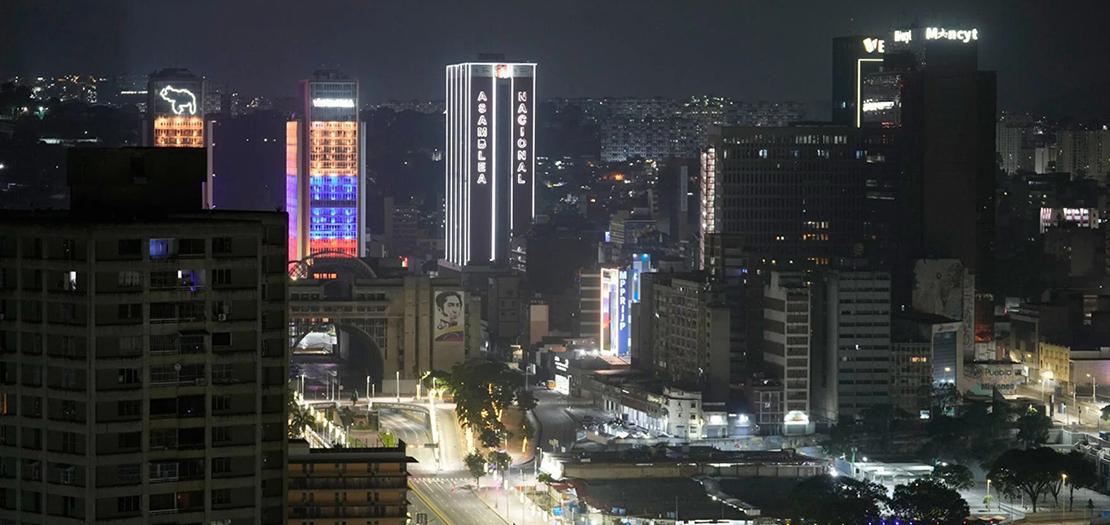
Venezuela’s bishops “are praying and in constant communication with each other” after United States forces attacked the country.
US President Donald Trump said special forces had captured the Venezuelan president Nicolas Maduro and taken him out of the country in an attack before dawn on Saturday, during airstrikes on the capital Caracas and other regions.
Delcy Rodríguez, the Venezuelan vice-president, demanded “proof” that Maduro and his wife Cilia Flores, who was reportedly captured with her husband, were still alive. Rodríguez said she did not know the whereabouts of the president, who has governed the nation since 2013.
The US attorney general Pamela Bondi said Maduro and his wife had been indicted and will face trial on charges including conspiracy for narco-terrorism in the southern district of New York. In a social media post, she said Maduro and Flores would “soon face the full wrath of American justice on American soil in American courts”. Maduro has been charged with conspiring to import cocaine and conspiring to possess and deploy automatic weapons.
The Archbishop of Valencia Jesús González de Zárate, the president of the Venezuelan bishops’ conference, told the EWTN news channel that as events unfolded it was “not easy to assess them fully”, but bishops across the country were maintaining contact with each other and with their priests.
In a statement reported by CNA, Bishop Juan Carlos Bravo Salazar of Petare, a diocese on the outskirts of Caracas, urged Venezuelans “to maintain calm, peace and above all an atmosphere of prayer”.
“It is important to stay sheltered and not go out,” he said. “For the good of our people, do not call people into the streets, nor spread information that has not been verified and confirmed, nor from sources that are not trustworthy or official.”
The bishop continued: “May the Holy Spirit grant us the graces we need to make a faith-filled reading of this historic moment and of our reality as disciples and shepherds of the faithful people.”
Marco Rubio, the US secretary of state, wrote on social media: “Maduro is not the president of Venezuela, and his regime is not the legitimate government. Maduro is the head of the Cartel de los Soles, a narco-terror organization which has taken possession of a country.”
Rubio, a Cuban-American whom Trump appointed his national security advisor in May, also referred to the July 2024 Venezuelan general elections where Maduro’s purported victory was heavily disputed within the country and denied by international observers including the US.
Maduro claimed he won 51.2 per cent of the vote, over the opposition candidate Edmundo González with 44.2 per cent. The opposition leader María Corina Machado, on whose behalf González ran for the presidency, alleged that printouts of votes from election-machines at Venezuela’s polling stations showed González won by a landslide.
Relations between the US and Venezuela have deteriorated further in recent months, with Washington deploying forces in the Caribbean and ordering strikes on vessels it claimed were smuggling drugs from Venezuela.
In a message published last week to mark Christmas, the Venezuelan bishops’ conference said “we are people of peace” but face a festive season “overshadowed today by repeated and at times contradictory news of warlike actions near our coasts with regrettable loss of life, the presence of a foreign military power in the international waters of the Caribbean and the predominance of a speculative narrative where opinion anticipates reality”.
They also condemned the country’s “political dynamics where freedom is removed from citizens – whether national and those abroad – who think differently”.
“The populace is subject to widespread impoverishment, there is galloping inflation and the economy is disintegrating, our natural resources are being confiscated and new economic sanctions are being imposed. Migrants are discriminated against and criminalised,” they said.
Following the US strikes on Saturday, the Spanish government urged “moderation”, a “de-escalation” of the situation and respect for international law and the United Nations charter. A statement from Spain’s foreign ministry said it was prepared to help facilitate dialogue to “achieve a peaceful and negotiated solution to the current crisis”.
It said Spain was “following closely the situation in Venezuela, in a coordinated manner with our partners in the European Union and the countries of the region”. The statement continued: “Spain recalls that it has not recognised the results of the elections of 28 July 2024 and has always supported initiatives to achieve a democratic solution for Venezuela.”
Mexico also condemned the US attack. In a statement, President Claudia Sheinbaum said the Mexican government “vigorously rejects the military action taken unilaterally in the last few hours by the armed forces of the US against targets in the territory of the Bolivarian Republic of Venezuela, in clear violation of Article Two of the charter of the United Nations”.
She continued: “Mexico is making an urgent appeal for international law to be respected as well as the principles and intentions of the UN charter.” Sheinbaum appealed for an end to “any act of aggression against the government and people of Venezuela”.
In Brazil, President Lula de Silva held an emergency meeting to discuss and analyse all available information about the US attack. At the start of January, Silva confirmed that he had spoken to Maduro about Venezuela’s worsening relations with the US.
In the UK, Prime Minister Sir Keir Starmer called for respect for international law and said the UK was “not involved in any way” in the attacks. He told the BBC he wanted to speak to Trump to “establish the facts” in a “fast-moving” situation.
Kaja Kallas, the vice-president of the European Commission, said: “The EU has repeatedly stated that Mr Maduro lacks legitimacy and has defended a peaceful transition.” She continued: “Under all circumstances, the principles of international law and the UN Charter must be respected. We call for restraint.”