Issued by the Catholic Center for Studies and Media - Jordan. Editor-in-chief Fr. Rif'at Bader - موقع أبونا abouna.org

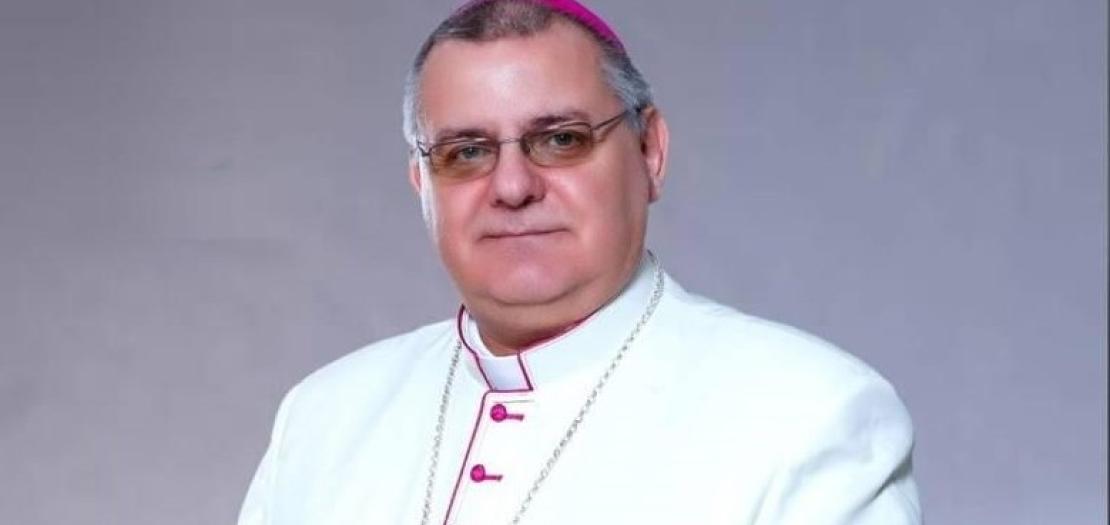
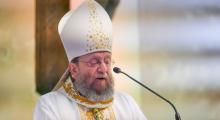
AsiaNews recently spoke by telephone with the Apostolic Vicar of Northern Arabia, Bishop Aldo Berardi, a member of the Order of the Most Holy Trinity and of the Captives, in Madagascar for the centenary celebrations of his Order on the island.
The focus was on the meaning and future of the mission of the Church in Arabia, a region ravaged by war and conflicts, starting with the latest one that broke out at the end of February between the United States (and Israel) and Iran, where the future, especially of economic migrants, is increasingly uncertain.
Presence and vocation, the prelate explains, are the key points of the upcoming meeting with the vicariate's clergy, with a commitment that goes beyond the task of “imparting the sacraments" and includes sharing the “suffering and contribute” to the growth of the region’s countries.
The Northern Vicariate includes four states in the Arabian Peninsula, each with its own social, political, and religious traits: Bahrain, Kuwait, Qatar, and Saudi Arabia. In the latter, no religion other than Islam is permitted but a substantial Catholic community calls it home.
The war between the United States and Iran is the source of uncertainty, driving away economic migrants after they lose their jobs and face an uncertain future. What remains is this sense of "fragility," says Bishop Berardi, which the Church deals with "with solidarity and charity, with prayer and unity among the different communities."
Following is the Bishop Berardi’s full interview with AsiaNews:
Your Excellency, six months have now passed since the start of the new Gulf War, what is the situation?
Currently, attacks are down, although each US offensive is met with a response from Iran, which has not spared the countries within by the vicariate, with drone strikes on Kuwait and, especially, Bahrain (where the Vicariate is headquartered). The evolution of the situation is linked to relations between Washington and Tehran.
Things have been calmer in recent days, despite repeated [US] announcements of agreements and [Iranian] denials. It is impossible to know what is really happening. Iran responded by striking US bases in the Gulf, destroying them, and is now targeting oil wells, refineries, and energy facilities, while the situation remains tense.
What are the consequences of the war on a daily basis, especially in terms of supplies, given the critical issues related to the Strait of Hormuz?
This situation is clearly critical. In Bahrain food supplies arrive from Saudi Arabia via the [King Fahd] Bridge connecting the two countries, or by air. Bahrain and Kuwait are the two places suffering the most, especially the latter, where all supplies arrive by sea, while Qatar relies on food from the United Arab Emirates (UAE).
Some key goods are in short supply. We are waiting for a full reopening because we are experiencing shortages and critical issues. As a Vicariate, we have been waiting for months for a canvas to cover the courtyard of the co-cathedral in Kuwait City. In Bahrain, we have begun building the bishop’s residence. For now, things are progressing, but there is no certainty regarding deliveries, especially for marble and iron.
Are people feeling the impact of the conflict and the alternating rumurs of peace and military escalation?
We hear the alarms, the drones taking off, while tensions and uncertainty persist. We await peace, we pray for peace, but with rumors of bombings and stories of agreements, people are exasperated. The future remains uncertain, and many things have changed, even in the economy. In terms of employment, many people have left because they lost their job or out of fear of war, which is something one can feel every day.
Everything is uncertainty regarding schools, since we don't know if they will open in September; we hope so, but doubts remain. We had to cancel exams because children couldn't study, or they had to study by taking online courses, but it's not the same.
The issue of uncertainty is especially true for migrants, who make up the vast majority of the population in the Gulf, including Christians...
Yes, and it's a tragedy! The economy is showing signs of fragility and uncertainty, going through a period of stagnation. For us, this is a call to rethink our pastoral care. When people come and go, leave and return, we always have to start all over again. We are facing a lot of suffering. At the moment, we don't have official statistics on departures from Bahrain, Kuwait, and Qatar, but for the Church in the Gulf, it is an open question.
Bishop Berardi, what are the greatest challenges, or priorities, in terms of pastoral care?
Training leaders, lay ministers entrusted with the Eucharist, and those responsible for communal prayer. These aspects of training give us pause, because after a while, people leave and we have to start over. Our task is to ensure continuity in training.
Despite critical issues and challenges, the life of the Church continues, and in recent months you have managed to visit all the parishes in the vicariate. What situation did you find?
Yes, despite the war, I visited all the parishes, and it was very important, not only because this is the year dedicated to visits, but also for the people, to show them that the bishop is present and close. We prayed for peace, I met with the Eastern Rite communities, imparted various ministries, and visited priests and nuns.
What remains is this sense of fragility, of not knowing how to move forward because from one day to the next you could lose your job and be forced to leave. Censorship imposed by the authorities and the lack of certainty about what is happening don't help. We heed what is said about the conflict.
For this reason, we prefer not to talk much about the war, but rather focus on hope, peace, and unity among communities. The mission has reinforced feelings of unity and prayer, the need for solidarity and charity, because many have lost their jobs and there are also problems finding food or shelter.
Your Excellency, have the faithful made any particular request in recent months?
The underlying desire is to see and meet their bishop, pray, and celebrate Mass together. However, I would like to emphasize a very important aspect – no priest has asked to leave; everyone has chosen to stay.
I invited them to be close to their linguistic or ritual community, to show that we as a Church are united and that we will never leave the region out of fear, because it is part of our vocation as priests and pastors: to remain and bear witnesses!
Do you remember a particularly significant event or moment in the past six months that show the strength of the faith of the Church of the Vicariate?
I remember an episode during a Mass. Suddenly, all the faithful's cell phones started ringing in a general alarm. Nevertheless, we continued the service, and no one left the building, taking part in the rite with greater intensity.
That was a profound moment, which was repeated in the following weeks. It is an important story because it shows that we must not give in to fear, or let ourselves be overcome by it.
Another significant moment was the visit by the Crown Prince of Bahrain (Salman bin Hamad Al Khalifa) to the cathedral, along with the ministers of justice and the interior. They asked me to leave the church open, because the people need to pray and receive spiritual support.
What is the Church's mission today in the vicariate, in a region ravaged by war?
This is the question I ask the clergy, and it will be the question we will address during the meeting scheduled in Bahrain a few months from now.
What is the meaning of our presence? What is our vocation? It is a commitment that goes beyond the task of maintaining the faith, imparting the sacraments, celebrating Mass. We must answer these questions.
Of course, our vocation remains, first and foremost, one of bearing witness, which is also a gesture of solidarity among us, among communities, rites, and languages united in diversity. But we also participate in people’s lives; we are part of these countries. We are not an external and temporary branch, but people who share in their suffering and contribute to their growth. At this point in time, we are all united, and this is important.
From this perspective, the stories of Saint Aretas and the Christian martyrs remain essential. What value does their sacrifice of faith have today?
Its relevance stems from a historical element. Our task is to remember the past and assert that Christian communities were already present in this area well before the arrival of Islam. Not only Saint Aretas, but also all the ruins discovered in the Emirates, Bahrain, and Kuwait, ensure a sense of continuity in the Christian presence.
Added to this is the value of the martyrs' testimony, with Saint Aretas, who refused to deny the cross of Christ, asserting with their own life Christ’s divinity and resurrection. For us, the challenge is also to bear witness to this dogma in Islamic countries where Jesus is not considered the son of God and for whom he did not die on the cross. We must maintain our faith, affirming the death and resurrection of Christ and his divine nature that saves us. This is fundamental!