Issued by the Catholic Center for Studies and Media - Jordan. Editor-in-chief Fr. Rif'at Bader - موقع أبونا abouna.org

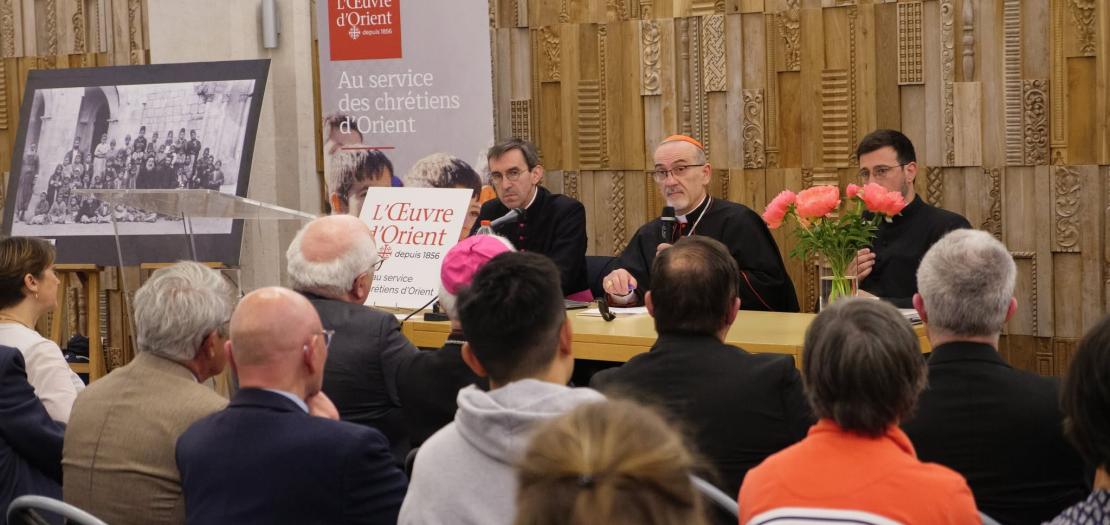
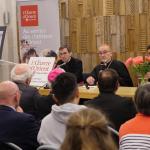
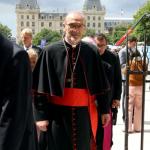
“France needed to hear directly from a pastor who lives side by side with the people of the Holy Land every day.” With these words, Msgr. Hugues de Woillemont, Director General of L’Œuvre d’Orient, expressed the deeper meaning behind the visit of His Beatitude Cardinal Pierbattista Pizzaballa, Latin Patriarch of Jerusalem, to France from June 8 to 14.
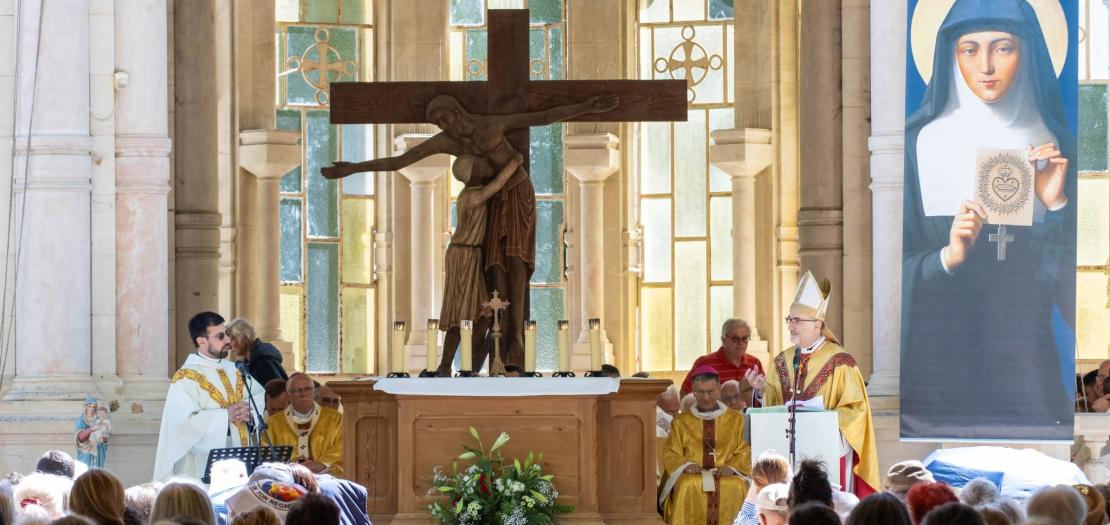
Invited jointly by L’Œuvre d’Orient and the Shrine of Paray-le-Monial, where he presided over the celebration of the Feast of the Sacred Heart of Jesus under the theme “Jerusalem, the First City of the Heart of Jesus,” Cardinal Pizzaballa’s visit was more than a series of official meetings and liturgical celebrations. It became a moment of encounter between the Church in France and the living reality of the Church of Jerusalem, carried through the voice and witness of its shepherd.
During his stay, the Patriarch met Church leaders, French civil authorities, and thousands of faithful, sharing with them the hopes, sufferings, and perseverance of the Christian communities of the Holy Land. Since the outbreak of the current conflict, many voices have spoken about the region; yet, as Msgr. de Woillemont noted, few can convey the human, spiritual, and pastoral depth of a shepherd whose daily ministry embraces Jerusalem, Gaza, the West Bank, Israel, and Jordan.
A Recognition of Service to Dialogue
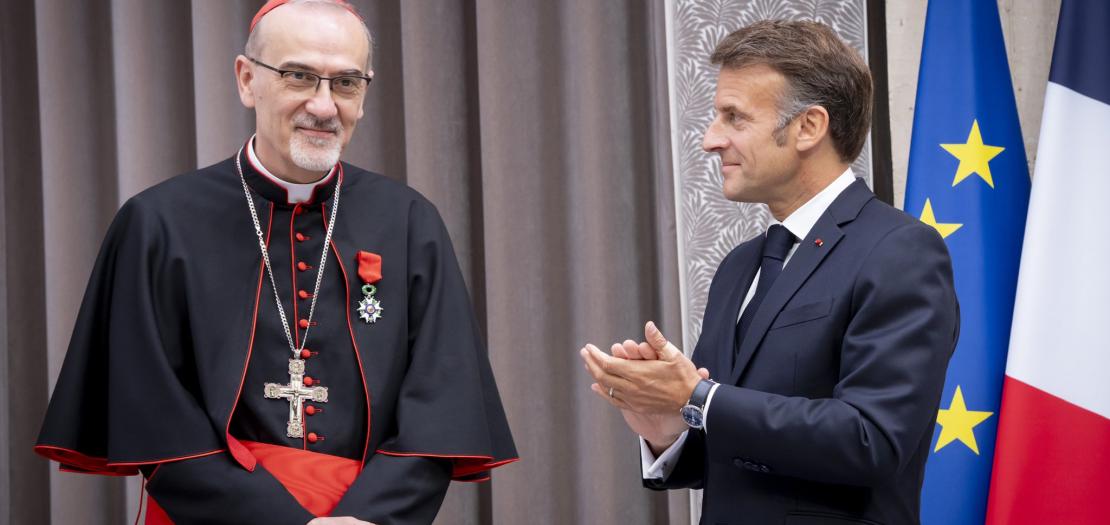
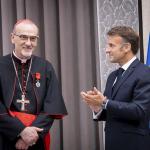
A highlight of the visit was Cardinal Pizzaballa's reception at the Élysée Palace, where President Emmanuel Macron conferred upon him the insignia of Knight of the Legion of Honor in recognition of his longstanding commitment to dialogue, justice, peaceful coexistence, and his service to the peoples of the Holy Land.
The Patriarch saw this recognition not just for himself, but for all the people of the Holy Land, as well as the French institutions working on the ground, serving the vulnerable, through hospitals and schools.
President Macron reaffirmed France's commitment to supporting the Christian communities of the Holy Land, preserving their presence, safeguarding the historical Status Quo of the Holy Places, and continuing humanitarian efforts, particularly in Gaza.
A Pastoral voice from the Holy Land
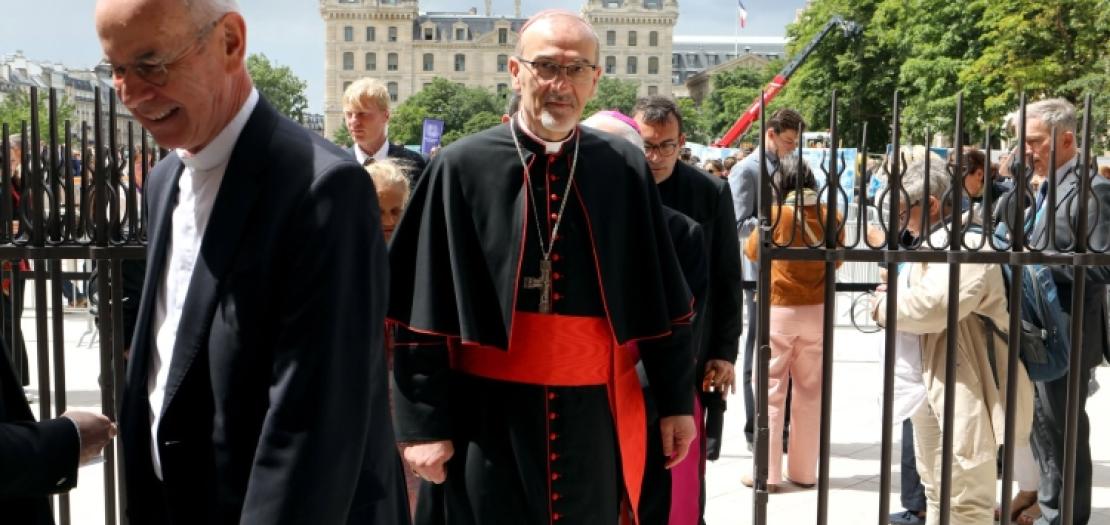
During his stay in Paris, Cardinal Pizzaballa met with the French Minister for Europe and Foreign Affairs, Jean-Noël Barrot, as well as members of the Permanent Council of the French Bishops’ Conference. These encounters offered an opportunity to share first-hand perspectives on the situation of the Church and the wider population in the Holy Land, at a moment when France is actively engaged in diplomatic efforts and preparing for upcoming international discussions.
For Msgr. Hugues de Woillemont, the visit also brought renewed attention to an often overlooked dimension: the mission of Christians in the Holy Land is not limited to responding to humanitarian needs. “It also involves supporting their specific vocation: to remain in this land, to sustain educational, social, and ecclesial institutions, and to continue to be artisans of dialogue and peace,” he said.
“They are often mentioned when they are under threat,” he added, “but far less when they continue to live, teach, provide care, pray, and serve their communities.” This continuity of daily life, he emphasized, is itself a form of witness. In this sense, the Patriarch’s message went beyond the language of crisis, Msgr. de Woillemont observed. “He came to speak of a future for the people of the Holy Land.
From "the Holy City" to "the City of the Sacred Heart"
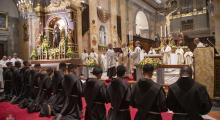
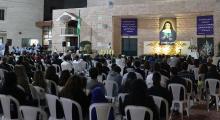
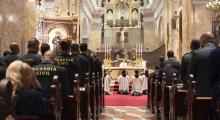
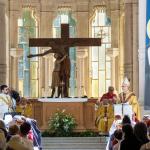
The second part of the visit brought Cardinal Pizzaballa to the Shrine of Paray-le-Monial, where he presided over the Feast of the Sacred Heart. The choice of Paray-le-Monial carried deep significance, as the place of the apparitions of the Sacred Heart to St. Margaret Mary Alacoque, allowing pilgrims to reconnect this devotion with its biblical source in Jerusalem, where Christ revealed the fullness of divine love through His Passion, Death, and Resurrection.
Throughout the celebrations, the Patriarch invited the faithful to contemplate the Heart of Christ not as a private devotion, but as the source of Christian life and the measure of every ecclesial community. He recalled that the initiative always belongs to God:
“The life of the world does not depend first on our own efforts, but on God's love that sustains us. We become builders of love only insofar as we respond to that love.”
He also reflected on Gethsemane as the place where love becomes decision, where Christ freely embraces the Father’s will, reminding believers that authentic discipleship is born from listening, trust, and obedience.
From this perspective, he underlined that forgiveness is never opposed to justice, but remains one of its highest expressions. Christians, he said, are called to defend truth, dignity, and human life without losing their identity, and to resist every logic of hatred or exclusion.
Looking back on the visit, Msgr. Hugues de Woillemont emphasized the coherence of the Patriarch’s message throughout the week, from political meetings to moments of prayer in Paray-le-Monial. At its core was a single invitation: to face reality without yielding to the dehumanization of others, and to believe that reconciliation remains possible.
“Cardinal Pizzaballa does not minimize any suffering, nor does he sidestep any difficulty,” he said, “but he refuses to consider reconciliation impossible. In the current context, these words carry particular weight.”
For Msgr. de Woillemont, this perspective also sheds light on the vocation of Christians in the Holy Land: not only to endure hardship, but to remain, to educate, to serve, and to sustain spaces of encounter in a fractured society. “The future of the Holy Land,” he reflected, “will not be built solely through political agreements or material reconstruction. It will also depend on the ability to rebuild trust, to educate the younger generations, and to keep spaces for encounter open.”
Shared call to keep one’s heart open
It is no coincidence that the visit culminated in Paray-le-Monial. “Between Jerusalem and Paray,” he noted, “there is a shared call to keep the heart open.”
In his encounters with political leaders, Church representatives, and pilgrims gathered in prayer, he presented the Church of Jerusalem not merely as a community marked by hardship, but as a living witness entrusted with proclaiming the dignity of the human person, guarding the possibility of communion, and making present the love of Christ in a land still scarred by division and conflict.