Issued by the Catholic Center for Studies and Media - Jordan. Editor-in-chief Fr. Rif'at Bader - موقع أبونا abouna.org

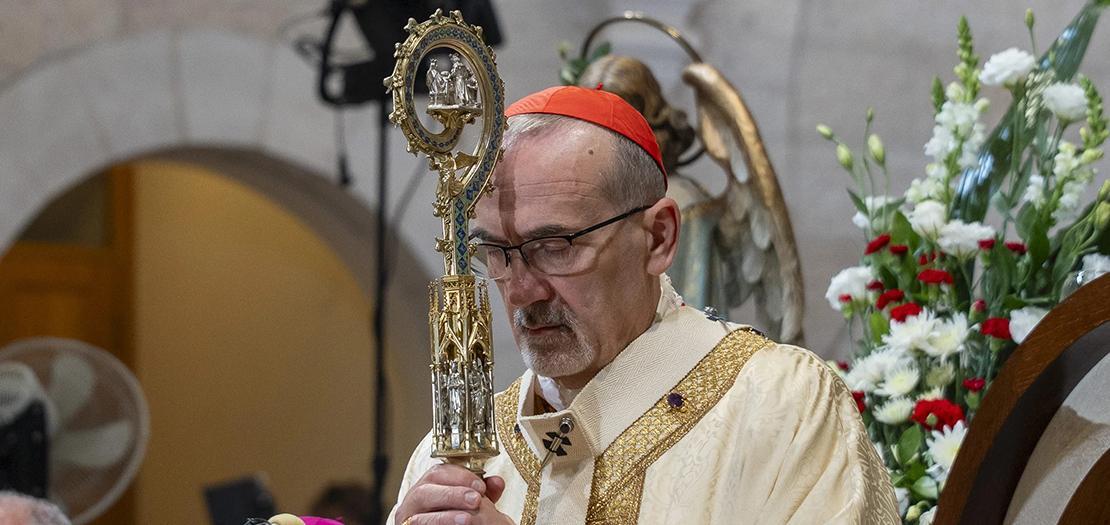
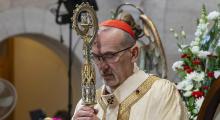
The humanitarian crisis in Gaza has not abated, although the situation in the Holy Land is no longer in the spotlight as it once was. Cardinal Pierbattista Pizzaballa, Latin patriarch of Jerusalem, emphasizes in this interview with the Register that several interconnected situations exist: In the Gaza Strip, there is “a truce, but it is not always respected,” and everything is due to precarious conditions.
Even in times of great crisis, the cardinal has not failed to enter Gaza, bringing humanitarian aid and relief to the suffering population. He now also views with concern the attacks on Christian villages, such as the one in Taybeh on October 17, which was also condemned by Israeli authorities.
In a complex situation such as this, Cardinal Pizzaballa reiterates that the Church’s role is to accompany those who are suffering.
It seems the situation in Gaza, like that in the Holy Land, has been completely forgotten. What is the situation now?
Let’s say not much has changed. The situation in Gaza remains problematic, especially on the humanitarian front. The fires of war have been extinguished, but they’re not entirely extinguished. There are still episodes of violence, war and death. There’s a truce, but it’s not always respected. Let’s say the real problem is humanitarian. Reconstruction hasn’t even begun. And we’re still living in a world of dependence on decidedly precarious conditions.
Do you still go to Gaza?
More or less, as always, when I can.
Do you have any idea when the situation will be over?
All situations are interconnected, directly or indirectly. It’s very difficult to understand how and when things will change. I don’t think anyone can answer these questions right now.
What can the Holy See do in Gaza?
There is currently no room for mediation by the Holy See, also because mediators are already in place; there’s no need to add more. What’s missing isn’t the ability to mediate, but the political will of all to reach a solution.
So, there’s not much the Holy See can do?
The Holy See, but I would say the Church more generally, works primarily on dialogue, support and networking. The Holy See can work on this.
The Latin Patriarchate of Jerusalem encompasses many states and many different situations. Is Gaza the most difficult? And how do the situations correlate?
These situations are related, even though they are completely different. The situation in Gaza is perhaps the most problematic. But the West Bank is also currently a cause for concern. And then there are the problems related to crime in the Galilee, other problems in Jordan, and still others in Cyprus.