Issued by the Catholic Center for Studies and Media - Jordan. Editor-in-chief Fr. Rif'at Bader - موقع أبونا abouna.org

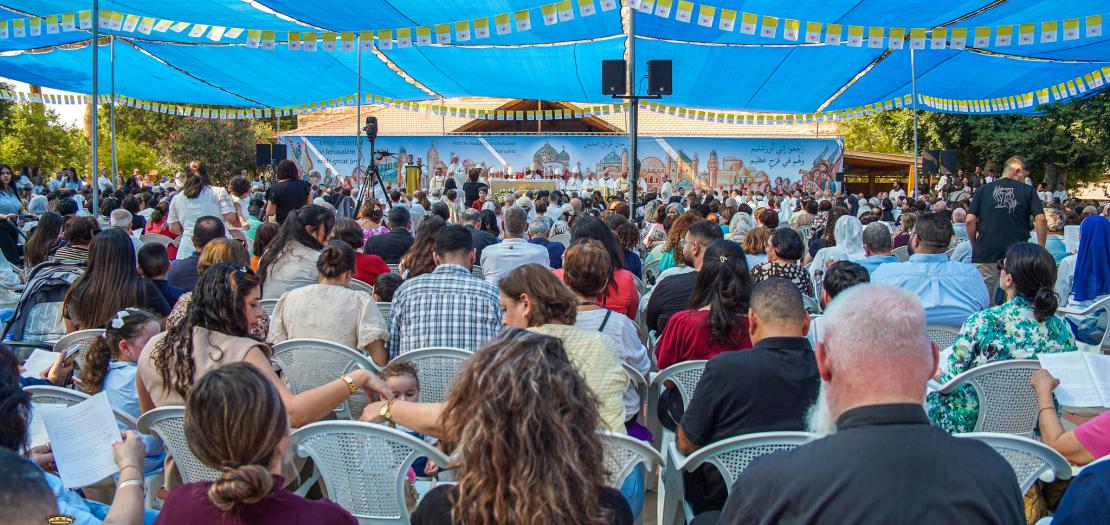
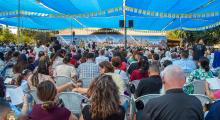
With Marian hymns filling the Shrine of Our Lady, Queen of Palestine, at Deir Rafat, faithful from across the Diocese of Jerusalem gathered on Sunday in prayer, seeking the intercession of the Virgin Mary and the consolation of her maternal presence amid the prolonged suffering affecting communities throughout the Holy Land.
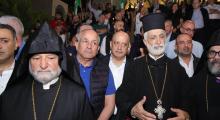
The celebration was marked by profound sorrow following the tragic killing of nine Christian men in the Hammoud area of Karak, Jordan. The tragedy deeply affected the entire Diocese of Jerusalem, as the Church mourned the loss of members of its Christian community and stood in prayerful solidarity with their grieving families and the Greek Orthodox Church.
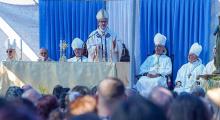
“While we are here, our brothers and sisters are mourning the loss of nine brothers who were killed in Jordan,” said His Beatitude Cardinal Pierbattista Pizzaballa, Latin Patriarch of Jerusalem, as the funeral ceremony took place at the same time. Entrusting the souls of the deceased to God's mercy and praying for the consolation of their families, the Patriarch emphasized that such moments of suffering call the entire Church to stand together in faith and solidarity. Following the Mass at Deir Rafat, Cardinal Pizzaballa traveled to Jordan to personally offer his condolences to the bereaved families and stand alongside the community in its grief.
“There are moments and days when we have to be all united, now more than ever before. Not just simply united, but united in Jesus. It is not just human fraternity; it is fraternity in Christ.”
Expressing his closeness to the victims’ families and the Greek Orthodox community affected by the tragedy, the Patriarch affirmed: “Your grief is our grief.” He also called for justice and the protection of all communities, praying that this tragedy would not weaken the bonds of fraternity between Christians and Muslims in Jordan.
The Patriarch also remembered the faithful from Palestine who were unable to attend the celebration. “We pray for all our brothers and sisters from Palestine who could not be with us today. We lift them up in our prayers, and we pray that one day the situation will be different and borders will no longer prevent us from gathering together.”
The solemn Mass was presided over by His Beatitude Cardinal Pierbattista Pizzaballa, Latin Patriarch of Jerusalem, and concelebrated by Archbishop Giorgio Lingua, Apostolic Delegate; Msgr. William Shomali, General Vicar of the Latin Patriarchate; Msgr. Rafiq Nahra, Patriarchal Vicar for Galilee; Msgr. Giacinto-Boulos Marcuzzo; and numerous priests of the Latin Patriarchate.
The celebration also brought together Knights and Dames of the Equestrian Order of the Holy Sepulcher of Jerusalem from the United States, England, Italy, Spain, and the Czech Republic, alongside representatives of the Sovereign Military Order of Malta, the Italian and British Consulates, and youth groups from across the Diocese.
Having Eyes of faith
At the heart of his homily, the Patriarch reflected on the encounter between Mary and Elizabeth in the Gospel of Luke, particularly Elizabeth’s question: “And why is this granted to me that the mother of my Lord should come to me?” (Luke 1:43)
For Cardinal Pizzaballa, this encounter reveals how God draws near to His people, often through the presence of others. Yet recognizing His visitation requires more than what human eyes can see. It calls for a heart open to the work of the Holy Spirit.
“If we look with our human eyes, we do not see hope here. But if we allow the Holy Spirit to work in us, we can see God at work, visiting us.”
The Patriarch emphasized that the Church’s mission in the Holy Land cannot be limited to describing the suffering and uncertainty that surround it. Rather, Christians are called to bear witness to a life and a hope that transcend what is immediately visible. Guided by the Holy Spirit, they are invited to recognize God's presence even when outward circumstances remain unchanged.
This vision, he explained, has practical consequences for the way Christians relate to one another, particularly amid the suffering and uncertainty experienced in the Holy Land.
“In times of fear and exhaustion, the temptation is to withdraw into ourselves and allow the barriers around us to become barriers between us. Faith, however, invites us to move beyond them: to approach others, offer comfort, and allow ourselves to receive comfort in return.”
“Our unity is important for this. We can help each other see what one cannot see alone, just as the Virgin Mary helped Elizabeth to recognize God’s presence, and Elizabeth, in turn, encouraged Mary in her faith.”
God's presence made concrete through the closeness of others
The Patriarch acknowledged the questions that arise in the face of prolonged suffering: Where is God? Why does He not intervene? While Christians may not be able to change the wider situation, he said, they can still make a real difference in the life of another person.
“We cannot change the situation, but we can change someone’s life,” he said, pointing to the importance of being present to those who are suffering. Visiting a person in pain, accompanying a family through a trial, or simply giving someone time and attention can become a way of carrying the Lord’s visitation to them.
At times, people feel that no one cares for them or listens to them. To give another person our time, the Patriarch noted, is itself a way of showing that we care. And this care must be reciprocal: we, too, need someone who will listen to us, accompany us, and offer consolation.
"In a land marked by fear and division, a community that knows how to welcome others and draw near to them becomes a sign of God's presence among His people". The Patriarch therefore invited the faithful to reflect on the place God holds in their daily relationships and on their readiness to recognize Him in the people they encounter.
“We are here today because we know that the Holy Virgin cares for us,” he said. “We are here to ask for her intercession, so that we may become those who bring the visitation of the Lord wherever we are.”
A sanctuary of consolation
Cardinal Pizzaballa remarked, “The Virgin Mary always surprises us.” Noting that given the closures and difficult circumstances in the region, attendance had been expected to be small. Yet many faithful made the journey to Deir Rafat, filling the sanctuary. Once again Mary gathers her children in prayer and continues to carry them closer to her Son.
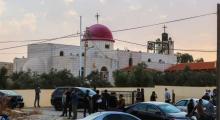
Since its establishment in 1921, the Shrine of Our Lady, Queen of Palestine, entrusted to the care of the Sisters of Bethlehem, has served as a place of prayer and consolation for the faithful. Through the many painful events and trials that have marked the history of this land, it has remained a place where the faithful can gather.
At the end of Mass, the faithful carried the statue of Our Lady, toward the church in a procession. Msgr. William Shomali recited the special prayer to Our Lady of Palestine, entrusting the Diocese and the Holy Land to her maternal intercession, before the Patriarch imparted the final blessing. The Sisters of Bethlehem then welcomed all to a fraternal lunch.