Issued by the Catholic Center for Studies and Media - Jordan. Editor-in-chief Fr. Rif'at Bader - موقع أبونا abouna.org

Church and international solidarity conveyed to Jordan
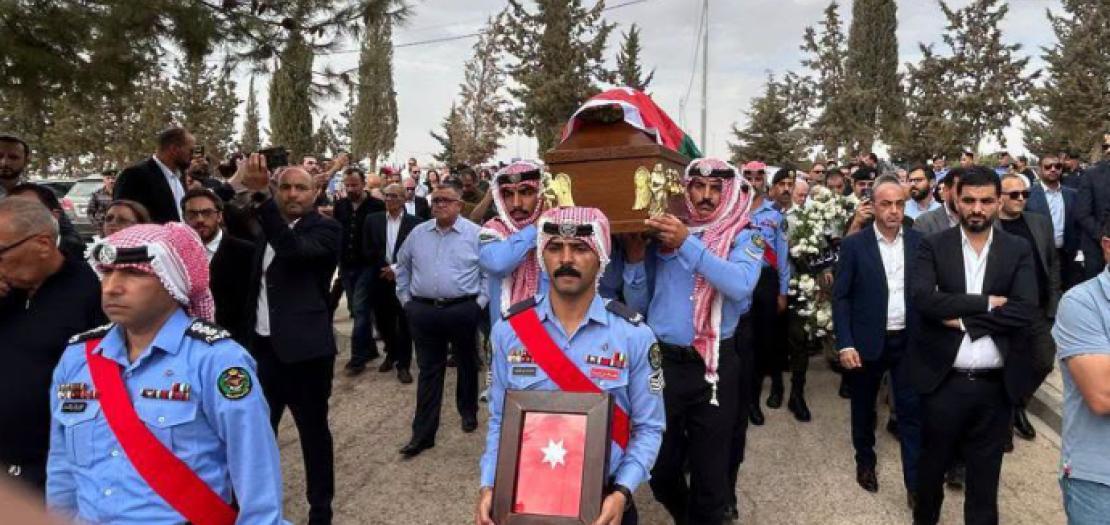
In the peaceful village of Hmoud, southern Jordan, a horrific massacre took place last Friday at the St. George Greek Orthodox Church claiming the lives of nine martyrs who had come to attend the funeral of a woman--a heinous crime, and utterly commendable by all measures especially since it targeted a humanitarian and spiritual moment devoted to consoling a grieving family.
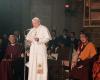
True, no society is completely immune from terrorism, but the shock was doubled because the crime took place in a church and in a country that His Holiness Pope Leo XIV praised for its common living and respect for religions when offering his condolences on Sunday. Thus, a single funeral became a national tragedy that left a deep wound in the heart of an entire Jordan.
In light of this pain, broad national and human solidarity emerged. His Majesty King Abdullah II was among the first to arrive at the hospital to console the families of the victims and check on the wounded, which was a gesture that embodied the closeness of the Hashemite leadership to its people. Muslims and Christians shared in the grief, while recognizing that the attack targeted not only a church, but rather human dignity, the nation’s security, and the values of common living.
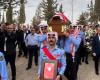
The stands expressing solidarity extended across the Arab world, at the international, and religious levels. The crime was condemned by the Chief Islamic Justice Department, the General Iftaa’ Department, the Ministry of Awqaf and Islamic Affairs, as well as the Grand Imam Sheikh of Al-Azhar. Messages of condolence and condemnation poured in from churches around the world, including the Middle East Council of Churches and the World Council of Churches. It was moving that Jordanians bid farewell to the martyrs on Sunday at the very same church, while the Pope appeared at his window in the Vatican, expressing his spiritual closeness to Jordan and praising the mutual respect among followers of different religions that distinguishes it.
For 27 years, His Majesty King Abdullah II carried the burden of defending the Christian presence and its authentic Arab identity, as well as of protecting the true image of Islam from the distortion of terrorism and extremism. He recently said before the United Nations: “We will protect Christianity in its homeland, and defend the true image of Islam.” I also recall His Majesty’s words in 2013 before the participants of a conference as he said, in the presence of Cardinal Jean-Louis Tauran: “Defending the Arab Christian identity is not a luxury, but a duty.”
Today, we must not look to the future with fear. After two days, the security services managed to arrest three suspects from one family. Security and judicial measures remain necessary, but they are not enough alone. The hardest battle is intellectual, educational, and cultural, namely how do we prevent takfiri ideas from seeping into minds and uproot the seeds of hatred before they turn into extremism and terrorism? And how do we teach generations that religious differences are a cultural enrichment and not a threat?
Jordan has a firm record in this field, namely the Amman Message in 2004, the “A Common Word” initiative in 2007 whose 20th anniversary will be marked next year, and the World Interfaith Harmony Week in 2010. During the reign of His Majesty the King, Jordan welcomed three popes, namely John Paul II, Benedict XVI, and Francis, and in 2014 it welcomed the Christians displaced from Mosul.
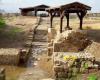
Jordan’s Christians, who are a numerical minority but not a “minority”, take pride in their belonging to their homeland and their historic participation in building it. Today, Jordan, in cooperation between the government and the churches, is preparing to celebrate in 2030 the 2,000th anniversary of the Baptism of Lord Jesus Christ, to offer the world a message of peace and harmony.
As for me, when I visited St. George’s Church on the day the martyrs’ funerals, and heard the prayers and hymns in both the Orthodox and Melkite Catholic rites, I contemplated the icon of the martyr St. George piercing the dragon, the symbol of evil. I raised my eyes towards the Church’s new martyrs and said from the bottom of my heart:
Beloved new martyrs, we ask for your prayers and intercession for Jordan, its Hashemite leadership and its people, as well as for all humanity. Help us ensure that love remains stronger than hatred, unity stronger than sedition, and life stronger than death.