Issued by the Catholic Center for Studies and Media - Jordan. Editor-in-chief Fr. Rif'at Bader - موقع أبونا abouna.org

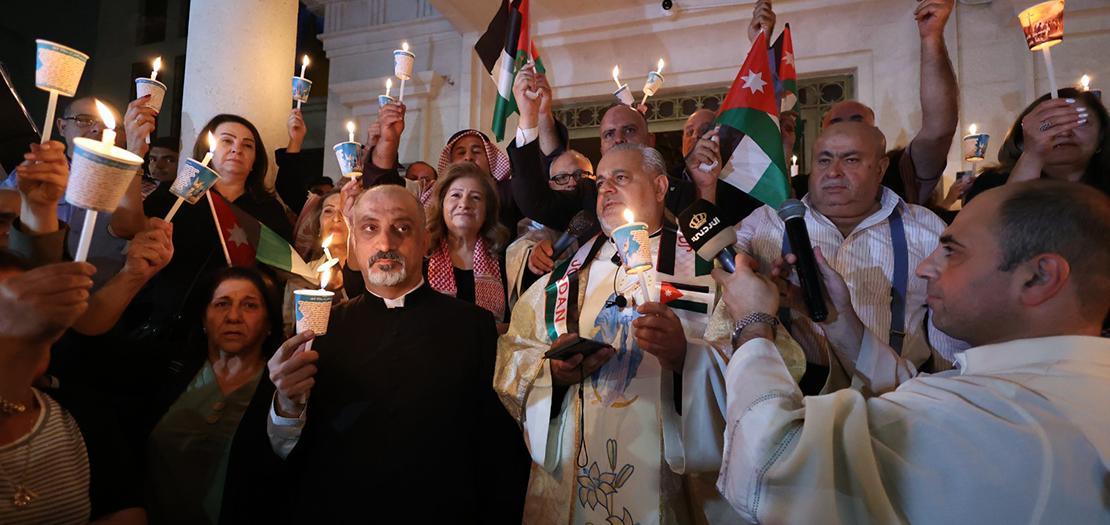
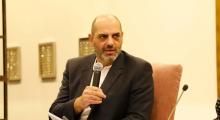
Following the deadly attack on a church in the Karak region, which claimed the lives of nine Christians, Father Rifat Bader, director of the Catholic Center for Studies and Media in Jordan, reflects on the historical roots of Christianity in the kingdom, the national solidarity that emerged after the tragedy, and the challenges facing Christian communities. Despite regional tensions, poverty, and unemployment, he advocates for a model of coexistence between Christians and Muslims and affirms his desire to see Christians remain in their land. "Nearly two thousand years after this event, Christians remain active in all areas of society. We do not experience our status as a numerical minority as something to be ashamed of," he told Aleteia. Interview.
Aleteia: Who are the Christians of Jordan today? What is their place in Jordanian society, what is their history in this region, and how do they contribute to the cultural, social, and religious life of the country?
Father Rifat Bader : Christians are not newcomers to Jordan. Their presence is deeply rooted in the history of this land, particularly since the baptism of Jesus Christ in the waters of the Jordan River, on its eastern bank, as evidenced by biblical, historical, and archaeological sources. Jordan is currently preparing for the year 2030, which will mark the second millennium of Christ's baptism. John the Baptist, who baptized Jesus, is considered the patron saint of the Church in Jordan. These preparations are a reminder of the long history of the Christian presence in our country. Nearly two thousand years after this event, Christians remain active in all areas of society. We do not experience our numerical minority as something to be ashamed of. What matters is our contribution to the common good. This contribution is first and foremost manifested in spiritual and ecclesial life. Jordan has eleven officially recognized ecclesial communities, in addition to other churches awaiting recognition. Our churches, both ancient and modern, bear witness to this presence. The recent inauguration of the Church of the Baptism of Christ, on the banks of the Jordan River, in the presence of representatives of the Pope and the King, is a prime example.
The second dimension is educational and cultural. The churches oversee more than a hundred schools. The schools of the Latin Patriarchate of Jerusalem, whose history stretches back more than 160 years, have helped educate several generations, long before the founding of the Emirate of Transjordan. We also have institutions of higher learning, including the American University of Madaba, as well as cultural centers and media institutions, such as the Catholic Center for Studies and Media, which I direct. Finally, our presence is charitable and social. Organizations like Caritas Jordan provide assistance to the poor, families in need, and refugees, particularly from Iraq and Syria. Religious congregations also contribute to the country's healthcare system through their hospitals. Christians are also present in public institutions, the military, the security services, the media, and the economy. They are represented in Parliament and the Senate, and Christian figures hold government positions. Our contribution is therefore not limited to the Church or to Christians alone. Christian schools welcome many Muslim students, and the institutions we run are places where Christians and Muslims work together. Our presence is open to serving all of Jordanian society.
After the attack on this church, which claimed the lives of nine Christians, what is the mood in the Christian communities? How are the victims' families and the faithful coping with this ordeal?
I visited a house of condolence in the village of Hammoud, where the bloody events that claimed the lives of nine Christians took place. There, I witnessed the profound sorrow of the victims' children, their parents, and their wives. This suffering compels us to reflect on how terrorism treats human life as if it had little value. The terrorists struck a peaceful place, where the faithful gather to pray in a spirit of love for all. The tragedy is all the more devastating because it occurred during the funeral of a woman who had died the previous week.
This act sparked immense emotion and a vast movement of solidarity. But this solidarity was not solely Christian: it was national and institutional, supported by all sectors of the Jordanian state. King Abdullah II visited the injured and offered his condolences to their families. Queen Rania, the princes, and members of the royal family also expressed their support. The government and security services mobilized to assist the bereaved families. No one could have imagined that such a tragedy could occur in a country like Jordan. As Pope Leo XIV reminded us during the Angelus prayer, this event took place in a country where coexistence and respect between religions are of paramount importance.
Today, the families remain plunged into grief. But the entire Jordanian society, Christians and Muslims alike, surrounds them with affection, brotherhood, and human compassion. We pray for the eternal rest of the victims, for the healing of the wounded, and that God may bring comfort to the families. The security forces quickly made arrests. According to the information we have, the alleged perpetrators are linked to an extremist and takfiri ideology, which involves excommunicating other Muslims and can be used to justify violence against those considered enemies.
Jordan is often presented as a haven of stability for Christians in the Middle East, in a region where their presence is sometimes severely threatened. After this attack, is this image of refuge still valid? Do Christians truly feel safe?
The Christian presence in Jordan is deeply integrated into society. This has been demonstrated in particular by initiatives for interreligious dialogue, some of which have been brought to the United Nations level, such as the World Week of Interfaith Harmony.
We cannot say that Christians in Jordan are living in fear or widespread anxiety today. Of course, this tragedy has caused immense sadness, profound emotion, and, for some, a sense of unease. But we observed that, on the Sunday following the attack, churches were filled with worshippers. A significant security presence was also deployed around places of worship.
For us, this testifies to the faithful's determination to continue practicing their faith despite the pain. This Christian presence will not be shaken by the attack. We want to affirm that Christians will continue to live their faith and contribute to Jordanian society. Our model of coexistence can be a source of inspiration for the whole world. With God's help, the Jordanian ship will continue to sail toward the shores of security, stability, and peace.
Beyond security concerns, what are the main difficulties faced by Christians in Jordan in their daily lives today?
Jordanian society, like many others in the Arab world and elsewhere, faces two major scourges: poverty and unemployment. These difficulties affect not only Christians but all segments of society. Many Christian entrepreneurs contribute to the country's economy and employ both Christians and Muslims. Church institutions also participate in the fight against unemployment, notably by recruiting teachers for schools. Poverty and unemployment therefore remain major challenges. Added to this is anxiety about the future in a region marked by persistent tensions and significant political instability. Jordan itself has suffered the consequences of regional conflicts. During the Iran-Iraq War, several missiles struck its territory. Even when we are not directly involved in a conflict, we feel its repercussions.
In a context of high regional tensions, particularly in Israel, the Palestinian territories, and Lebanon, how do Jordanian Christians, and Jordanians more broadly, experience this instability? Can Jordanian coexistence inspire other communities in the region?
Regional tensions fuel anxieties about the future, as Jordan is not isolated from the events shaking the Middle East. Conflicts have consequences for our security, our economy, and our daily lives. We cannot achieve genuine political stability without comprehensive regional stability and a just, lasting, and definitive solution to the Palestinian question. We reiterate this constantly: resolving this issue is essential not only to the stability of our region, but also to that of the world.
Jordan, for its part, has developed initiatives for dialogue and coexistence between religions. We believe this experience can be a source of inspiration for other societies in the Middle East. Religious diversity is not a threat; it is a human and civilizational asset. We must continue to build societies where everyone can practice their faith and participate fully in public life, regardless of their religion.
Given the departure of Christians from several Middle Eastern countries, how do you envision the future of the Christian community in Jordan?
A number of Christians have left Jordan to settle in countries like the United States, Australia, and Canada. But, thank God, we have not experienced forced displacements of Christian populations comparable to those that have occurred elsewhere in the region.
I am thinking in particular of Palestine, where the situation under occupation has contributed to the departure of many Christians, and of Iraq, where terrorist organizations have caused profound suffering over the past decade. We affirm that Christians will remain here, on their land, and that they will continue to build the future within the framework of their historic partnership with their Muslim brothers and sisters. The disappearance of Christians from this region, God forbid, would represent a considerable loss to the richness and diversity of Arab and Middle Eastern societies. As Pope Benedict XVI emphasized in his apostolic exhortation Ecclesia in Medio Oriente , dedicated to the Church in the Middle East, a region deprived of its Christians, or in which they represent only a very small presence, would no longer be the region we have known throughout history. Our responsibility, therefore, is to preserve this presence, to continue serving the whole of society, and to transmit to future generations a culture of coexistence, dialogue, and peace.
 Jordan: Conference “Christians in the East as Co-Builders of the Future “ kicks off 29-30 October
 “Bring the visitation of the Lord to others”: A call to the faithful on the Feast of the Patroness of the Diocese