Issued by the Catholic Center for Studies and Media - Jordan. Editor-in-chief Fr. Rif'at Bader - موقع أبونا abouna.org

The governing Bangladesh Nationalist Party has pledged a nationwide program to plant 250 million trees over five years as part of its environmental agenda.
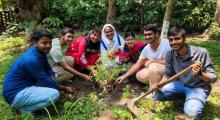
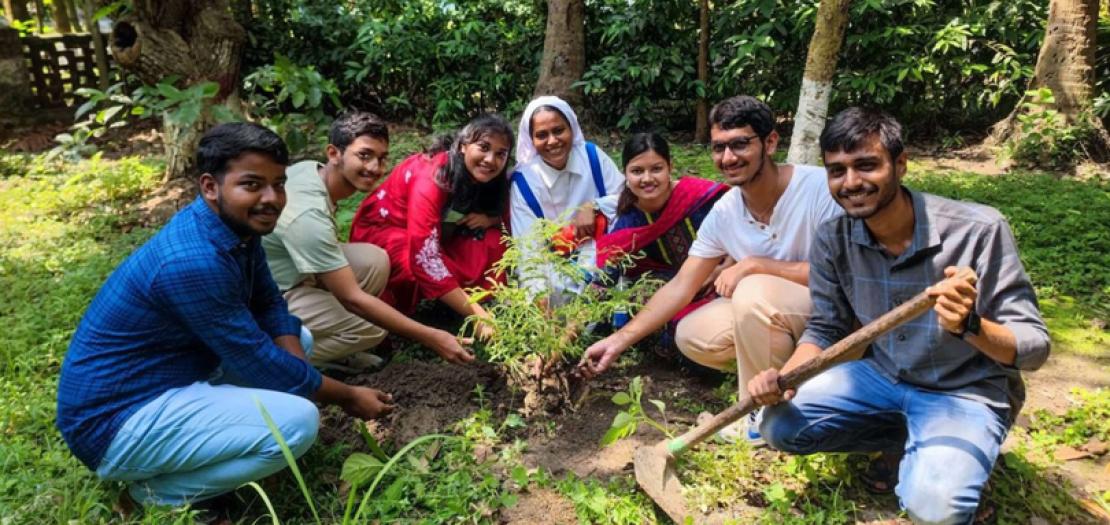
Youth groups and students participating in a Catholic environmental movement have planted more than 10,000 trees in Bangladesh.
Catholic students, inspired by Pope Francis’ encyclical Laudato Si’, are taking practical action in caring for their “common home” through an initiative known as the 45-day Earth Campaign, led by the Bangladesh Catholic Students’ Movement (BCSM) through its Laudato Si’ Commission.
From remote diocesan towns to busy urban schools, young Catholics have gone from door to door – more often from classroom to classroom – raising awareness about environmental care and urging small but meaningful changes in daily life.
Fr. Bikash James Rebeiro CSC, secretary of the Episcopal Commission for Youth (EC-Y) and National Youth Coordinator, called the campaign a concrete expression of faith lived publicly.
“Catholic youths took an initiative for a 45-day Earth Campaign under the theme ‘From Reflection to Action’,” he told The Tablet. “They visited schools and colleges across their 20 units in different dioceses to spread awareness about protecting our common home and to inspire students to reduce waste and clean their surroundings.”
While exact figures are still being compiled, Fr. Rebeiro estimated that more than 10,000 trees have been planted across Bangladesh through the combined efforts of youth groups and participating students. Yet the campaign, he said, is about more than numbers.
“In the light of Laudato Si’, they strive to celebrate care for our common home and to encourage communities to take meaningful action for a sustainable future,” he said. “Their slogan is: ‘Every tree planted is a symbol of hope.’”
The Church’s support has been both practical and pastoral. Fr. Rebeiro describes how the national office has sought to remove institutional barriers by providing official endorsements and practical toolkits for use in schools and colleges. These resources include action plans, student pledges, and the distribution of native saplings for planting drives. Clergy accompanying the campaign have also offered blessings, grounding the environmental effort in the sacramental life of the Church.
“I am incredibly proud of our BCSM youth,” Fr. Rebeiro said. “They are championing the message of Laudato Si’ and reminding their peers that caring for God’s creation is a core Christian duty.”
For the students involved, the campaign is deeply personal. Pranto Simon Sarker from the Diocese of Dinajpur reflected on a sunset scene that, he said, revealed “the vastness and wonder of the natural world”. That moment of contemplation has led to a firm commitment: “I commit to protecting nature and caring for the environment through my daily actions.”
Similarly, Amanisha Rozario from the Diocese of Rajshahi spoke of nature as a source of healing and stillness. “A single sunset can remind us to slow down and appreciate the beauty beyond busy human life,” she said. Her commitment extends to practical steps, from reducing pollution to encouraging others to preserve natural resources for future generations.
Their voices echo broader concerns in Bangladesh, a country highly vulnerable to climate change and environmental degradation. The governing Bangladesh Nationalist Party (BNP) has pledged a nationwide program to plant 250 million trees over five years as part of its environmental agenda.
While such initiatives remain at the policy level, Church-based efforts like the BCSM campaign show how local communities are already acting on the ground. Caritas Bangladesh is also contributing to this effort, with plans to plant 500,000 trees across its operational areas.
The Episcopal Commission for Youth emphasizes shaping young Catholics as responsible citizens, aware of social and economic realities and committed to building a more just and sustainable society.
For the students planting saplings and sharing their reflections, the campaign is not simply another program. It is, as Fr. Rebeiro suggests, a “prophetic spark” – one that seeks to heal communities, restore creation and bear witness to hope in a fragile world.