Issued by the Catholic Center for Studies and Media - Jordan. Editor-in-chief Fr. Rif'at Bader - موقع أبونا abouna.org

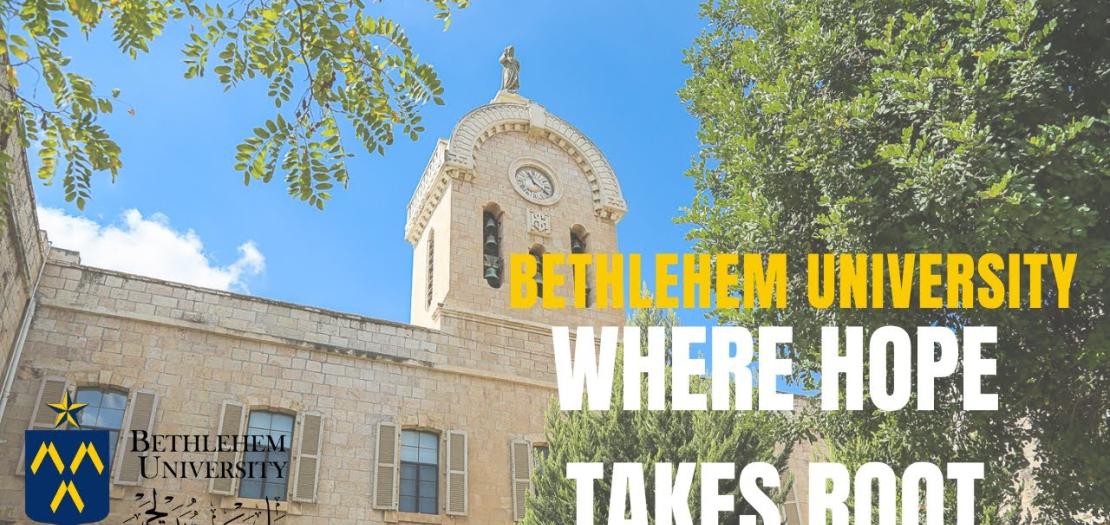
Bethlehem University has made a distinguished academic contribution to the national scholarly project “The Archaeology and History of Palestine,” through the high-quality research of its faculty members and active leadership in shaping the publication. This collective national effort seeks to preserve Palestine’s history and heritage through a rigorous Palestinian scholarly lens.
Professor Iman Saca, Vice President for Academic Affairs at Bethlehem University, played a central role in this project as a member of the Board of Directors of the Palestinian Research Center and as a member of the book’s Editorial Committee.
In addition, Prof. Saca authored a chapter titled “Community Archaeology,” in which she emphasizes this approach as the most effective framework for safeguarding cultural heritage. Her contribution highlights the importance of engaging local communities in protecting archaeological sites, promoting pluralistic interpretations of heritage, and empowering Palestinians to reclaim ownership of their past and narrate their history in their own voices.
Bethlehem University’s academic contribution is further strengthened by the work of Dr. Omar Abed Rabbo, Chairperson of the Department of Humanities and the Archaeology and Cultural Heritage Program at the University, who co-authored three scholarly chapters in the volume.
The first chapter, “Palestine in the Frankish Period: Civilizational History (1099–1292),” offers an in-depth analytical reading of the demographic, urban, and cultural impacts of the Frankish occupation. It highlights the interaction between European architectural styles and local traditions, as well as the role of Palestinians in agriculture, industry, and the arts during this period.
The second chapter, co-authored with Dr. Mahmoud Hawari, is titled “Palestine in the Mamluk Period (1250–1517),” and presents a concise overview of Palestine’s history during the Mamluk era, a time marked by major political transformations that shaped the region’s historical trajectory.
The third chapter, co-authored with Dr. Mahmoud Hawari and Dr. Abdul Razzaq Matani, is titled “The Early Islamic Period (634–1099): A Renewed Assessment of Urban and Rural Stability, Cultural Landscape, and Material Civilization.” This chapter examines a pivotal five-century period in Palestine’s history, shedding light on its urban, cultural, and social developments.
Published by the Palestine Research Center, “The Archaeology and History of Palestine” brings together the work of approximately 40 Palestinian scholars. Spanning nearly 800 pages and featuring more than 410 maps, images, and plans, the book documents Palestine’s history and cultural heritage from the Paleolithic era to the present day. The publication represents a serious scholarly effort to decolonize historical narratives and establish an academically grounded account authored by Palestinian researchers.
As part of this national endeavor, several participating academics and researchers, including Prof. Iman Saca, were received by His Excellency President Mahmoud Abbas at the Presidential Headquarters in Ramallah. President Abbas expressed his appreciation for the scholars’ efforts and called for continued Palestinian-led scholarship in documenting modern Palestinian history and preserving it for future generations, emphasizing the need for broad participation from researchers in Palestine and the diaspora.
This academic engagement reflects Bethlehem University’s enduring commitment to knowledge production, the preservation of national memory, and meaningful contribution to scholarly projects that reaffirm Palestine’s history, identity, and cultural heritage through authentic Palestinian scholarship.