Issued by the Catholic Center for Studies and Media - Jordan. Editor-in-chief Fr. Rif'at Bader - موقع أبونا abouna.org

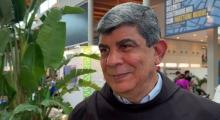
Following is the text of the meditation by His Beatitude Cardinal Pizzaballa, Latin Patriarch of Jerusalem, on the second Sunday of Lent dated March 8, 2026:
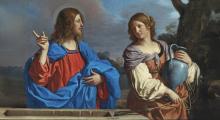
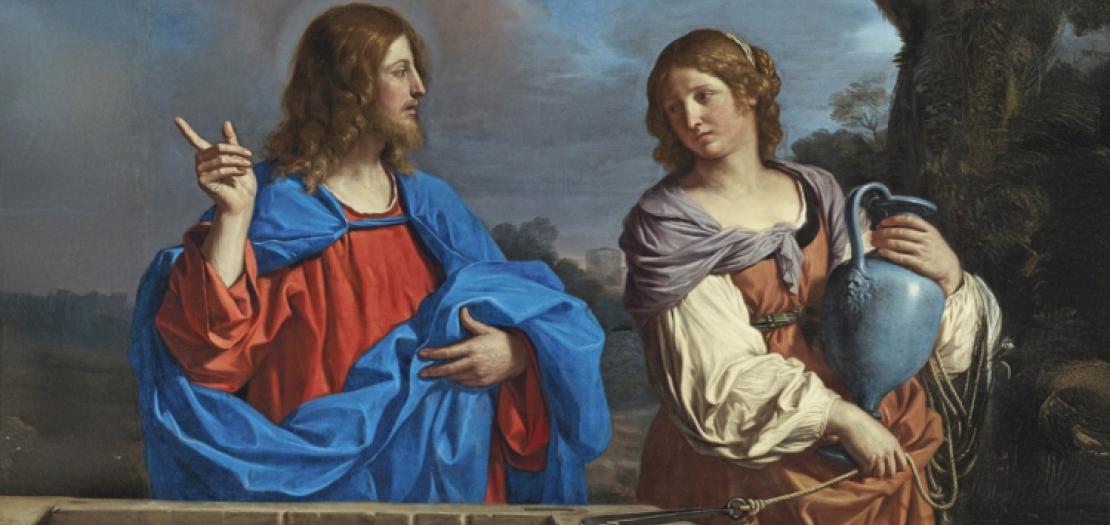
We enter the Gospel passage about Jesus’ encounter with a woman from Samaria (Jn. 4:5-42) through a detail in verse 6, where we read that Jesus was fatigued from the journey. This term, “tired, labor,” appears again later in the passage, at the end, when Jesus speaks to the disciples and tells them that He sent them to reap what they did not toil for. Others have labored, and they are now reaping the fruits of that labor. (Jn. 4:38)
The “labor” Jesus refers to here is connected to missionary work. This term appears frequently in Pauline literature, where Paul describes his ministry as a labor in which he toils without sparing himself. (1 Cor. 15:10; Col. 1:29, etc.)
This reference helps us understand the weariness the evangelist John attributes to Jesus. Jesus is tired not only because of the journey from Judea to Galilee, but also because of another journey that began in the Father’s bosom and led Him to dwell among us. (Jn. 1:14) It is a long and arduous journey, for the humanity Jesus seeks is lost and far from Him.
Today, we contemplate this lost humanity in the figure of the Samaritan woman. She, too, is on a journey. Every day, she goes to the well to draw water, but this journey never truly quenches her thirst. It is a repetitive, tiresome journey, one she longs to escape, as she herself asks Jesus: “Give me this water, so that I may not be thirsty or have to keep coming here to draw water.” (Jn 4,15) Her quest seems endless, and her actions never satisfy her longing.
But this thirst also symbolizes her life. Immediately after this request, seemingly without logical transition, Jesus introduces a more personal subject into their conversation, (Jn. 4:16-17) one concerning her emotional life and her five husbands.
We soon realize that her emotional life mirrors the repetitive journey to the well: it is a cycle that has not given her life. She has been in search of love but has never truly found it. She now lives with a man who is not her husband – she is a woman who has given up.
This is where the journey of humanity, wounded by evil, leads. She has come to a place of surrender, believing she will never find the love she seeks, trapped in a cycle of gestures that are ultimately insufficient for her life.
And this is the place where Jesus, the beloved Son, must pass on His journey. (“He had to pass through Samaria” - Jn. 4:4)
Having reached this point, where He can finally meet His scattered creation, Jesus does not rebuke or judge her. He does not remind her that she is a Samaritan woman with an irregular emotional life. Nor does He merely offer her a new doctrine. When she shifts the conversation to doctrinal matters, He does not pause to correct her religious ideas or to convince her of the truth.
First, He speaks the truth about her. (Jn. 4:17-18) But this truth, spoken with love and compassion, does not hurt her; instead, it sets her free. It does not shame her but reveals to her the deeper truth – what moves her, the thirst within her, and the search that, until now, had not led her to encounter the source of life.
A second significant moment occurs when the woman asks the fundamental question hidden in verse 20: Where should one worship God? On this mountain (Gerizim) or in Jerusalem? What does this mean? Where is the spring? Where can you find the living water? (“The woman said to him, “Sir, I see that you are a prophet. Our ancestors worshiped on this mountain, but you say that the place where people must worship is in Jerusalem.” (Jn. 4:19-20)
Neither in Jerusalem nor on this mountain, but in this man who came to meet her, who stopped to speak with her, and who entered into her complex and wounded history.
The spring is not a place but a liberating relationship. So much so that the woman leaves behind her water jar, with which she went to the well every day, and goes to testify that she has heard a new Word that has set her free – one that, like a spring, can quench the thirst of many: “Then the woman left her water jar, went back to the city, and said to the people, «Come and see a man who told me everything I have ever done. Could this be the Messiah?” (Jn. 4:28-29)
+Pierbattista