Issued by the Catholic Center for Studies and Media - Jordan. Editor-in-chief Fr. Rif'at Bader - موقع أبونا abouna.org

Following is the text of the meditation by His Beatitude Cardinal Pierbattista Pizzaballa, Latin Patriarch of Jerusalem, marking the 28th Sunday of ordinary time, dated October 11, 2026:
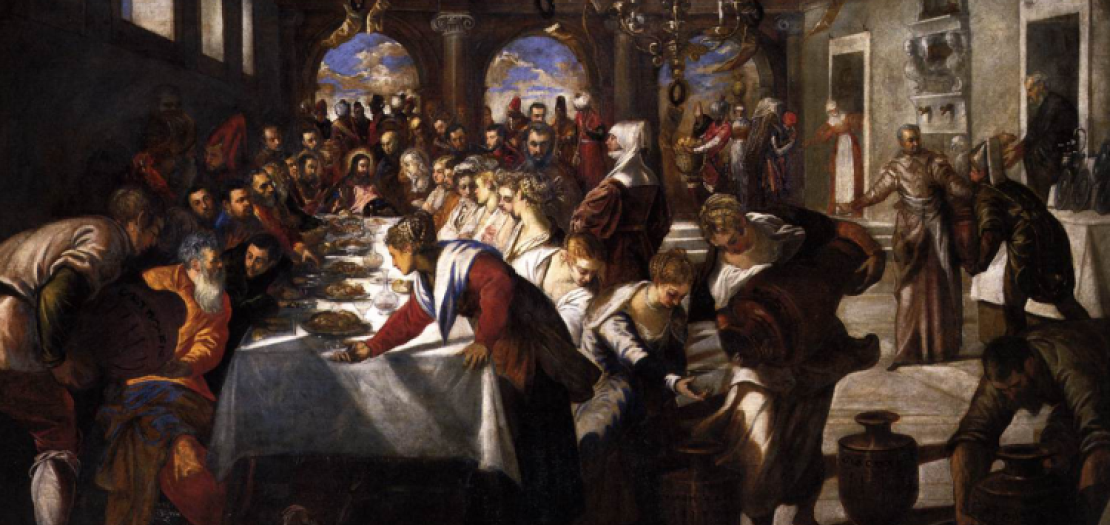
Let us listen to this Sunday’s Gospel reading, (Matthew 22:1–14) focusing first on one aspect that emerges from the text.
There is a king who prepares a wedding banquet for his son and organizes a feast, to which he invites a first group of people. Since they do not accept the invitation, he sends his servants to call others, so that the feast may take place.
There is a particular detail in the text that can help us understand one of the many aspects of this passage: the king’s actions are deeply marked by words.
First of all, he extends invitations and sends his servants to call those who have been invited. (Matthew 22:3). When they refuse the invitation, the king sends his servants out again and entrusts them with very specific words to convey: “Tell them: Behold, I have prepared my Banquet... come to the wedding feast!” (Matthew 22:4)
In the face of their definitive refusal, the king begins to speak again and tells his servants to go everywhere and call to the wedding feast all those they will encounter. (Matthew 22:9)
But it is not over yet. The feast has finally begun, the hall is filled with people, and the king, upon entering, sees a man who is not wearing a wedding garment. He does not drive him out immediately; on the contrary, he first speaks to him: “Friend, how did you come in here without a wedding garment?” (Matthew 22:12)
This king, therefore, calls, speaks, says, gives orders, and does so repeatedly, just as, in the previous parable, the master of the vineyard had gone out several times during the day to call workers to work in his vineyard.
The attitude of the invited guests, on the other hand, is almost the opposite. Of the first group, in fact, it is simply said that they did not want to come. (Matthew 22:3) Not one of them speaks. When the king then sends the servants again to renew the invitation, some go away to their own affairs, while others seize the servants and mistreat them. This time too, no one speaks, except those who use words to insult the servants. (Matthew 22:6)
Finally, in the second scene, when the king enters the hall and addresses the man without a wedding garment, instead of answering, he goes silent. (Matthew 22:12)
The king’s question is neither a judgment nor a reproach, but an opportunity for salvation, an invitation to come back to his senses. However, because he gives no answer, he is excluded from the feast and thrown outside. (Matthew 22:13)
Exactly as happened in the Garden of Gethsemane, where Jesus addresses Judas by calling him in precisely the same way: “Friend, do what you came for!” (Matthew 26:50) A word to which Judas does not respond, because in that case too, as here, the problem is a failed relationship, a broken off dialogue.
We could say that the silence of the guest without a wedding garment expresses, at its core, the same attitude of rejection shown by the first invited guests. And we could therefore conclude that, just as the king’s actions are marked by the word, so too are human actions marked by the absence of words—by silence.
All this means that what truly excludes a person from the feast is the failure in responding, because this silence reveals a closing-off and speaks of a heart that remains distant.
The king offers his word to everyone: to the good and the bad, to those who near and to those far away. He opens the door to all, and the call is without exclusion, freely given and unexpected. For this reason, it is not the wicked who remain outside, but the silent, those who do not enter into dialogue and intimacy with the Lord.
The Lord, in fact, does not desire mere executors of his commands; he wants friends who speak with Him, he wants children.
Everything that enters into this dialogue with the Lord is, in some way, redeemed: even our evil, even our sin.
+Pierbattista